February 18, 2026
When you hear the name Blå Fågel Rörstrand, it translates simply to Blue Bird. But for collectors and lovers of Scandinavian design, those words mean so much more. This celebrated Swedish dinnerware isn't just porcelain; it's a piece of history, capturing a simple, elegant style that feels both classic and perfectly at home today.
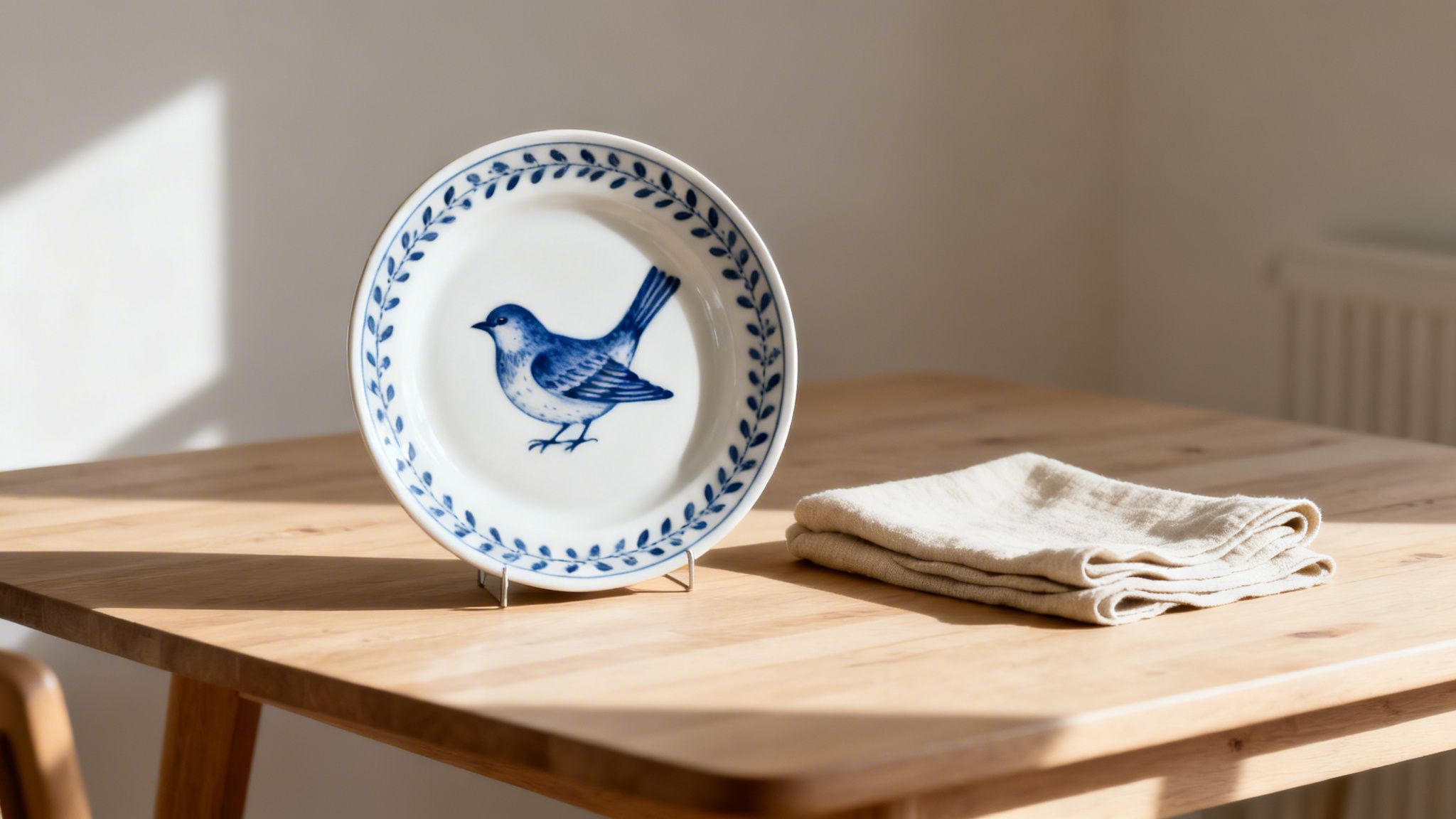
To understand Blå Fågel is to appreciate an enduring symbol of Swedish craftsmanship. This isn't just about plates and cups. It's about an aesthetic that feels both traditional and wonderfully modern, a quality that allows it to blend into contemporary homes while still telling a story of its heritage.
You could almost think of it as the porcelain cousin to the rustic Dala horse. Both are quintessential Swedish treasures, but they represent different facets of the country's artistic soul. Where the Dala horse brings a folksy, colourful warmth, Blå Fågel offers a touch of refined, classic style.
The beauty of Blå Fågel is tied directly to the core principles of Scandinavian design that so many of us love. The pattern is a masterclass in:
This blend of form and function is exactly why the pattern still resonates so strongly. It’s a piece of Swedish history that’s meant to be lived with, used, and enjoyed—not just admired from behind glass.
The Fågel Blå (Blue Bird) pattern that emerged in the 1980s belongs to a later chapter in Rörstrand's story. This specific line was made using Swedish flint ware, a distinctive material known for its subtle bluish tinge that sets it apart from traditional porcelain.
Today, these vintage Rörstrand pieces are becoming more and more collectible. Items like the 8.25-inch soup plates are gaining value on the global market as people rediscover their unique charm. You can see wonderful examples of Rörstrand's Fågel Blå to appreciate its heritage and appeal firsthand.
Whether you're a seasoned collector or just found your first piece at a flea market, this guide will help you become an expert.
To really get the simple charm of a blå fågel rörstrand piece, you first have to understand the powerhouse that created it. Rörstrand wasn't just another pottery works; it was a giant of European porcelain with a history stretching all the way back to the early 18th century. Try to imagine a single company that starts out making elegant Rococo pieces and winds up defining the clean lines of modernism—that, in a nutshell, is the story of Rörstrand.
This long journey through time cemented the brand as a true symbol of Swedish quality and artistic vision. For centuries, the factory walked a fine line between crafting unique, one-of-a-kind art and producing beautiful, everyday dinnerware that people could actually afford. It’s this dual focus that built such a rich legacy of innovation.
Knowing this history is key. It shows that the Blå Fågel pattern isn’t just a pretty design. It's the result of nearly 250 years of skill, artistic experimentation, and a deep-seated understanding of what makes a design last.
Founded way back in 1726 near Stockholm, Rörstrand is one of Europe's oldest porcelain makers. In its early days, it focused on faience—a type of tin-glazed earthenware—often making pieces that imitated the popular styles coming from Delft and East Asia. This knack for adapting and mastering new techniques became a core part of its DNA.
Over the next two centuries, the factory kept evolving, embracing new materials and art movements as they came along. It became a crucible for Swedish design talent, attracting artists and ceramicists who were always pushing the boundaries of what was possible with clay and glaze. This reputation for quality sealed its place in Swedish culture.
Rörstrand’s ability to consistently innovate while honouring its heritage is what separates it from its contemporaries. The factory became a living museum of Swedish design evolution, with each new pattern telling a small part of a much larger story.
The 20th century was a particularly creative period, shaped by influential designers like Sven Markelius. By the 1930s, Rörstrand was doing it all, from series manufacturing to original sculptures. The factory’s output really ramped up during the 1940s, as its innovative glazing techniques gave it a serious edge in European markets. By the time Blå Fågel came along, the company had been perfecting its craft for almost two and a half centuries. For an interesting parallel in Swedish ceramics, you can explore the history of Höganäs Keramik stoneware and its own unique contributions.
Today, pieces from Rörstrand's final decades are highly sought-after vintage items. Scandinavian heritage enthusiasts see them as important artefacts of Swedish manufacturing excellence. You can find more insights about Rörstrand's 20th-century journey on 20thcenturyforum.com. This incredible history is the backdrop for the simple blue bird that would capture so many hearts decades later.
Flipping over a piece of blå fågel rörstrand to check its base is a bit like reading a signature. That maker's mark, or backstamp, is your single best clue to a piece's authenticity and origin story. For collectors, learning to read these marks is the first real step toward building a confident eye.
This is your practical field guide to spotting the genuine treasures. It’s not about guesswork; it's about connecting a series of specific clues that, together, confirm you're holding a real piece of Swedish ceramic history. We’ll look at the stamps, the feel of the material, and the fine details of the pattern itself.
The most reliable way to identify an authentic Blå Fågel piece is by examining that backstamp. Rörstrand's marks changed over its many centuries of production, but for the Blå Fågel pattern, you're looking for a specific 20th-century design.
The key mark to find is the iconic "Rörstrand Sweden" stamp, always accompanied by three crowns. This particular mark confirms its Swedish origin and places it squarely in the correct manufacturing era. You might also spot other numbers or letters—these often relate to production batches or even specific decorators—but those three crowns are the essential signature of quality.
Think of the Rörstrand backstamp as a passport. It tells you where the piece came from and the era it travelled through, offering undeniable proof of its identity and journey from the factory to your hands.
This flowchart can help you visualise the different eras of Rörstrand production based on key identifiers.
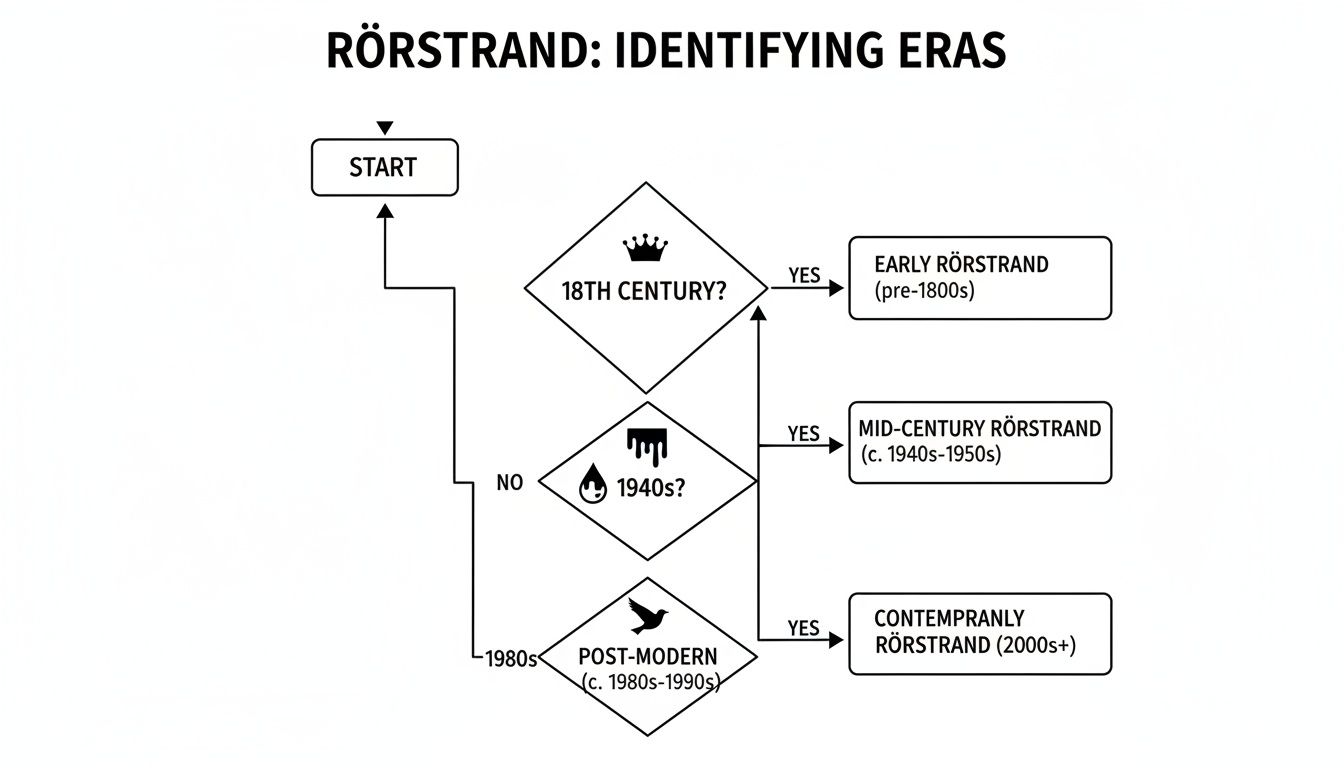
As the chart shows, specific icons—like the crown, glaze details, or the bird motif itself—can help you quickly narrow down a piece's production timeline.
Beyond the stamp, the material itself tells a story. As we've learned, Blå Fågel was made from Swedish flint ware, not traditional porcelain. This gives it several distinct characteristics you can look for:
These material clues are just as important as the backstamp. When you have the right mark and the right material, you've got a powerful indicator of authenticity. For more examples of distinctive Swedish ceramics, you might enjoy our guide on collecting Gabriel Sweden stengods.
Finally, take a close look at the Blå Fågel pattern. The blue bird should be rendered with a delicate precision, showing clear lines and subtle shading. The foliage around it should also be well-defined. On lesser-quality copies, the design can look blurry, smudged, or overly simplistic, lacking the graceful artistry of a genuine Rörstrand piece. By examining these three areas—mark, material, and motif—you give yourself the power to distinguish the real deal from the rest.
Whether you've inherited a single teacup or are actively hunting for a full dinner service, knowing how to value blå fågel rörstrand porcelain is a must. The worth of any piece is never just about its age; it's a delicate dance between its rarity, condition, and how much fellow collectors desire it. This guide will give you the inside track on how to assess what you have and make smart choices on your collecting journey.
Ready to begin the hunt? For many, the thrill is in the search itself. You can find these vintage treasures tucked away in all sorts of places, from your local antique shop and neighbourhood flea markets to sprawling online marketplaces like Etsy and Sweden’s own Tradera. Don't overlook estate sales, either—they can be absolute goldmines, sometimes offering up entire sets that have been lovingly preserved for generations.
The single biggest factor that drives a piece's value is its condition. An item in flawless shape will always fetch a higher price than one showing its age. To properly assess a piece, you need to channel your inner detective, keeping an eye out for the most common types of damage.
Your fingertips are just as important as your eyes here. Gently trace the rim of a plate or the lip of a cup. The tiniest of chips, often called a "flea bite," is often easier to feel than to see.
Next, hold the piece up to a bright light, turning it over to check for any hairline cracks. These whisper-thin fractures can be tricky to spot but will definitely impact the value. Lastly, look for crazing, which is a fine web of cracks in the glaze itself. While some collectors feel it adds to the vintage charm, heavy crazing is generally seen as a flaw.
Think of a piece's condition as its life story. A pristine plate tells a tale of careful preservation, while a chipped cup speaks of a life well-lived. For a collector, the former is almost always more valuable.
Beyond the physical state of your porcelain, a few other elements play a crucial role in its final valuation. Understanding these will help you figure out if you're holding a common find or a rare gem.
By combining a sharp eye for condition with a good sense of what makes an item rare, you're well on your way to building a beautiful and rewarding collection.
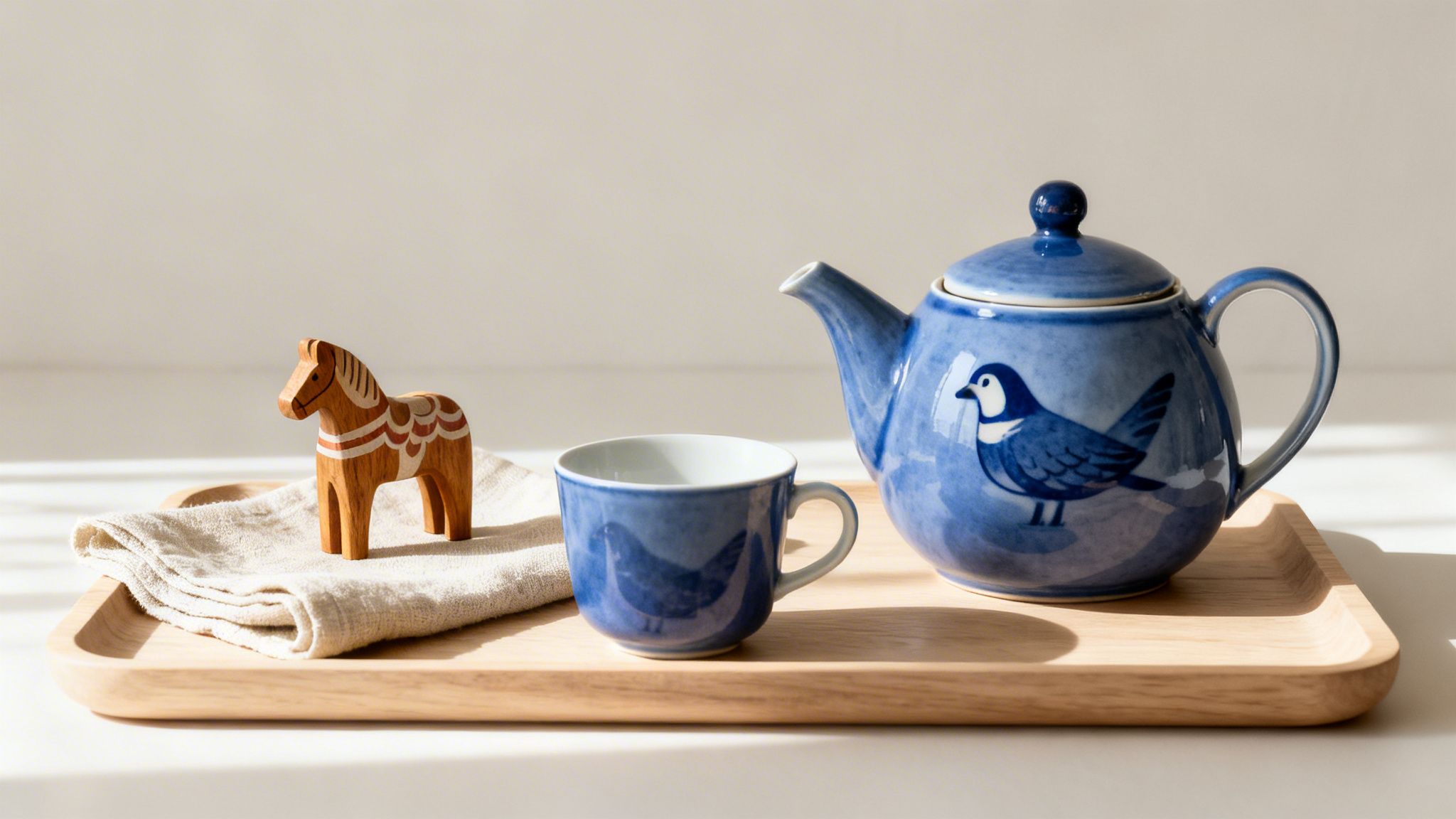
Weaving classic blå fågel rörstrand pieces into a modern home is all about striking a beautiful balance. The goal is to let their delicate, timeless elegance sing against more contemporary textures and materials. This isn't about creating a stuffy museum display; it's about inviting these stories of Swedish craftsmanship into the fabric of your daily life.
The cool blue and white of the porcelain pairs wonderfully with the warmth of natural wood, a real cornerstone of Scandinavian design. Just imagine a stack of Blå Fågel plates resting on a rustic, reclaimed wood shelf, or a few teacups arranged on a simple linen runner. This mix of refined ceramic and organic texture creates a look that feels both fresh and deeply rooted in tradition.
Think of a vignette as a tiny, curated story you tell with objects. Building one with your Blå Fågel porcelain is a simple way to create a charming focal point in any room. It’s your chance to blend old and new, and to celebrate different facets of Swedish heritage all in one thoughtful little arrangement.
Start with a single piece—maybe a lovely creamer or a sugar bowl—and build out from there. Here are a few ideas to get you started:
The real secret to a great vignette is balance. It's not about clutter. It’s about a thoughtful composition where each element—the smooth porcelain, the rough wood, the soft linen—gets a chance to shine and add to an overall feeling of calm and beauty.
Beyond just being beautiful to look at, Blå Fågel was made to be used and enjoyed. A tablescape built around these pieces feels special without ever being stuffy or overly formal. Start with a neutral base, like a simple white or beige tablecloth, which will really let the blue pattern pop.
Warm metallics, like brass or copper candle holders, add a touch of modern warmth that perfectly complements the cool tones of the ceramic. For cutlery, you could go with simple stainless steel or even sets with wooden handles to continue that natural theme. This kind of thoughtful pairing ensures your vintage treasures feel right at home on a modern table, creating a setting that tells a story of both past and present.
Owning a piece of blå fågel rörstrand porcelain is like holding a little piece of Swedish design history in your hands. To make sure these treasures last for generations to come, a bit of gentle care is all it takes. The right approach to handling, cleaning, and storing your collection is key to preserving its delicate beauty and value.
First things first, let's talk about cleaning. The most important rule is to avoid the dishwasher at all costs. The intense heat and harsh detergents are just far too aggressive for these vintage ceramics. Over time, they can cause the lovely blue pattern to fade and might even lead to crazing—that fine web of cracks you sometimes see in an old glaze.
Instead, always wash your pieces by hand. A bit of lukewarm water, a mild soap, and a soft cloth or sponge are your best friends here. Stay away from abrasive scouring pads or powders, as they can easily scratch the glaze, permanently dulling its shine and damaging the intricate bird design.
How you store your porcelain is just as important as how you clean it. Sudden, extreme temperature changes—what experts call thermal shock—can cause tiny cracks to form. So, never take a plate from a chilly cabinet and immediately pour hot gravy on it. It’s always best to let your pieces adjust to room temperature first.
When it comes to stacking, a little separation goes a long way.
Think of caring for your vintage china like tending to a garden. Gentle, consistent attention is what allows its beauty to flourish for years, preventing the small damages that can accumulate over time.
And what about those lovely teacups? It’s tempting, but try to avoid hanging them by their handles. This puts constant stress on the joints, which can weaken them over time and lead to a heartbreaking break. It’s much safer to store them standing upright on a shelf, ensuring your beautiful blå fågel rörstrand collection stays picture-perfect.
When you start collecting vintage ceramics, a few questions always pop up. It's completely natural! Let's clear up some of the most common queries about blå fågel rörstrand, so you can feel confident as you care for and grow your collection.
The short answer is a definite no. These beautiful pieces hail from the 1980s, long before modern kitchen appliances were a consideration in their design. We strongly advise against putting them in a dishwasher. The intense heat and harsh detergents will inevitably cause that delicate blue pattern to fade and can even lead to fine cracks, or crazing, in the glaze.
The microwave is also off-limits. The traditional Swedish flint ware material simply wasn't made for it, and you risk damaging your precious ceramics or creating a safety hazard. Always stick to gentle hand-washing; it's the only way to truly preserve its beauty for years to come.
While they both fall under the ceramics umbrella, they're quite different materials with a unique feel. You probably know porcelain for its pure, bright white colour and almost translucent quality when held up to the light. Flint ware, on the other hand, is a specific type of earthenware that Rörstrand favoured for its sturdiness.
The most telling feature of the flint ware used for Blå Fågel is its lovely, subtle bluish-white tint. This unique quality gives the pieces a distinct character that seasoned collectors can spot from a mile away—it's a true hallmark of Rörstrand's production during that era.
The best clue is sitting right on the bottom of your piece! The most reliable way to date your Blå Fågel is to carefully examine the backstamp. Rörstrand has been around for centuries and used many different marks, so the details here are everything.
For Blå Fågel, you're looking for the "Rörstrand Sweden" mark, which will have the iconic three crowns symbol alongside it. This specific stamp combination is your confirmation, placing its production squarely in the 1980s. You can always cross-reference your mark with online guides for Rörstrand backstamps to be absolutely certain of its origin and authenticity.
At Dalaart, we're passionate about celebrating the rich history of Swedish craftsmanship. From iconic Dala horses to timeless ceramics that bring Scandinavian heritage into your home, we invite you to explore our curated collection of authentic, hand-crafted treasures at https://dalaart.com.


.svg)


.png)


