March 4, 2026
There's something uniquely captivating about black and white art. By stripping away colour, we're forced to look closer and see what truly lies at the heart of a piece: the texture, the interplay of light and shadow, the raw emotion. It's like a story told with fewer, more powerful words—where every single line and shade carries incredible weight.
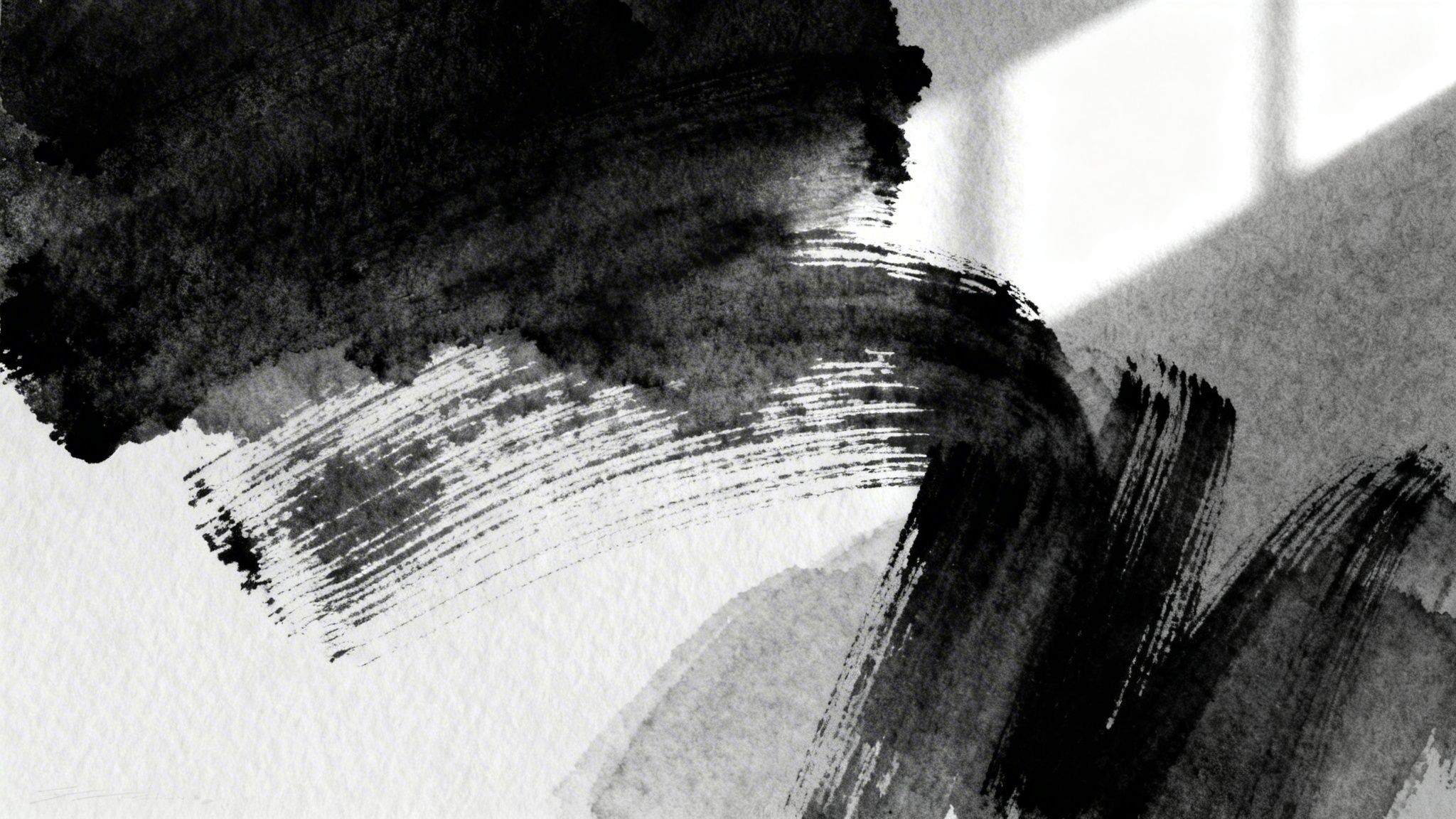
The timeless appeal of black and white art isn't an accident; it stems from its deliberate simplicity. When an artist chooses to work without colour, they can't rely on a fiery red for passion or a cool blue to create a sense of calm. Instead, they have to master the very foundations of visual art to tell their story.
This isn't a limitation, but a truly sophisticated choice. It encourages both the artist and the person viewing the art to look deeper. Without the immediate distraction of a full colour palette, our eyes naturally drift to the subtle details that often go unnoticed.
Just imagine a photograph of a face. In colour, you might first notice the shade of their lipstick or the bright hue of their eyes. But in black and white, your attention is pulled to the texture of their skin, the dramatic shadows under their cheekbones, or the glint of light in a single tear. The emotion itself becomes the main event.
This idea holds true for all kinds of monochrome art, from sweeping abstract paintings to bold graphic prints. The real power is found in the contrast, in what is emphasised and what is left to our imagination. It creates a connection that feels both classic and refreshingly modern.
By stripping away colour, black and white art doesn't lose anything. Instead, it gains a powerful focus on form, texture, and the raw emotional core of the subject.
This philosophy of "less is more" is something that connects beautifully with the core principles of Scandinavian design. A well-designed Nordic home prizes clarity, function, and calm, uncluttered spaces. In the same way, black and white art finds its strength through a similar kind of purity.
This shared aesthetic celebrates:
Now that we have a feel for its power, we can begin to explore how this timeless look is used today, from its deep historical roots to how you can bring it into your own home.

While you can find monochrome art all over the world, its story runs especially deep in the forests and villages of Dalarna, Sweden. This region, famous for its strong folk culture and artisanal spirit, became the heartland for a particular kind of black and white art that truly captured the soul of Swedish life. It’s a story told not just through artistic skill, but through the simple, powerful contrasts that became a form of cultural identity.
You can’t talk about this history without mentioning the master etcher Anders Zorn. Though many know him for his vibrant oil paintings, Zorn’s work in black and white etching completely reshaped Scandinavian art. His prints took everyday rural scenes—fishermen hauling their nets, women bathing by the lake, intimate portraits of local characters—and turned them into masterpieces known across the globe.
Zorn’s true genius was his ability to use the starkness of black ink on paper to suggest incredible depth and texture. His lines weren’t just outlines; they were sculptural, carving light and shadow into the page to reveal the very character of his subjects. This unique approach cemented a legacy of artisanal excellence that would inspire artists for generations to come.
Born in Mora in 1860, Anders Zorn created more than 280 etchings during his career, many of which are now celebrated as cornerstones of Dalarna’s artistic heritage. These pieces masterfully depicted Dalecarlian folk life with a dramatic intensity that only black and white can deliver.
Even Zorn’s famous limited painting palette, known as the 'Zorn palette', influenced his printmaking. With it, he proved that black ink and white paper were all he needed to express a world of complex emotion and narrative. You can explore his incredible technique in more detail by reviewing the extensive Zorn collection in Mora.
This dedication to authentic storytelling and fine craftsmanship created a powerful link between fine art and folk traditions. The same hands that carved everyday objects were now creating fine art that spoke with a distinct regional voice—an ethos that values honesty, skill, and a deep connection to place.
Anders Zorn’s etchings did more than just capture images; they preserved the spirit of a place and its people, proving that the most profound stories can be told with the simplest of palettes.
This artistic heritage doesn’t just hang on a gallery wall; it extends right into the heart of Swedish craftsmanship, most famously in the creation of the Dala horse. Just as Zorn's etchings captured the essence of Dalarna, these hand-carved figures embody the region's creative and traditional spirit. In a way, both the esteemed etchings and the humble wooden horse are born from the same cultural DNA.
They represent a shared appreciation for:
This connection beautifully highlights how a powerful aesthetic—whether in a print or a sculpture—can become a vital cultural artefact. You can delve deeper into the region that inspired both of these art forms by reading our guide on the beauty and culture of Dalarna, Sweden.
When we talk about black and white art, we aren't describing a single, narrow category. It’s a wonderfully broad term that covers a huge range of creative expressions, each with its own character and feeling. To really appreciate its magic, it helps to see how different styles tell completely different stories.
The medium an artist chooses is everything. Think of a charcoal drawing; its soft, blendable nature creates gentle shadows and subtle shifts in tone. The result often feels intimate and atmospheric, almost like a whispered secret shared between the artist and the viewer. It’s the perfect way to capture the delicate curve of a cheek or the soft light of a misty morning.
On the other hand, a woodcut or linocut print is all about bold confidence. By carving away material, the artist leaves behind sharp, decisive lines and solid blocks of black. This style doesn’t whisper—it makes a clear, powerful statement that’s fantastic for graphic storytelling and eye-catching designs.
The world of monochrome art is rich with history, stretching from centuries-old techniques to sleek, contemporary forms. Each style gives us a unique way to see the world without the distraction of colour, focusing our attention on the pure, essential elements of light, shadow, and form.
Here are a few key styles you'll encounter:
The beauty of black and white art lies in its diversity. A sharp graphic print feels like a bold declaration, while the soft gradients of a charcoal portrait are more like a private, emotional thought.
This powerful black-and-white aesthetic isn't just for modern prints and galleries; it can also breathe new life into cherished folk art traditions. Take the beloved Swedish Dala horse, for instance. Traditionally painted in vibrant, joyful colours, it takes on an entirely new personality when rendered in simple black and white.
Stripped of its familiar red and blue "kurbits", the focus shifts to the horse's simple, elegant form and the beautiful, hand-carved texture of the wood. Today, artisans are reimagining these iconic figures with monochrome patterns, creating pieces that feel both deeply rooted in tradition and perfectly at home in contemporary, Scandinavian-inspired interiors. It’s a beautiful example of how flexible black and white art truly is, connecting history with modern design in a single, striking object.
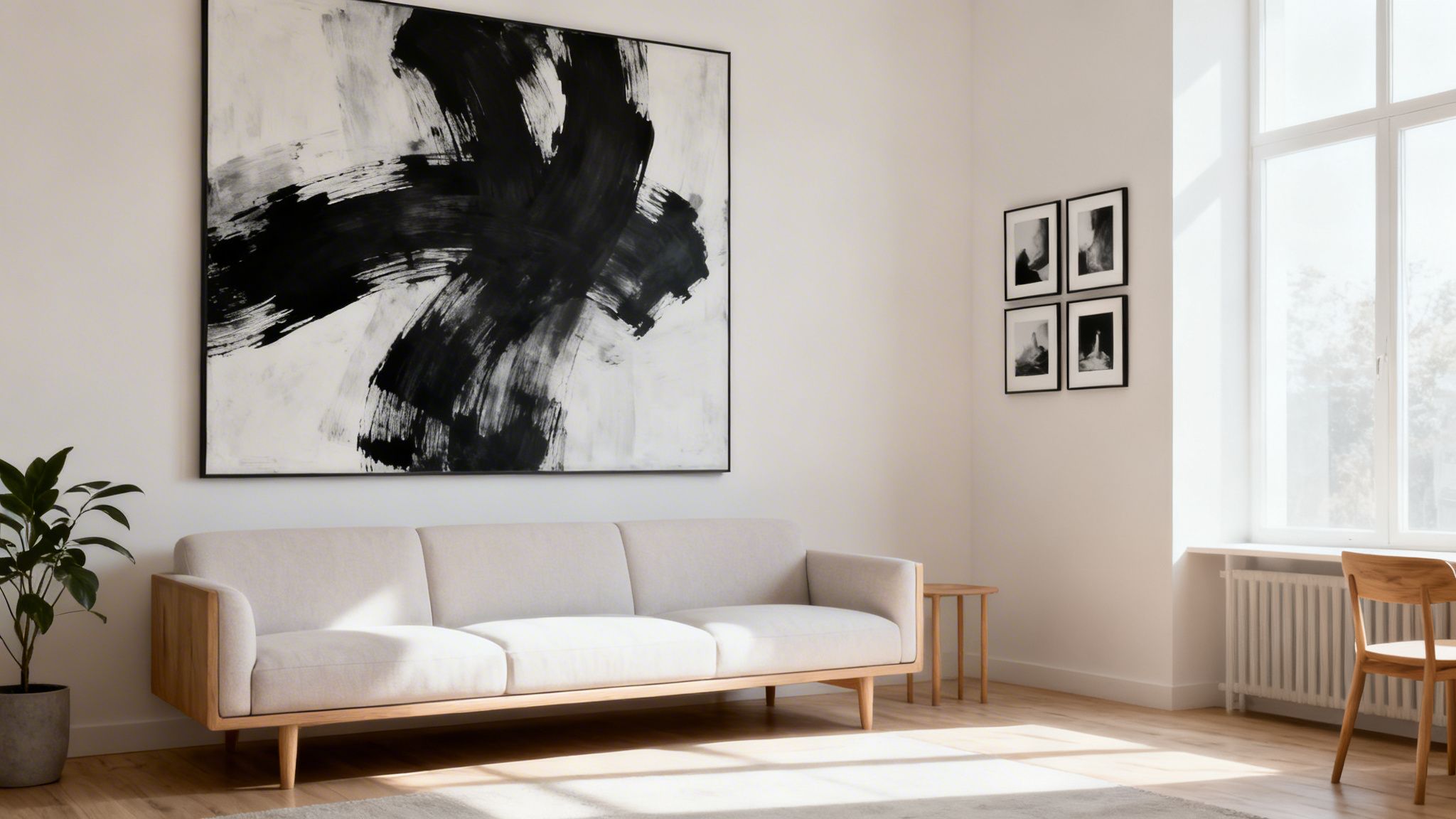
Bringing black and white art into your home is a wonderfully simple way to add instant character and focus. Its innate versatility allows it to harmonise with almost any interior, from the most colourful and eclectic to the serenely uncluttered. The real secret isn't just what art you choose, but how you welcome it into your space.
One of the most powerful strategies is to go big with a single, large-scale piece. Think of it as a visual anchor that commands the room. Placing a bold abstract painting over a sofa, or a dramatic, high-contrast photograph in an entryway, creates an immediate and confident focal point that sets the tone for the entire home.
Another delightful approach is to curate a gallery wall. This isn't about finding perfectly matched frames or sizes; in fact, it's the variety that makes it so captivating. A thoughtfully arranged collection of smaller black and white pieces can tell a much larger story, adding a rich layer of personality to your walls.
When you start to build your display, keep these tips in mind:
You could transform a plain hallway, for instance, by lining it with a series of black and white architectural prints in identical frames for a clean, gallery-like effect. This simple touch can turn a forgotten, transitional space into a deliberate design moment. You can discover more inspiration for styling paintings for your walls in our detailed guide.
The real strength of monochrome art in decorating is its ability to act as a neutral element. It can calm a colourful room or add depth to a minimalist one, all without ever clashing.
Black and white art truly is a chameleon, fitting seamlessly into the most diverse interior aesthetics. In a minimalist or Scandinavian-inspired home, it reinforces the core emphasis on clean lines, pure form, and curated simplicity. Here, a lone piece against a white wall becomes a quiet, contemplative statement.
Yet its power is just as evident in a maximalist space. Amidst bold colours and rich patterns, a piece of black and white art offers a sophisticated moment of visual rest. Imagine adding a bold, abstract monochrome painting to a vibrant living room; it doesn’t compete but instead introduces a touch of refined balance, proving that this timeless art form genuinely has a place in any home.
Collecting art is so much more than just filling an empty space on your wall. It's a chance to invite stories, heritage, and a bit of soul into your home. When it comes to black and white art, this is especially true. Choosing an authentic, handcrafted piece over a mass-produced print forges a real connection to the artist and their craft, transforming your collection from simple decoration into a set of treasured heirlooms.
You can see this beautifully in the legacy of the great Anders Zorn. His black and white etchings did more than just depict scenes; they captured the very soul of Dalarna. For generations, these pieces have been passed down within families, valued not just as pictures, but as windows into a specific time and place, cherished for their incredible craftsmanship.
As you start your collection, think of yourself as a curator of stories. Whether you find yourself drawn to vintage prints or modern folk art, always look for pieces that have a clear history. A signature from the artist, a stamp from a gallery, or even the tiny, charming imperfections of a handmade item are all hallmarks of authenticity. These are the details that tell you you're bringing home a unique work, not just a passing trend.
This tradition is alive and well with modern artisans. A hand-carved, monochrome Dala horse, for instance, is far more than a stylish object. It’s a direct link to centuries of Swedish craftsmanship, beautifully reimagined for today's homes. Each one carries the subtle marks of the carver's hand, giving it a personality and charm that is truly one-of-a-kind.
Choosing to collect handcrafted art is a sustainable choice. It supports skilled artisans, preserves cultural traditions, and brings items with lasting value and character into your life.
Anders Zorn's etchings are still a high point in Dalarna's art history, with an amazing collection of his work housed at the Zornmuseet in Mora. In his lifetime, his prints often sold over 1,000 impressions per plate. He used a simple palette of just Cremnitz white and ivory black to create luminous effects that brought the region’s folk life to life. These works cemented his place as a master of monochrome, and you can explore his incredible impact by visiting the wonderful collection at the Zorn Museum.
Whether you begin with a single vintage photograph or a contemporary piece of folk art, the goal is always the same. Collect pieces that truly speak to you, that celebrate craftsmanship, and that carry a story you’ll want to share for years to come.
Ready to roll up your sleeves? There’s something deeply satisfying about making your own art, and this guide is for anyone who wants to try their hand at a piece of Scandinavian folk history. We’ll walk you through transforming a simple, unpainted Dala horse into a striking piece of black and white art.
The process is more straightforward than you might imagine, breaking down into just a few manageable steps. With a bit of patience, you can create a unique artwork that’s entirely your own, blending a traditional shape with a modern, monochrome feel.
Before a single drop of paint touches the wood, it needs to be properly prepared. A smooth surface is absolutely key to getting those clean, crisp lines and a finish that looks professional, so don’t be tempted to skip this initial step. Your goal here is to create the perfect little canvas for your design.
Start by lightly sanding the entire surface of your unpainted Dala horse. Use fine-grit sandpaper with gentle, even strokes to smooth out any rough patches. Once you're happy with it, wipe the horse down with a dry, clean cloth to get rid of every speck of dust. For a truly professional look that makes the black paint pop, applying a thin coat of white primer is a great idea.
The real beauty of creating your own black and white Dala art is the connection you build with the piece. It’s not just an object; it’s a story you’ve told with your own hands.
Now for the best part: bringing your vision to life. This is where you get to play with patterns and shapes, creating visual interest using just two colours. You don’t need to be a master artist, either; even simple, bold designs can look incredibly effective.
Think about applying the traditional 'kurbits' patterns but with a modern twist. These floral, gourd-like motifs look absolutely stunning when simplified into bold black lines against a clean white background.
This visual guide breaks down the core steps in acquiring art, from the first spark of discovery to making a sound investment.

The infographic highlights a clear path for new collectors, putting the focus on identifying, verifying, and investing thoughtfully. If you're ready to start your own project, you can get the perfect canvas by exploring this DIY unpainted Dala horse.
As you begin to explore the striking world of monochrome, you might find a few questions popping up. It's only natural. Let's walk through some of the most common queries to help you confidently bring the elegance of black and white art into your home.
This is a question we hear often, and the answer is a resounding yes. A piece of black and white art doesn't just work in a colourful room; it often enhances it. Think of it as a sophisticated neutral, a visual anchor that can ground a vibrant space and bring a sense of balance.
For instance, a large monochrome canvas can provide a focal point in a living room filled with bold jewel tones, preventing the space from feeling overwhelming. A gallery wall of smaller black and white prints can introduce texture and interest without clashing. The key is to select frames—like simple black or warm natural wood—that echo other elements in your decor to create a cohesive look.
Black and white art doesn't compete with colour; it complements it. By offering a moment of quiet contrast, it can make the colours around it feel even more intentional and vibrant.
Building a collection of art you love shouldn't feel out of reach. Starting your journey into black and white art is wonderfully accessible, even with a modest budget. A great place to start is by looking for high-quality prints from up-and-coming artists online, visiting local art fairs, or browsing vintage shops for unique photographs and etchings that already have a story to tell.
Another deeply rewarding option is to create a meaningful piece yourself. A DIY project, such as painting an unpainted Dala horse in a monochrome palette, connects you to a rich artisanal tradition in a very personal way. This approach not only gives you a unique work of art but one that holds immense personal value.
Yes, it's a fantastic and thoughtful choice for a nursery or a child's room. From a developmental standpoint, high-contrast black and white images are among the very first things a baby can see clearly, making them incredibly stimulating for their developing vision.
As a child grows, the art can grow with them. You can opt for playful subjects or bold, graphic patterns that inspire imagination. A monochrome Dala horse, for example, is a perfect blend of traditional folk art whimsy and a chic, timeless aesthetic. It's a piece they can treasure for years to come, long after they've outgrown the cot.
Discover your own piece of authentic Scandinavian heritage with Dalaart. Explore our curated collection of hand-carved Dala horses, including exclusive designs and DIY models, at https://dalaart.com.


.svg)


.png)


