February 16, 2026
Carin Kry Design is the living, breathing spirit of traditional Swedish folk art. It’s a style deeply rooted in history, most famously captured in the iconic Dala horse. But this is so much more than just a decorative object; it’s a storytelling tradition where artisans turn simple pieces of wood into cherished symbols of their culture. You can almost feel the soul of Scandinavian craftsmanship in every piece, each one hand-painted with incredible care and steeped in generations of artistry.
At its very core, Carin Kry design is an artistic language that speaks of community, history, and a deep connection to the natural world. This art form was born in the forested heartlands of Sweden, especially the Dalarna region, during the long, dark winters. Families would gather together to carve and paint, not just as a creative outlet, but as a way to pass down stories and cultural values from one generation to the next.
Try to think of each creation not as a mere object, but as a chapter in a much larger story. The familiar Dala horse, for instance, started out as a simple wooden toy for children but grew to become a national symbol of strength, courage, and good fortune. It’s this emotional weight that truly separates authentic folk art from simple decoration.
The real magic of a Carin Kry design piece is its unique, handcrafted nature. No two are ever exactly alike. The subtle differences in the carving and the artist's brushstrokes give each one its own distinct personality. This authenticity is a direct result of the artisan's touch, a tradition that has stayed remarkably true to its roots for centuries.
The true value of this folk art is found in its imperfections. Every hand-painted flower and each carved line is a testament to the human hands that made it, connecting you directly to the artisan and their heritage.
This entire tradition is built on a few key principles that give it its undeniable character:
Understanding these elements is the first step toward truly appreciating the depth and timeless appeal you'll find in every single Carin Kry design.
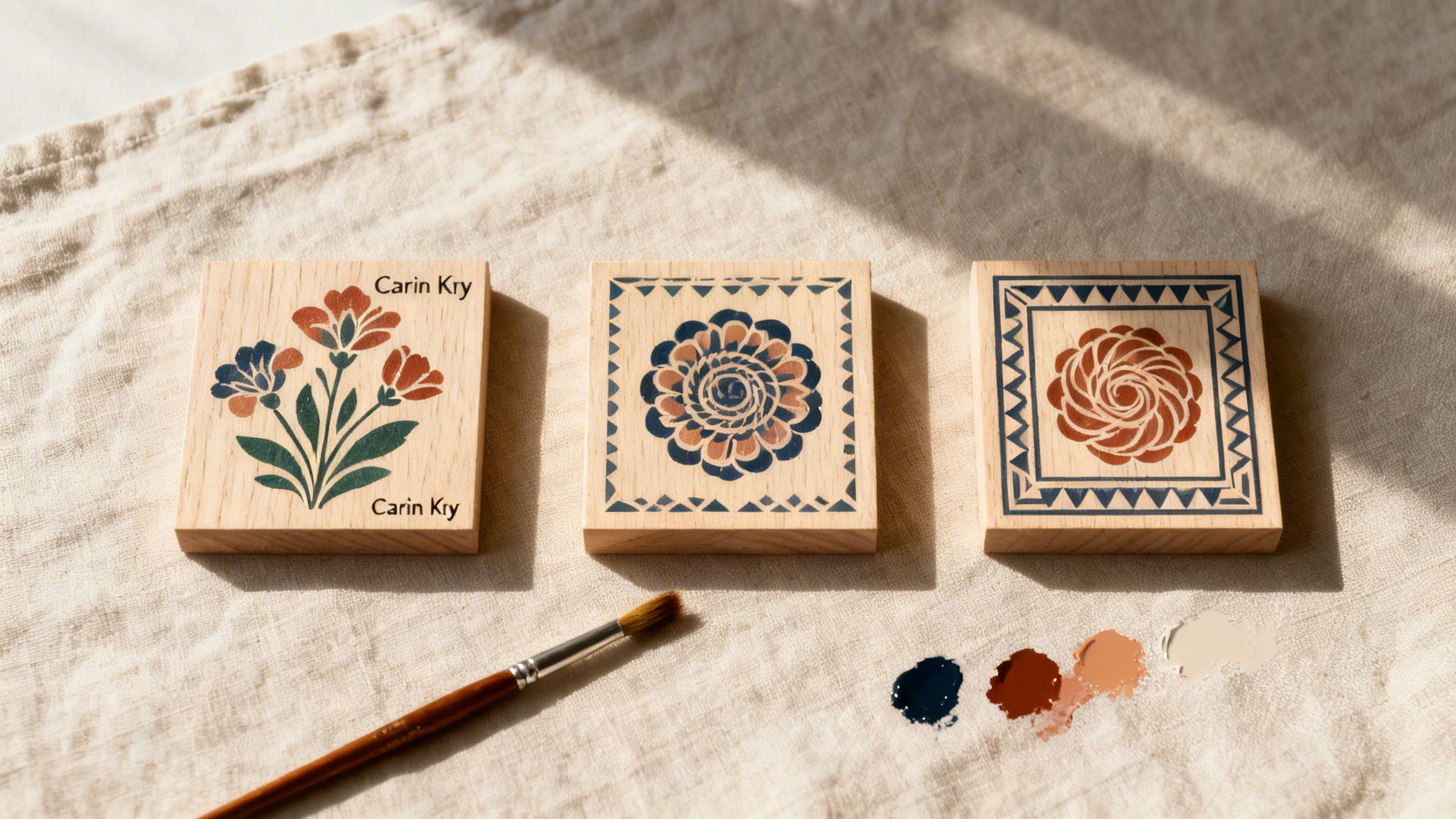
So, what is it that makes you look at a piece and know, instantly, that it's a Carin Kry design? It’s a certain visual language, where every colour, every curve, and every brushstroke tells a story rooted deep in Swedish tradition. This isn’t just about making something look pretty; it's a deliberate and meaningful artistic heritage brought to life.
You can think of the style as a conversation between the artist and her culture. The sturdy, almost humble shapes of the wooden figures—from the famous Dala horse to roosters and pigs—are a nod to the resilience and practical nature of the Swedish people. There’s an honest, down-to-earth quality in the carving that gives each piece a solid presence.
But that foundational simplicity is just the beginning. It becomes the canvas for an explosion of vibrant, expressive detail, celebrating life with patterns and motifs passed down through the centuries.
At the very heart of the Carin Kry aesthetic are a few key motifs that you’ll see again and again. These aren’t just random decorations; they are symbols pulled from nature and folklore, each with its own story to tell. Once you can spot them, you start to see the artistry on a whole new level.
A few signature elements to look for include:
These motifs are all applied with a distinctive, freehand brushstroke that gives them so much character and life. Those slight variations and tiny imperfections aren't flaws at all—they are the treasured mark of the artisan's hand, making each piece genuinely one-of-a-kind.
The vibrant colour palette—dominated by rich reds, deep blues, and earthy greens—is more than just an aesthetic choice. It is a defiant celebration against the long, dark Scandinavian winters, bringing warmth and energy into the home.
Ultimately, the real magic of a Carin Kry design is in the perfect harmony between its sturdy form and its intricate decoration. The solid, carved shapes provide a feeling of stability and history, while the colourful, detailed patterns give each piece its unique soul and personality.
It’s this beautiful balance that creates an art form that feels both timeless and deeply personal. It's what allows these pieces to stand out, whether as a single accent in a room or as part of a growing collection, bringing a touch of authentic Swedish heritage and artistic spirit into any space.
To truly get a feel for Carin Kry design, you have to go back to where it all began: the stunning Dalarna region in the heart of Sweden. This isn't just a location on a map; it's the very soul from which this iconic folk art flows. The deep forests, close-knit villages, and rich history of Dalarna are literally carved and painted into every single piece.
Just imagine those long, dark Swedish winters. Surrounded by a seemingly endless supply of timber, local artisans would turn inwards, using their hands to create objects of beauty and tell the stories of their community. Over centuries, they didn't just practice their craft—they perfected it, turning simple blocks of wood into powerful symbols of hope and heritage.
This legacy has firmly established Dalarna as the undeniable centre of Swedish folk art, a place where tradition isn't just remembered, it's lived. This artistic spirit is more than a historical curiosity; it’s a vibrant, essential part of the local culture and its economy today.
What makes the connection to Dalarna so potent is that these traditions never faded away. They are kept alive by a bustling local economy where craftsmanship and tourism are beautifully intertwined. People travel from all over the world to see these skills in action, which in turn creates a sustainable ecosystem for the very artists who carry these traditions forward.
This direct line from creator to admirer infuses each piece with incredible value. When you hold a Carin Kry design, you’re not just holding a beautiful object. You’re holding a tangible link to the artisan who made it and supporting the culture they represent. You can dive deeper into this captivating province by reading our dedicated article on the beauty of Dalarna.
Understanding this origin story transforms a collection from a set of beautiful items into a meaningful investment in a living artistic heritage. Each piece represents a family, a village, and a history that continues to unfold.
The bond between folk art and the local economy here is incredibly strong. In the heart of Dalarna, the tradition of hand-carving and hand-painting wooden items, like the beloved Dala horse, is a cornerstone of the community. It's not just a hobby; it's a livelihood.
In fact, Dalarna is Sweden's fourth largest tourism region by commercial guest nights, supporting around 1,000 companies that are part of this vibrant industry. This makes the craft a core pillar of the local economy.
This supportive environment is crucial. It ensures these unique skills aren't lost to time but are passed carefully from one generation to the next, maintaining the authenticity and quality that define Carin Kry design. This economic vitality is what allows artisans to dedicate their lives to their craft, ensuring that every new piece is as genuine as those made centuries ago. It’s this fusion of culture and commerce that keeps the spirit of Dalarna alive and well.
In a world flooded with mass-produced items, learning to spot a genuine piece of Carin Kry design is more than just a skill—it’s how you invest with real confidence. It’s not hard to tell a handcrafted treasure from a lookalike once you know the signs. It all boils down to appreciating the small, human touches that a machine could never hope to replicate.
The very first step is to simply pick it up. Get a feel for it. An authentic piece is carved from solid wood, usually pine or birch, and has a satisfying weight and density. Run your fingers across the surface. You should be able to feel the faint texture of the wood grain just beneath the paint, a tell-tale sign that it's not made from plastic or resin.
True Swedish folk art is a celebration of beautiful imperfection. Mass-produced items are identical and sterile, but a genuine Carin Kry design wears the marks of its creator like a badge of honour. Keep an eye out for these key indicators:
These aren't flaws; they are the fingerprints of the artist. This unique character is exactly what gives each piece its soul and its value.
Provenance—the documented history of an object—is crucial in the world of folk art. A piece with a known history, perhaps passed down through a family or purchased directly from a specific workshop, carries a story that adds immeasurable value beyond its physical form.
Finally, flip the piece over. Look for a signature, an initial, or a workshop mark on the bottom. Many artisans sign their work, creating a direct link to their identity and heritage. While older, unsigned pieces are certainly collectible, a clear mark is one of the strongest green lights for authenticity.
Verifying these marks might involve checking collector's guides or online resources that detail items from well-known workshops. For anyone interested in seeing curated collections from trusted sources, you can learn more about sourcing authentic pieces from trusted sellers like Leksands Hemslöjd. By combining these simple observational skills, you can confidently pick out and cherish a true work of art.
A piece of Carin Kry design is much more than a static object for a museum display; it's a lively storyteller, ready to bring warmth and a unique personality into your home. Thinking about how to integrate this kind of art isn't just about placing a Dala horse on a bookshelf and calling it a day. It’s a chance to truly weave the heart of Swedish heritage into the fabric of your living space.
Don't see them as isolated items, but as vibrant accents. Imagine a brightly coloured folk art rooster—it can provide an incredible pop of colour against a minimalist, neutral wall, instantly becoming the room's focal point. In the same way, gathering several smaller pieces on a floating shelf or a mantlepiece creates a thoughtful collection that tells a much richer story.
The real magic of styling with folk art lies in finding the harmony between the old and the new. You might be surprised to learn that these traditional pieces can feel right at home in almost any interior, from a rustic farmhouse to a sleek, contemporary apartment. The secret is to find a common thread—this could be a colour, a theme, or even a texture.
To get a balanced, curated look, try one of these approaches:
The versatility of Carin Kry's designs is incredible. They can be both a bold, powerful statement and a quiet, subtle nod to tradition. It’s this timeless appeal that lets them bridge generational styles, bringing a sense of history and soul to modern living.
The infographic below offers a simple way to think about what to look for when styling your home with authentic folk art pieces.
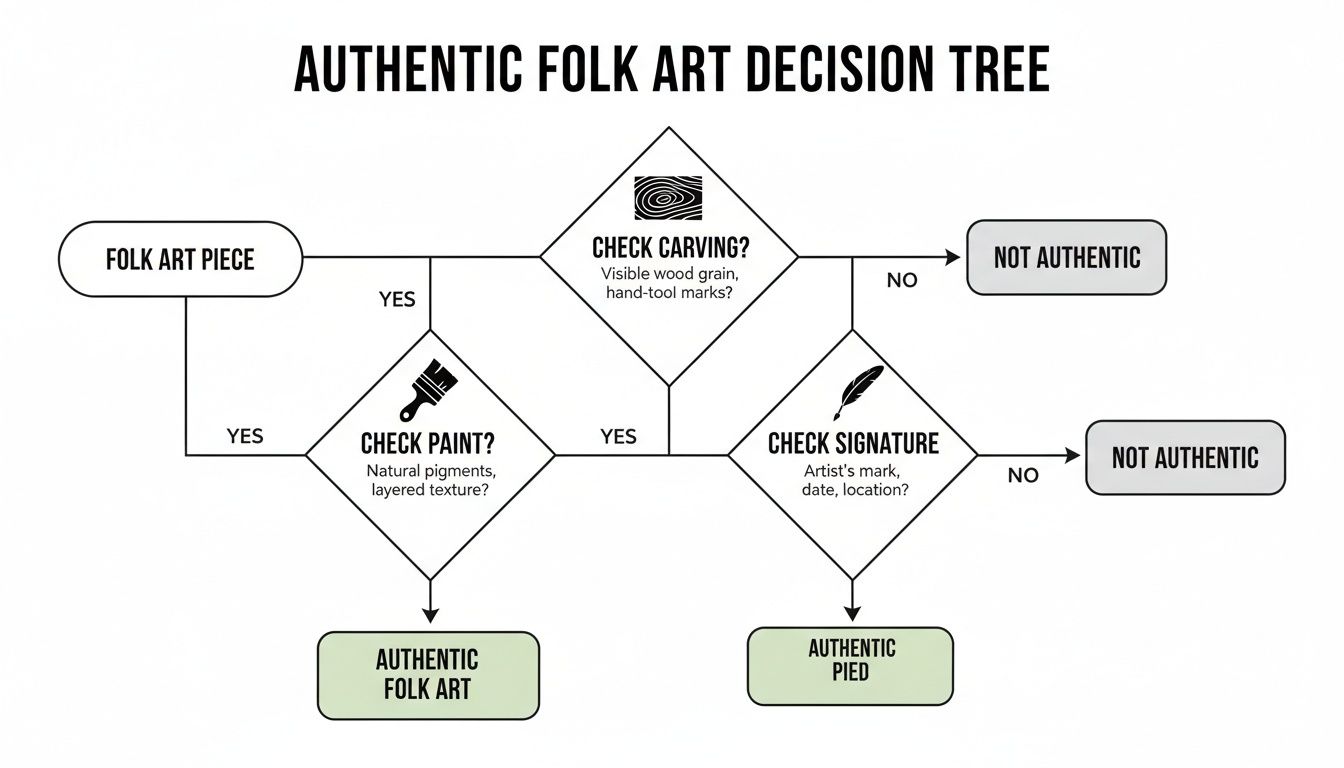
As the visual guide hints, the most compelling arrangements often feature pieces with a strong, clear history—where the carving style, the paintwork, and the signature all point to genuine craftsmanship. When you thoughtfully place these items in your home, you elevate them from simple decorations into meaningful works of art that truly enrich your home’s character.
Starting or expanding a collection of Carin Kry design pieces is a genuinely rewarding journey. What begins as a simple interest often blossoms into a meaningful connection with Swedish heritage. If you're just starting, the path is wonderfully straightforward. There’s no need to feel overwhelmed—the real secret is to start small and with a clear purpose.
A classic Dala horse is the perfect first piece. It's the quintessential symbol of this art form and serves as a fantastic anchor for everything that comes next. From there, you can start building around a theme that really speaks to you, which helps create a collection that feels cohesive and looks stunning on display.
Giving your collection a sense of direction is key. It helps you make deliberate choices rather than just acquiring pieces at random, and honestly, it makes the hunt for the next addition that much more exciting.
A few popular themes to consider are:
You can learn more about curating your own set by reading our beginner's guide to collecting Dala horses. This approach helps turn a hobby into a personal narrative told through beautiful objects.
For more experienced collectors, the real thrill often comes from sourcing rare or vintage items. This requires a completely different strategy, one that’s focused on historical significance and the condition of the piece. Assessing older Dala for authenticity and provenance becomes absolutely crucial.
Viewing your collection as an investment in a living artistic heritage adds a profound layer of meaning. Each piece supports the craftspeople and preserves the cultural and economic importance of this art form, especially in its home region of Dalarna.
Dalarna's folk art tradition is deeply woven into its identity, and it's thriving as tourism in the area continues to grow. The region stands out as Sweden's most visited non-metropolitan destination, attracting craft enthusiasts from all over the world. In fact, Dalarna recently saw a 3.7% growth in guest nights, outpacing the national average and marking its third straight year of increases. You can explore more about Dalarna's growing appeal in this OECD report.
Here are some of the most common questions we get about collecting Carin Kry design pieces. Whether you're wondering how to care for them or what makes one piece more valuable than another, getting these answers straight can give you the confidence you need to grow your collection.
One of the first things new collectors ask is about proper care. How do you clean these hand-painted wooden treasures without damaging them? The golden rule is simple: be gentle. A light dusting with a soft, dry cloth is usually all it takes to keep them looking their best.
If you run into a bit of stubborn grime, it’s okay to slightly dampen a cloth with water. But—and this is important—never use harsh chemical cleaners. They can strip the paint and damage the wood, destroying the very character that makes your piece so special. It’s also wise to keep them out of direct sunlight and away from extreme temperatures to prevent the colours from fading and the wood from cracking.
Another frequent topic is value. What exactly makes one piece more sought-after than another? It’s a fascinating mix of factors that creates a hierarchy for collectors.
At the end of the day, though, the most valuable piece is the one that speaks to you. A genuine Carin Kry design is more than an investment; it’s a piece of living history. It's a connection to a rich cultural tradition that brings warmth and storytelling into your home for years to come.
Discover your own piece of authentic Swedish heritage with Dalaart. Explore our curated collection of hand-carved folk art at https://dalaart.com.


.svg)


.png)


