February 13, 2026
When you see an end grain chopping board, you're looking at a true piece of kitchen craftsmanship. These boards are built from short blocks of wood, all stood on their end. This means the tough, fibrous grain faces upwards, creating a very unique cutting surface.
This special construction allows a knife blade to slip between the wood fibres, rather than slicing straight through them. It’s this clever design that makes the surface famously gentle on your knives and surprisingly durable.
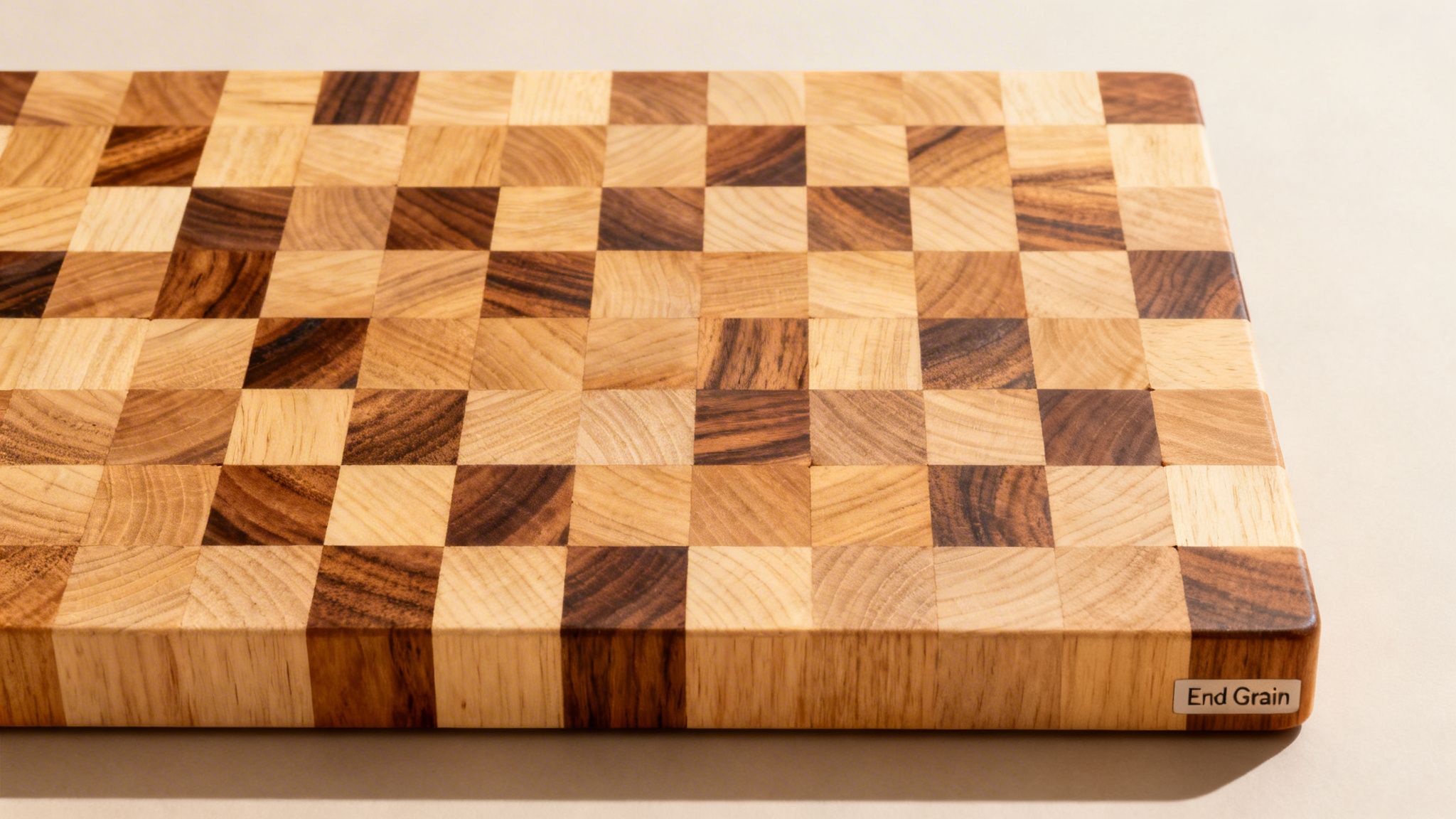
To really get what makes these boards special, you need to think about how wood is put together. Picture a tree trunk as a huge, tightly packed bundle of microscopic drinking straws. These are the wood fibres, and they all run vertically from the roots up to the leaves.
When a chopping board is made, how these "straws" are arranged makes all the difference. There are three ways to orient the grain, and each one behaves differently under a knife.
Most wooden chopping boards you’ll find are either "face grain" or "edge grain". With these, the wood is cut so the long sides of the fibres are exposed on the cutting surface. When you chop down, your knife is slicing across these fibres, almost like cutting through a piece of rope.
Over time, that constant cutting action dulls your knife and leaves behind permanent scratches and gouges on the board. This is where an end grain board completely changes the game.
An end grain chopping board is built so the ends of the wood fibres—the openings of our imaginary straws—point directly up at your knife. Instead of severing the fibres, the blade’s edge gently parts them, sinking in between them as you make a cut.
As soon as you lift the knife, the natural give in the wood allows these separated fibres to spring right back together. It’s like the board is "healing" the cut. This is the single most important idea behind end grain construction. The parting-and-closing action is what makes the surface so forgiving for a sharp blade.
Making a board this way is far more labour-intensive than making a standard one. It’s a multi-step process:
This complex process is exactly why end grain chopping boards are considered a premium product. They aren't just a simple plank of wood; they're meticulously engineered pieces of functional art. Understanding this core difference is the first step to seeing why they’re such a worthwhile investment for your kitchen.
Choosing an end grain chopping board is more than just an aesthetic upgrade for your kitchen; it’s a genuine investment in your entire culinary toolkit, especially your knives. The unique way the wood grain is oriented—vertically—isn't just for show. It creates a dynamic surface that actively preserves the razor-sharp edge of your blades, a benefit that truly sets it apart from any other type of board.
To get a better picture, think about what happens when you cut on a standard edge grain board. Your knife is essentially slamming into a solid wall of horizontal wood fibres, forcing its way through and slowly dulling the blade with every single slice.
An end grain surface is a completely different story. It behaves more like a dense brush. As your knife comes down, its edge slips gently between the vertical wood fibres. They part to allow the blade to pass through and then spring back together once the knife is lifted.
This incredible "self-healing" quality is the secret to a longer-lasting, sharper knife. Because the blade meets such little resistance, its delicate edge avoids the microscopic damage and rolling that eventually makes it feel dull.
The magic of this self-healing property doesn't stop at keeping your knives sharp. It also contributes directly to the board's own longevity and good looks. Those tiny incisions made by your knife are far less likely to become permanent scars.
While an edge grain board quickly collects a network of very visible cut marks, an end grain surface stays remarkably smooth. This means your board will look newer for much longer, holding onto its beautiful checkerboard pattern without the distracting web of scratches that plague lesser boards.
The self-healing nature of end grain wood isn’t just a feature; it’s a fundamental change in how a cutting surface interacts with a blade. It preserves your tools, protects its own surface, and provides a superior chopping experience with every use.
This same fibre-closing action also brings a significant hygienic advantage to the table. On a typical wooden or plastic board, knife grooves can turn into permanent microscopic trenches. These cuts trap moisture and tiny food particles, creating the perfect breeding ground for bacteria that can be tough to clean out.
Because the fibres of an end grain chopping board close back up after each cut, they help prevent bacteria from getting lodged deep within the wood. This simple action makes the surface less hospitable to microbial growth and much easier to sanitise properly. Of course, regular cleaning is still vital, but the board's very structure gives you a head start in maintaining a clean, safe food preparation area. You can find more details in our complete guide to end grain chopping boards and their care.
This superior performance is recognised by chefs and home cooks around the world. In the bustling kitchens of South East Asia, for instance, end grain chopping boards are the top choice for their durability and knife-friendly surface. Research has shown these boards can reduce knife dulling by up to 30% compared to edge grain alternatives—a key factor where 68% of consumers prioritise product lifespan. This preference has fuelled a 25% increase in e-commerce sales, reflecting a deep appreciation for quality that lasts. You can discover more insights about the cutting board market in South East Asia.
Ultimately, choosing an end grain board is about more than just having a beautiful piece of wood in your kitchen. It’s a practical decision that leads to:
It’s an intelligent upgrade that pays you back in performance, hygiene, and durability, making it a cornerstone of any serious cook's kitchen.
Choosing the right wood for your end grain chopping board is about striking a delicate balance between performance, good looks, and a long life. It’s not just about what matches your kitchen countertops; it’s about picking a material that can take a beating day in and day out, all while being food-safe and kind to your knives. Not all woods are up to the challenge.
The best choices are always hardwoods, especially those known for their durability and a dense, closed-grain structure. This is a crucial feature for kitchen hygiene. Woods with small pores are much less likely to trap food and moisture, which helps keep your board sanitary.
For an end grain board, you’ll want to stick with woods that have a proven track record. The most popular and reliable options are celebrated for their perfect mix of hardness, grain, and visual appeal.
Here are a few of the best woods to look out for:
As this diagram shows, the core benefits of an end grain board—like knife care and hygiene—are directly tied to choosing the right kind of wood.
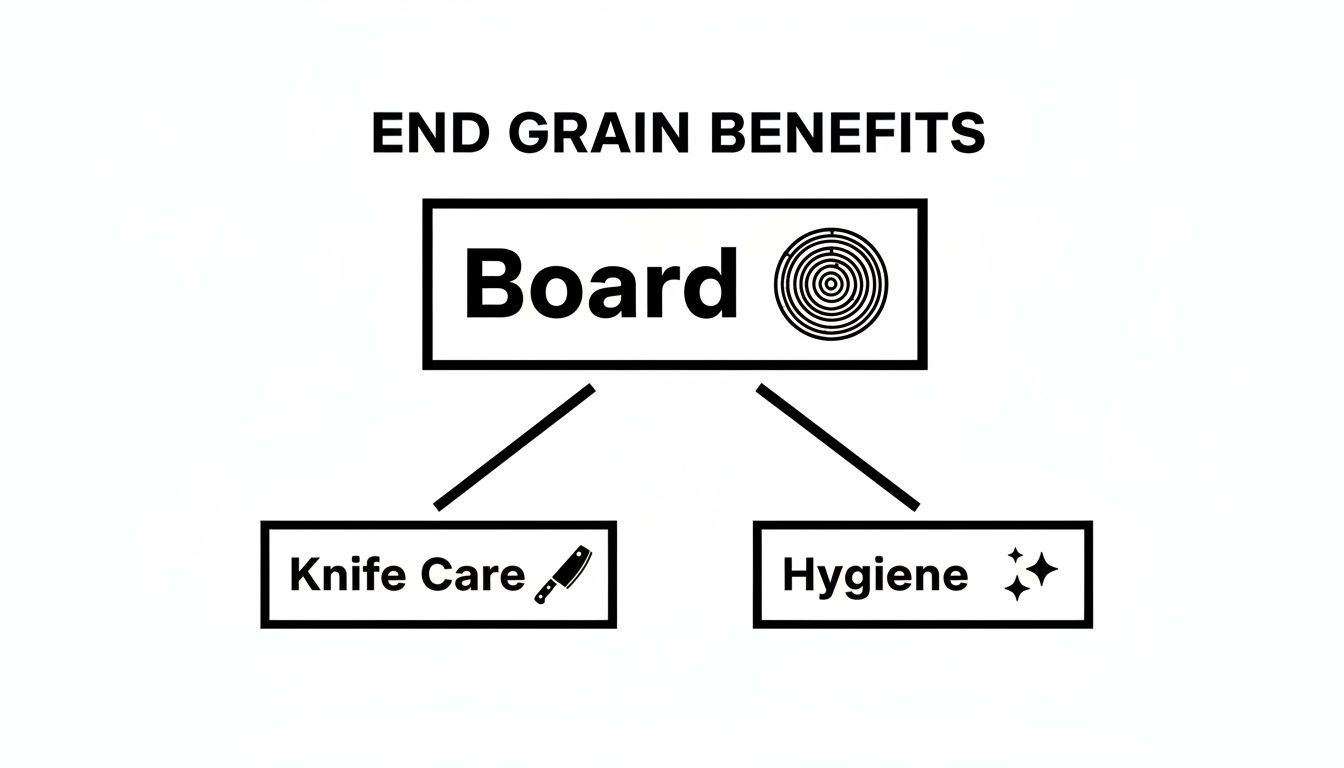
It’s clear that the board's biggest advantages come from its unique construction, and that’s only possible when you start with high-quality, appropriate wood species.
When you hear woodworkers talk about chopping boards, two terms pop up again and again: Janka hardness and grain type. Getting a handle on these will help you make a much smarter choice.
The Janka hardness rating is a standard way of measuring how well a wood resists dents and wear. It’s a great clue to its durability, but you don’t want something that’s too hard. An excessively hard wood can be tough on your knives, dulling them faster. Maple, Walnut, and Cherry are all in that "sweet spot"—hard enough to last, but soft enough to be kind to your blades.
Closed-grain versus open-grain is probably the single most important factor for hygiene. Closed-grain woods like Maple have a smooth, non-porous surface. On the other hand, open-grain woods like Red Oak have larger pores that can easily trap bacteria and are best avoided for cutting surfaces.
Beyond the big three, other woods like Teak have become popular, largely because of their high natural oil content. This makes Teak incredibly resistant to water and warping—a quality that has made it a favourite in many parts of the world.
For instance, the preference for end grain chopping boards in Southeast Asia is closely linked to their hygienic properties, which are essential in humid climates. Regional studies have found that end grain construction traps 99.9% less bacteria than plastic boards. The design also cuts down on moisture absorption by 25-35% compared to flat grain, preventing warping. This has led to widespread adoption, using abundant local Teak to create boards that far outlast common alternatives. You can find more details in the global kitchen chopping board market report.
Ultimately, the best wood for your board is a personal choice that balances these practical factors with your own style. And if you love seeing beautiful wood in your home, you might enjoy our guide on creating stunning wood wall art.
An end grain chopping board is a true kitchen workhorse, built to last for generations. But like any quality tool, it needs a bit of looking after to stay in peak condition. Think of it less as a chore and more as a simple ritual that protects your investment, ensuring the wood remains strong, sanitary, and beautiful for decades of daily use.
Proper maintenance really boils down to one central idea: keeping the wood hydrated. When the wood fibres dry out, they shrink, which can lead to cracks or splits in the board. A well-oiled board is a happy board, one that repels water and resists stains with ease.
Before you even think about chopping your first onion on it, your new end grain board needs to be seasoned. This first step creates a protective barrier that stops moisture from soaking into the wood—the number one cause of warping and cracking. It's the foundation for all future care.
For this, you’ll want a generous amount of food-grade mineral oil. This type of oil is perfect because it's non-toxic, has no smell, and won't go rancid like common cooking oils (such as olive or vegetable oil).
Daily care for your end grain chopping board is refreshingly straightforward. The goal is to clean it effectively without stripping away the protective oils you’ve worked so hard to build up. This simple routine will keep it hygienic and ready for your next culinary adventure.
After each use, just wash the board with a soft sponge, warm water, and a small amount of mild dish soap. Once it's clean, give it a thorough rinse.
The most crucial part of daily cleaning is drying. Never let your board drip-dry flat on the counter. Always wipe it down with a clean towel and then stand it on its edge so air can circulate freely around all sides. This simple habit prevents water from pooling and is your best defence against warping.
About once a month, or whenever the wood starts to look a bit dry or lacklustre, it's time for a deep conditioning treatment. This replenishes the moisture deep within the wood and adds an extra layer of protection. For this, a board cream or conditioner—often a mix of mineral oil and beeswax—is ideal.
The beeswax is great because it fills in any minor scratches on the surface and provides a more robust water-resistant barrier than oil alone. Simply apply the conditioner with a clean cloth, let it sit for a few hours, and then buff off any excess. This quick monthly step will keep your board looking rich and lustrous.
To make things easy, here’s a quick guide to keeping your board in pristine shape for a lifetime. If you enjoy working with wood and appreciate functional design, you might also find some inspiration in our guide to building a DIY wine rack.
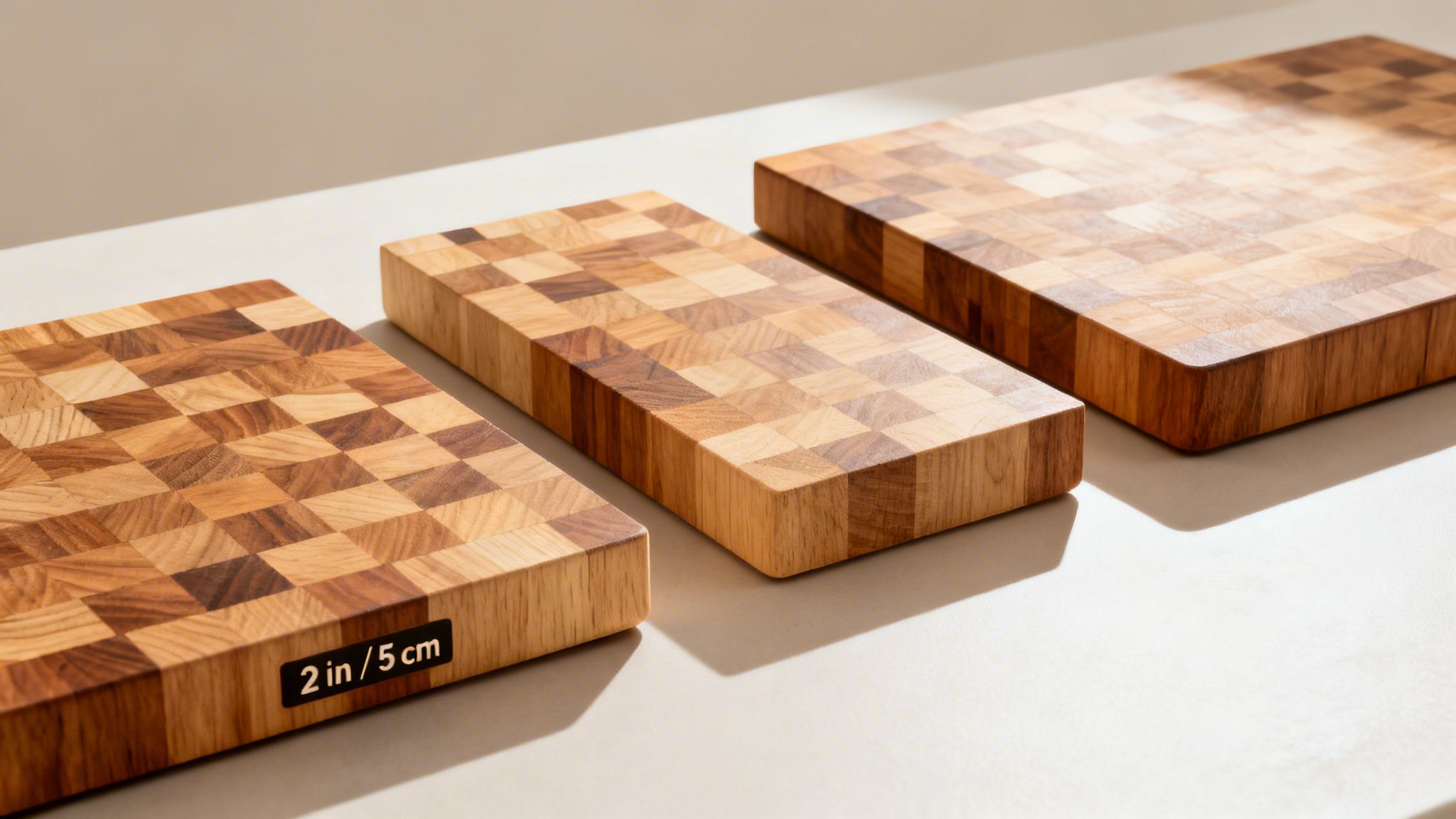
Choosing the perfect end grain chopping board goes way beyond just admiring its stunning checkerboard pattern. It’s about finding a true partner for your kitchen. The right size and thickness will fit your cooking habits like a glove, making your prep work smoother and fitting neatly into your space. Get it wrong, and a board that’s too small will feel cramped and messy, while one that's too big will just get in the way.
The trick is to match the board to how you actually cook. Be honest with yourself. Are you mostly doing small jobs, like mincing a single clove of garlic or slicing a lime for a G&T? Or are you the type to break down a whole chicken and prep mountains of veg for a big family meal?
Your daily kitchen routine is the single best guide for picking the right dimensions. A smaller board, something around 30cm x 20cm, is perfect for those quick, little tasks. It’s easy to grab for slicing a bit of cheese or chopping herbs, and it cleans up in a flash.
For the everyday grind of meal prep, a medium-sized board is a much better bet. Think about something in the 45cm x 30cm range. This gives you enough real estate to comfortably chop several ingredients without everything spilling onto the worktop. It keeps your flow organised and efficient.
The most serious home chefs often dedicate counter space to a large, heavy butcher block. These beasts, often 60cm x 45cm or even bigger, become a permanent, stable surface for heavy-duty work like kneading dough or carving a Sunday roast.
While size is all about your workspace, thickness is what determines the board's stability, durability, and ultimately, how long it will last. For a proper end grain chopping board, you really want to look for a thickness of at least 5cm (2 inches). This heft isn't just for show; it gives you critical advantages you simply won't get from a thinner board.
Here’s why that extra weight and substance truly matter:
When you get the size and thickness right, your board transforms from a simple kitchen accessory into an essential culinary tool you'll rely on for years. By thinking about how you cook and prioritising a solid, substantial build, you'll end up with a board that feels like it was made just for you.
Choosing a high-quality end grain chopping board isn't just an upgrade for your kitchen; it’s a conscious move towards more thoughtful, sustainable living. In a world overflowing with disposable gadgets, a well-made wooden board is a rare thing: an item built to last not just for years, but potentially for a lifetime. That longevity is the very heart of its eco-friendly character.
Unlike plastic boards that get scarred, stained, and inevitably tossed in the bin, a wooden board is renewable and, crucially, repairable. Its long lifespan drastically cuts down on waste, breaking the endless cycle of buying and replacing. When you invest in something made for permanence, you’re choosing quality over quick convenience and durability over disposability.
Of course, a board's journey to sustainability starts long before it lands on your countertop. Its real environmental footprint is tied to where the wood comes from and who turns it into a board. This is why it’s so important to look for wood sourced from responsibly managed forests.
Certifications are your best guide here. Keep an eye out for credentials like:
When you see these labels, you know you’re supporting practices that protect biodiversity, fight deforestation, and uphold the rights of local communities and workers. You’re not just buying a board; you’re investing in a healthier planet.
A truly sustainable product is one that respects its origins, serves its purpose for a long time, and can be returned to the earth at the end of its life. An end grain board made from certified wood perfectly embodies this principle.
Your choice has a ripple effect. Supporting artisans who put sustainable practices first adds another layer of ethical value to your purchase. The benefits are clear: end grain boards see 28% higher repeat purchases simply because a well-cared-for board can easily last more than 10 years. On the sourcing side, sustainability stats show that using local woods can slash carbon footprints by 40% compared to imports, a fact that resonates with the growing number of people seeking eco-conscious products.
This philosophy of enduring craftsmanship is shared by artisans worldwide, from woodworkers in Southeast Asia to the creators of authentic Swedish folk art at Dalaart, who use recycled wood for their pieces. You can learn more about what’s driving these consumer trends in sustainable kitchenware.
Ultimately, by making an informed choice, you’re doing more than just buying a chopping board. You’re championing a system that values quality craftsmanship, responsible forestry, and a less wasteful way of living.
Even after seeing all the benefits, you might still have a few lingering questions about what it’s actually like to own an end grain chopping board. It’s completely normal. Getting clear, straightforward answers will help you feel confident that you’re making a brilliant choice for your kitchen.
Let’s tackle some of the most common questions we hear, covering everything from daily care to food safety.
It’s a common misconception that they’re difficult to care for. The truth is, their maintenance isn't harder—it’s just different from what you might be used to with plastic or edge grain boards.
The single most important thing is regular oiling. Don't worry, it's not a chore! A quick conditioning with food-grade mineral oil once a month takes just a few minutes. This simple step is the secret to preventing cracks and ensuring your board becomes a lifelong kitchen companion.
Day-to-day cleaning is exactly the same as any wooden board: a little mild soap, warm water, and a proper dry. So, they aren't more difficult; they just have a crucial need for hydration that other boards don't.
Absolutely, as long as you clean it properly afterwards. The beautiful hardwoods used in end grain chopping boards, like maple and walnut, come with their own natural antimicrobial properties that help keep bacteria at bay.
The real magic lies in the self-healing nature of the wood fibres. When your knife makes a cut, the fibres part and then close back up. This helps stop bacteria from getting trapped deep inside, a problem you often see with heavily scarred plastic boards.
The golden rule is simple: wash the board thoroughly with hot, soapy water right after it’s been in contact with raw meat. Then, stand it on its edge to let it air dry completely.
That higher price tag is a direct reflection of the incredible amount of skilled, hands-on work that goes into making one. This isn’t just about cutting a slab of wood to size; it’s a far more intricate and labour-intensive craft.
Creating an end grain board is a meticulous process:
This method demands more wood, a higher level of craftsmanship, and a whole lot more time. What you're paying for is a superior product, engineered to perform beautifully and last for generations to come.
For stubborn stains or lingering smells from things like garlic and onions, nature provides the best solution. All you need is a bit of coarse salt and a lemon.
Just sprinkle a generous amount of salt over the problem area and use half a lemon to scrub it right into the wood. The salt acts as a gentle abrasive to lift the stain, while the acidic lemon juice works wonders to neutralise any odours. If you have a really deep-set stain, a light sanding followed by a fresh coat of oil will bring the surface back to new.
At Dalaart, we believe in craftsmanship that lasts a lifetime, blending timeless tradition with everyday function. Explore our collection of authentic, hand-crafted Swedish treasures by visiting https://dalaart.com.


.svg)


.png)


