January 18, 2026
Think of metal artwork for your wall as more than just a picture hanging in a frame. It's a living piece of design, something that plays with texture, light, and dimension to completely reshape the feel of a room. Unlike a flat canvas print, metal art actually interacts with its surroundings, creating a visual experience that feels both incredibly modern and surprisingly timeless.
Picture a plain, boring wall. Now imagine that same wall becoming the focal point of the room, a true statement of your personal style. That's exactly what metal artwork can do. It stops being a simple decorative afterthought and becomes an architectural feature in its own right, setting the entire mood and character of your space.
This guide is all about exploring how metal’s special qualities—its unique textures, the way it reflects light, and its sheer durability—can elevate any home. We're going to look past the idea of art as just an accessory and start seeing it as a core part of your home's story.
So what really sets metal artwork apart from other materials, like wood or textiles? It all comes down to its incredible versatility and, most importantly, how it plays with light.
Think about the clean, sleek lines of brushed aluminium. It can bring a cool, sophisticated energy to a minimalist living room. Then contrast that with the rustic warmth of hammered copper, which adds a sense of history and handcrafted charm, making it perfect for a more traditional or eclectic home.
Metal art doesn't just hang on a wall; it performs. The way a polished steel surface catches the morning sun or a burnished brass piece glows in the soft evening lamplight adds a dynamic, ever-changing dimension to your decor.
This unique quality makes metal a powerful tool for interior designers and homeowners. It can trick the eye into making a small room feel larger, bring a bit of brightness to a dark corner, or simply add a captivating point of interest to an otherwise overlooked wall.
This is just the beginning of our deep dive into the world of metal artwork for wall decor. We’ll lay out a clear roadmap for your journey, covering everything you need to know, from picking the right materials and mastering placement to making sure your chosen piece looks incredible for years to come.
We’ll explore:
By the time we're done, you'll have all the confidence you need to choose and display a piece of metal art that truly feels like you.
Choosing the right metal artwork for a wall is a bit like casting an actor for the starring role in your home’s design story. Each metal has its own distinct personality, bringing a unique energy to the space. Getting to know these characteristics is the first step towards creating a look that feels truly intentional and impactful.
Think of lightweight aluminium as the versatile character actor of the art world. It’s wonderfully adaptable and can be shaped into large, dramatic pieces without putting a heavy strain on your walls. This makes it perfect for those oversized abstract sculptures or intricate, laser-cut panels that really command attention.
Stainless steel, on the other hand, is the sleek modernist. Much like a polished skyscraper, it gives off a cool, industrial vibe that’s incredibly durable and a breeze to maintain. Its reflective surface can instantly brighten a room and pairs beautifully with minimalist or contemporary interiors where clean lines are king.
If you’re after warmth and a sense of history, copper and brass are your go-to choices. These metals have a living finish, which means they develop a rich, beautiful patina over time. This natural ageing process tells a story, much like a well-loved vintage leather chair, adding a depth and character that evolves right alongside your home.
This concept map shows how a metal's style is born from its inherent texture, the way it plays with light, and its impressive durability.
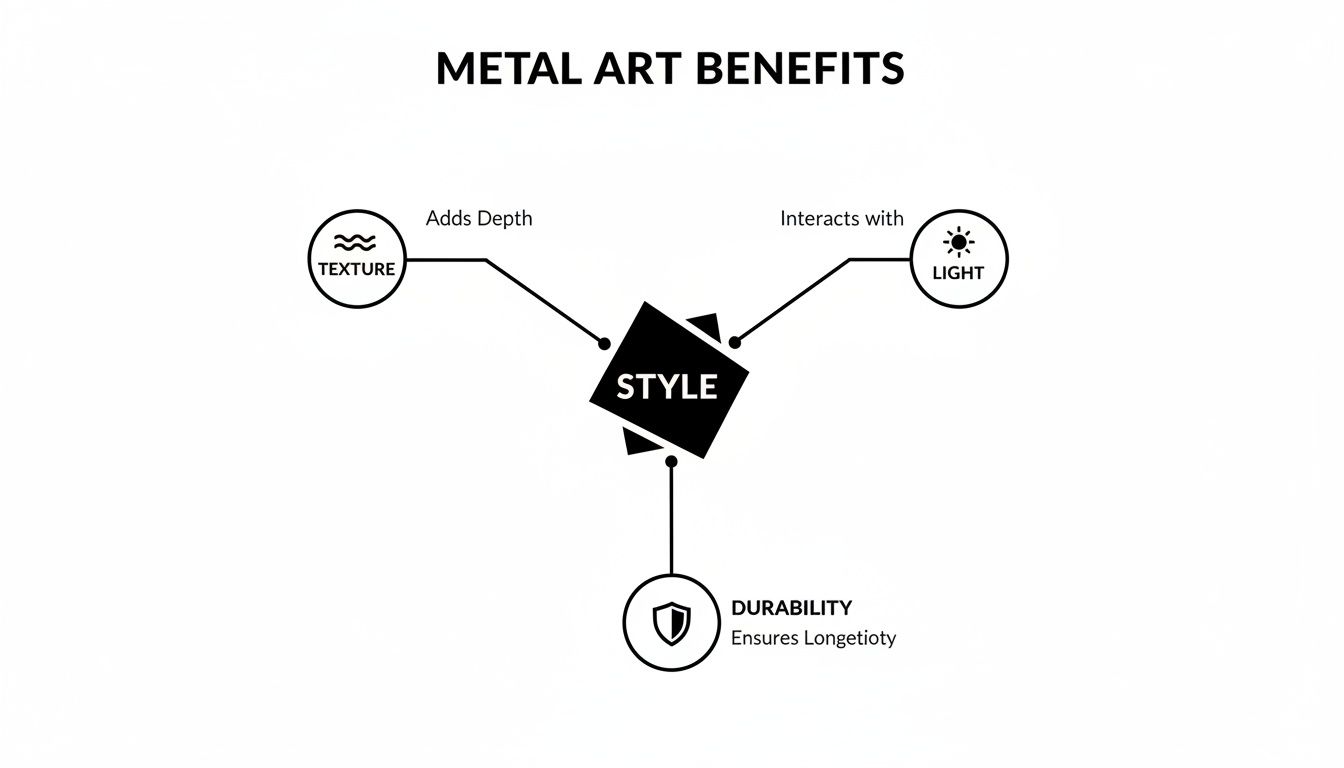
As the diagram illustrates, the final style of a piece is the result of these three core attributes working in harmony to create a cohesive and dynamic visual.
The material you choose has a direct say in how the artwork interacts with your existing decor. A bold, geometric stainless steel piece can amplify a minimalist room’s crispness, while the organic, flowing forms of a copper sculpture might soften a contemporary space and add a welcome touch of warmth.
The global appeal of metal art is certainly on the rise, especially in regions seeing a rapid design evolution. Take Southeast Asia's wall art scene—it’s booming amidst fast-paced urbanisation. The Asia Pacific Wall Art Market report forecasts that the market will more than double in the coming years, with metal artworks recently capturing 22% of the regional market share thanks to their resilience in humid climates.
The real beauty of metal artwork for a wall lies in its ability to either blend in seamlessly or create a powerful, intentional contrast. It's not just about filling a space; it's about defining it.
To get you started, consider these popular pairings:
Ultimately, the right material won’t just match your style—it will elevate it, turning a simple wall into a testament to your personal taste.
Alright, let's move from the 'what' to the 'how'. Picking out the right metal artwork for your wall isn't just about finding something you like; it's about making it feel like it truly belongs in your home. The secret lies in a careful balance of three key things: scale, finish, and placement. Get these right, and the piece won’t just be hanging on your wall—it'll be a part of the room's soul.
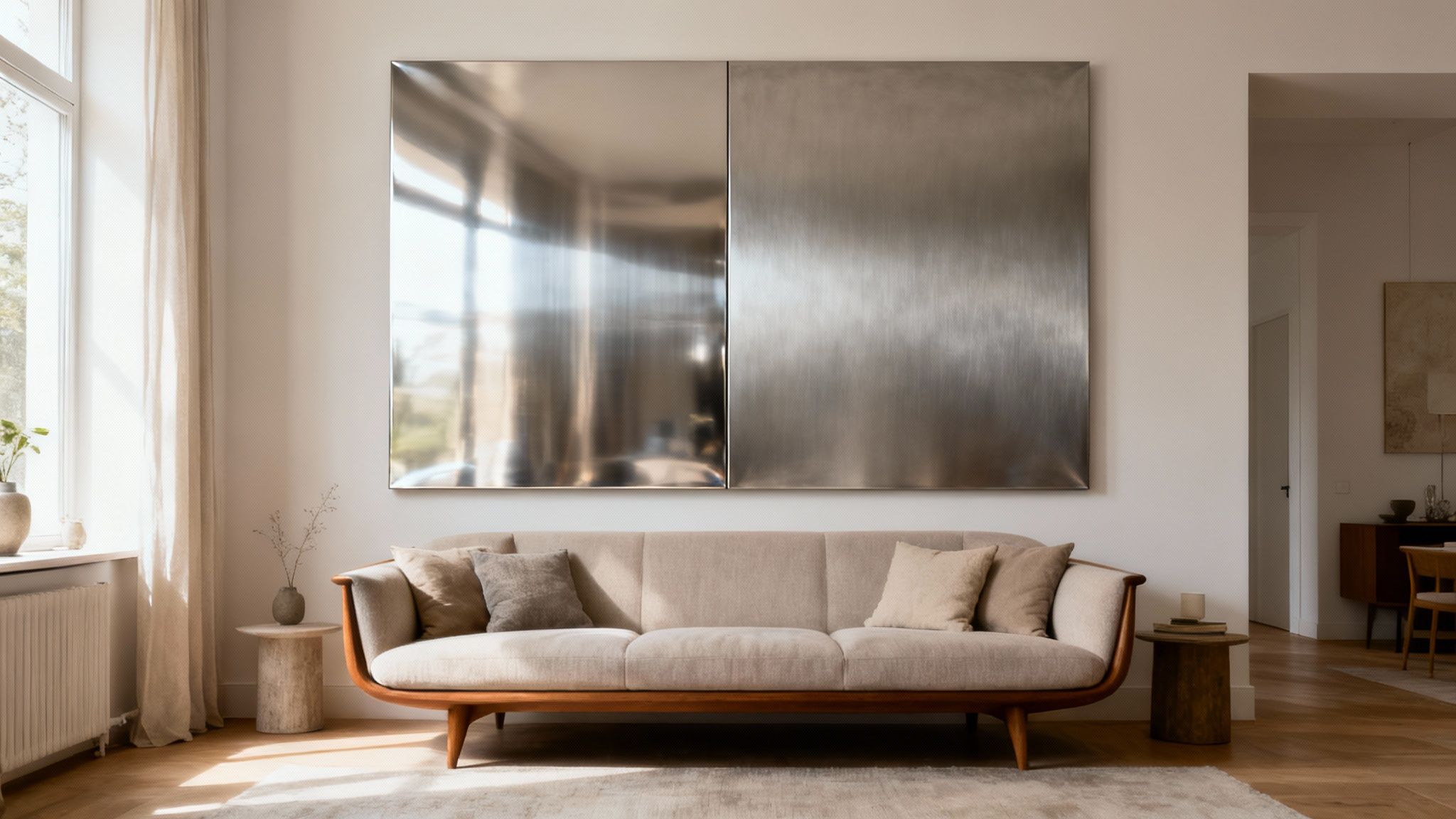
Think of these three elements as the pillars supporting your design vision. Let's break down how to get each one just right.
The size of your metal art is probably the most important decision you'll make. A piece that's too small can look lost and insignificant, almost like an afterthought. Go too big, and it can completely overpower the room, making it feel cramped and unbalanced. The goal is harmony.
A handy trick used by interior designers is the two-thirds principle. It's simple: your art should take up about two-thirds of the empty wall space above a piece of furniture like a sofa, console, or headboard. So, if your sofa is 210 cm wide, you'll want to look for artwork that falls somewhere between 140 cm and 158 cm wide.
This little guideline is brilliant because it stops the art from feeling disconnected. It ensures the piece feels anchored and perfectly integrated with its surroundings.
Once you've got the scale sorted, it's time to think about the finish. This is where you decide how your metal artwork will play with the light in the room and what kind of mood it will set.
A highly polished, reflective surface—like chrome or sleek stainless steel—acts almost like another window. It bounces light around, making a small or dim room feel brighter and more open. This creates a really dynamic effect, as the art's appearance will subtly shift and shimmer as the light changes throughout the day.
On the other hand, a matte or brushed finish offers a more understated, sophisticated vibe. These surfaces absorb light instead of reflecting it, creating a softer, more diffused look. This is perfect for spaces where you want to add texture and depth without any glare, like a cosy reading nook or a calm bedroom.
Choosing a finish is like choosing the tone of voice for your room. A polished piece speaks with confidence and energy, while a matte finish communicates a sense of calm and quiet elegance.
Finally, where is this piece going to live? Every room has a different job and a different feel, and your art should complement that. A smart placement strategy can elevate a great piece into the perfect one for that specific space.
Here are a few ideas to get you started:
By thoughtfully considering scale, finish, and placement, you can confidently choose metal artwork for a wall that doesn't just look incredible but truly enhances the way you live in your home.
Choosing between metal and wood for your walls is a bit like picking a soundtrack for your home. Neither is inherently better; they just create entirely different atmospheres. Each material speaks its own visual language, setting the tone for the entire room.
Metal artwork for a wall often projects a sleek, modern, and sometimes industrial energy. It’s a language of clean lines, reflective surfaces, and a cool, collected feel that can make a space feel crisp and contemporary.
In contrast, wood brings an undeniable sense of warmth, organic texture, and a direct connection to the natural world. Picture a hand-carved piece with its grain on full display—it feels grounded, traditional, and full of earthy character. To really dig into this, you might want to explore the unique appeal of wood wall art in our detailed guide.
When it comes to sheer resilience, metal generally has the upper hand. Metals like stainless steel and aluminium are resistant to fading, warping, and pests, making them a lasting investment, especially in homes with fluctuating temperatures or humidity.
Wood is also durable, but it can be more sensitive to humidity, temperature swings, and the occasional scratch. The beautiful thing about wood, though, is its ability to be refinished. This gives it a different kind of longevity, allowing it to be restored or even completely restyled down the line.
The decision between metal and wood is a choice between two distinct personalities for your home. Metal offers a sleek, modern pulse, while wood provides a warm, natural heartbeat. The best choice is the one that harmonises with the story you want your home to tell.
How much care your art needs really depends on its finish. Powder-coated or sealed metal art is incredibly low-maintenance, usually needing just a light dusting with a soft, dry cloth to keep it looking pristine.
Polished wood might ask for an occasional waxing or oiling to maintain its lustre and protect it from drying out. Unfinished or rustic wood pieces, on the other hand, need very little upkeep but are more vulnerable to stains and moisture.
The global appetite for distinct, handcrafted decor is growing, especially through online marketplaces. The handicrafts market in Southeast Asia, for instance, which includes unique metal artworks, has seen explosive growth. During the COVID-19 pandemic, online handicraft sales in the region surged by an impressive 50%, highlighting a huge new appreciation for intricate metal crafts. You can discover more insights about the booming Asia-Pacific handicrafts market.
This trend shows a clear demand for materials that offer both beauty and durability—qualities you'll find in both metal and wood. Ultimately, the choice comes down to the aesthetic voice you want to amplify in your living space.
You’ve found the perfect piece of metal art, and now it’s time for the final, crucial step: getting it on the wall securely so it can be enjoyed for years to come. Think of this as the last part of the creative process. How you hang and care for your art is just as important as choosing it in the first place.
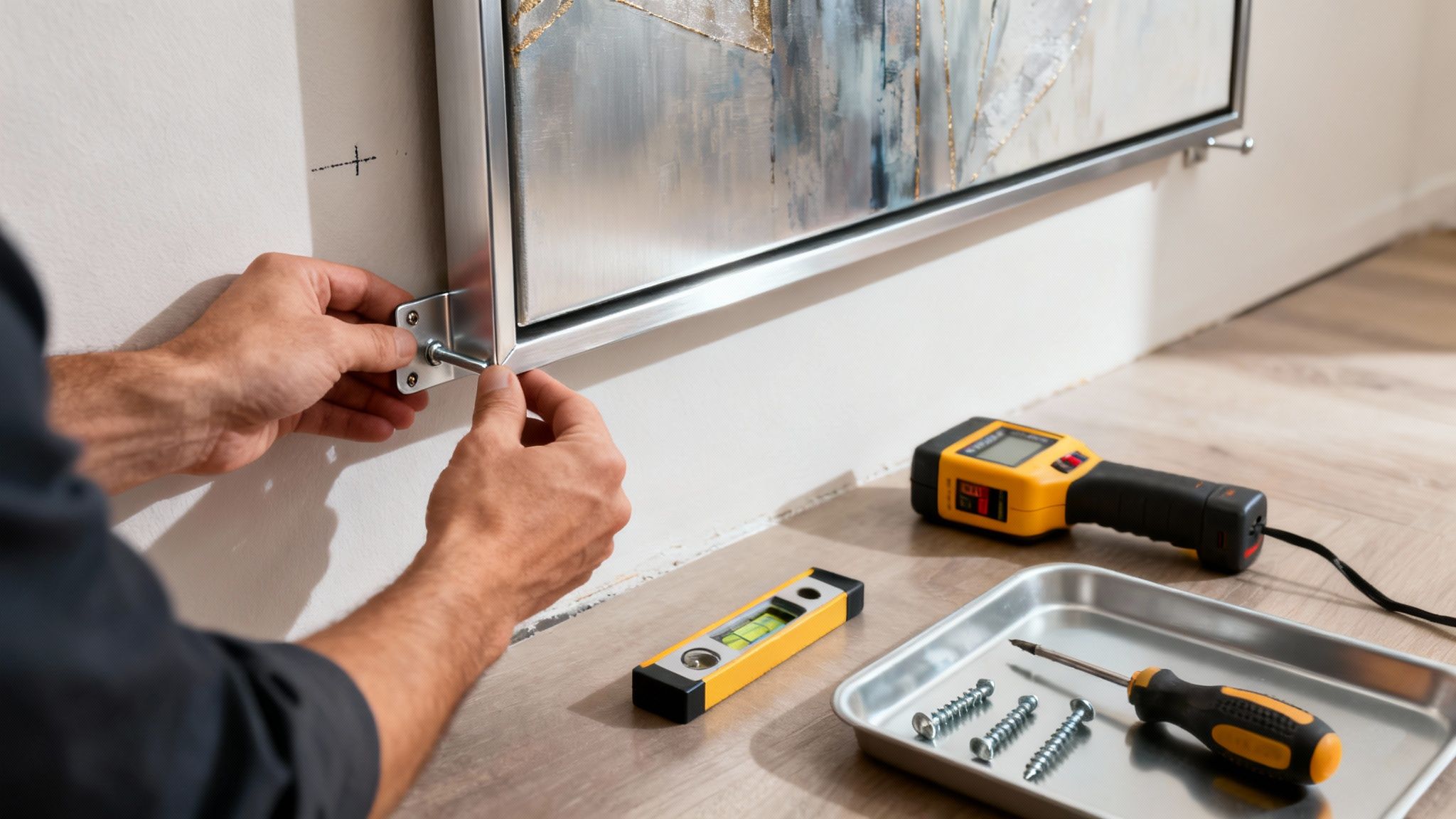
Hanging your art correctly, especially a heavier piece, is all about safety and getting the aesthetics just right. A secure installation prevents any unfortunate accidents and makes sure the piece hangs exactly as the artist intended, looking its absolute best.
Before you even think about making a hole in the wall, it’s worth gathering a few essential tools. You don’t need a professional workshop, just the right gear to make the job smooth and secure.
Installing metal art isn't just about hammering a nail into the wall. It’s about respecting the weight of the piece and the structure of your home. Taking that extra minute to find a stud or use the correct anchor is the single most important thing you can do to protect your investment and your walls.
Once your art is proudly and securely on display, a little bit of routine care is all it takes to keep it looking fantastic. The great news is that most metal art is wonderfully low-maintenance. The only trick is using the right technique for the specific metal.
For sleek, modern metals like stainless steel and aluminium, a gentle dusting is usually all that’s required. Grab a soft, dry microfibre cloth to wipe away dust and fingerprints without leaving any scratches. It’s best to steer clear of harsh chemical cleaners, as they can easily damage the protective finishes.
Metals like copper and brass give you a choice. If you adore that warm, brilliant shine, you can keep it looking new by polishing it occasionally with a cleaner made specifically for that metal. On the other hand, many people absolutely love the rich, natural patina these metals develop over time. To encourage this beautiful ageing process, just let them be. A gentle dusting is all they need as you let the air work its natural magic.
As you get closer to choosing the perfect piece of metal artwork, a few last-minute questions often pop up. It's completely normal. Let's walk through some of the most common queries to make sure you feel confident and excited about your decision.
After all, bringing new decor into your home is a big deal, and having all the facts helps ensure you’ll love the result for years to come.
Absolutely, but the secret lies in choosing the right material for the job. For rooms with a lot of moisture, like kitchens and bathrooms, you’ll want to go with metals that are naturally resistant to rust. Think stainless steel or powder-coated aluminium.
These materials are designed to handle humidity and the occasional splash without a problem, keeping their shine and finish intact. It's probably best to steer clear of raw iron or untreated steel in these spaces, as they’re much more likely to rust over time. A little bit of good ventilation will also go a long way in preserving any artwork in these rooms.
One of the easiest ways to create a beautifully cohesive look is to match the finish of your metal art to the hardware you already have in the room. Take a look at your cabinet handles, light fixtures, or even the legs on your furniture.
For instance, warm-toned metals like brass or copper feel right at home with rich wood furniture and earthy colour palettes. On the other hand, cooler metals like chrome or brushed nickel are a perfect fit for modern, minimalist spaces with a monochrome scheme. Don’t feel like you need an exact match, though—sometimes, a deliberate contrast between metals can create a really dynamic and interesting look.
Think of matching metal art not as finding an identical twin, but as finding a complementary partner. The goal is to create a visual conversation between the new piece and your existing decor, where each element highlights the best in the other.
If you have more specific questions about pairing art with your decor, you can always find more answers by exploring our comprehensive FAQ page for additional insights.
While a bigger piece certainly requires a bit more planning, hanging it securely is very manageable if you take the right steps. The most important thing you can do is use a stud finder to locate the structural supports in your wall. Anchoring your screws directly into those studs gives you the strongest hold possible.
If there isn’t a stud exactly where you need one, make sure to use heavy-duty wall anchors that are specifically rated to support the weight of your artwork. Always use a level to get it perfectly straight, and for heavier pieces, it's always a good idea to have a second person help lift and position it.
Yes, definitely. Sustainability has become a real focus for many artists and decor brands. You can find stunning pieces crafted from recycled metals, like reclaimed steel or aluminium. This simple choice dramatically reduces the environmental impact that comes from mining and processing new materials.
On top of that, some artists are very conscious about using low-VOC (volatile organic compound) paints and finishes, which is much better for your home’s air quality. Choosing sustainable metal artwork for a wall is a wonderful way to make sure your decor not only looks fantastic but also aligns with your personal values.
At Dalaart, we celebrate the beauty of handcrafted tradition. While exploring the modern appeal of metal, consider the timeless warmth of our authentic, hand-carved Dala horses, crafted from sustainable wood in Sweden. Discover a piece of Scandinavian heritage for your home at https://dalaart.com.


.svg)


.png)


