February 23, 2026
That first step into a Swedish grocery store is more than just a quick errand—it's your first real taste of the local lifestyle. Forget the sprawling, chaotic hypermarkets you might be used to. A typical Swedish grocery store is an exercise in calm efficiency, sustainability, and quality over quantity. It’s your cultural roadmap to understanding how Swedes really eat, live, and think.

Picture clean, perfectly organised aisles where every single product has its place. The atmosphere is quiet and methodical, a world away from the sensory overload you find in large stores elsewhere. This sense of order isn't an accident; it's a direct reflection of Swedish culture itself.
As soon as you walk in, you’ll notice the emphasis on fresh, seasonal produce. The selection might feel smaller, but it’s been intentionally curated to highlight what’s best right now, whether it's sweet summer berries or hearty autumn root vegetables.
Most Swedish supermarkets are designed for straightforward, stress-free navigation. Big chains like ICA and Coop have different business models, but they share a common philosophy of simplicity and function. You'll find clear signs and logical product groupings that make finding what you need an easy, pleasant experience.
A few key areas really define the Swedish grocery trip:
This focus on quality and mindfulness goes beyond the food. It's about creating a pleasant, efficient environment where shopping is a task done well, not a chore to be rushed through.
This first visit is the perfect chance to notice some of the subtle cultural norms. You’ll see nearly everyone bringing their own bags—a standard practice here long before it became a global trend. The checkout is swift and quiet, and the expectation is that you’ll pack your own groceries quickly. If you're exploring the capital, our guide to the Stockholm metro map can be a great help for locating stores across the city.
Ultimately, your first time in a Swedish grocery store is an introduction to the core values of simplicity and thoughtful consumption. It turns a simple errand into a genuinely insightful cultural discovery.
To really get a feel for the rhythm of a Swedish grocery store, it helps to know the big names that shape how everyone shops. While walking into any of them feels pretty similar—clean, organised, and efficient—the philosophies behind the major chains are surprisingly different, influencing everything from the store’s layout to what you’ll find on the shelves.
The Swedish grocery scene is really run by a handful of key players, and each has its own distinct personality. It’s better to think of them not just as places to buy milk, but as different community hubs with unique ways of doing things. This healthy competition has created a market that's both robust and incredibly resilient.
The two undisputed titans of the industry are ICA and Coop, but their foundations couldn't be more different. ICA runs on an independent franchise model, which basically means each store owner has a huge amount of freedom. This is why a giant ICA Maxi in a bustling city can feel a world away from a tiny ICA Nära in a quiet village; each one can tailor its stock to what the locals actually want.
Coop, on the other hand, is a cooperative owned by its members—the shoppers themselves. This member-first structure often means a heavy focus on sustainability, ethical sourcing, and community values. Their dedication to ekologisk (organic) products is a massive part of their identity and really clicks with Swedes who care about the environment.
These two approaches—one that champions local entrepreneurs and another built on collective ownership—are the twin engines powering the entire Swedish grocery sector. Both compete intensely with loyalty programmes and weekly discounts, shaping the shopping habits of millions.
It's not just a two-horse race, though. Other stores like Axfood's Willys and Hemköp, along with the budget-friendly German chain Lidl, keep the competition fierce. This whole dynamic marketplace is a huge slice of Sweden's economy.
In fact, the Swedish supermarket and grocery industry is a powerhouse, projected to have a market size of €32.5 billion by 2026, spread across thousands of individual businesses. The sector has proven its strength time and again, weathering pressures like "shrinkflation"—where you get less product for the same price—by using clever discounts to keep shoppers coming back. You can dive into deeper insights into the Swedish grocery market to see the economic forces at play.
Understanding who these players are and the economic world they live in turns a simple shopping trip into something more. You start to get a much richer appreciation for what's on the shelves, why it costs what it does, and how your choice of store connects you to a much larger story about Swedish culture and its economy.
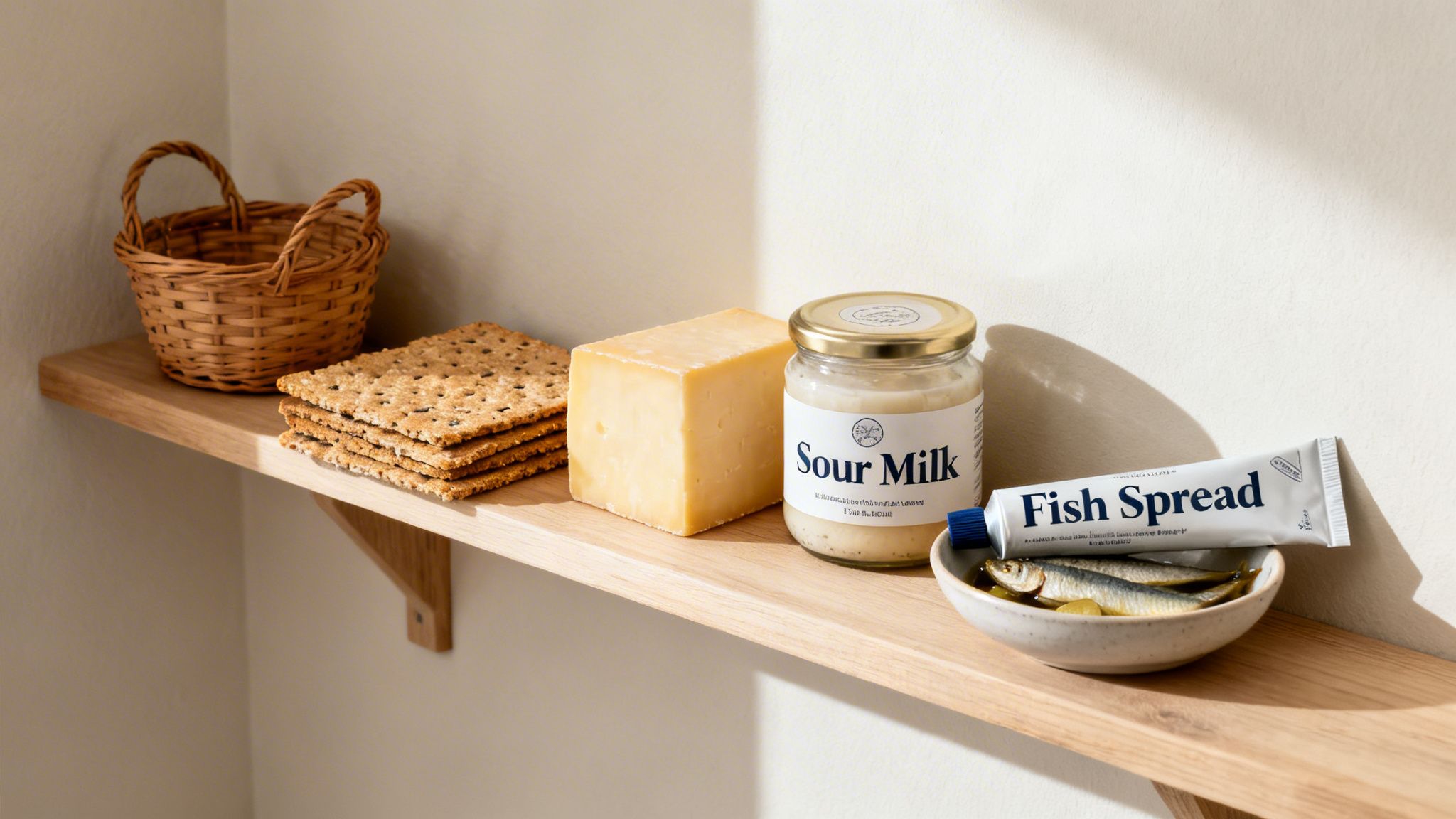
Alright, basket in hand? Stepping into a Swedish grocery store isn't just about ticking items off a list; it's a bit of a cultural deep dive. Every aisle has something new to show you, turning a simple shopping trip into a fun lesson in Swedish food.
Let’s start in the dairy section, because it’s truly impressive. We’re not talking about a little cooler in the corner—this is often an entire wall of products. This is where you'll meet filmjölk, a cultured milk with a tangy, slightly sour taste that’s a breakfast must-have for many Swedes. Think of it as a drinkable, less-sweet yoghurt, perfect over muesli or with a few berries.
And the cheese! You'll find a fantastic selection of local hard cheeses. Be sure to look for Västerbottensost, which has a sharp, complex flavour, or the milder Prästost. These are staples on any celebratory food platter and are far more than just sandwich fillers.
Next, make your way to the bakery aisle, the heart and soul of Swedish comfort food. The real star here is knäckebröd, or crispbread. If you're only familiar with thin, bland crackers, you're in for a treat. Swedish knäckebröd comes in all shapes and sizes, from thick, hearty rye wheels to delicate, seeded wafers. It's the perfect vehicle for cheese, pâté, or a bit of smoked salmon.
This is also your one-stop-shop for fika, the beloved Swedish coffee break. While many Swedes are avid home bakers, the stores have you covered with classics like kanelbullar (cinnamon buns) and slices of prinsesstårta (princess cake), giving you an instant taste of this wonderful tradition.
No tour of a Swedish grocery store would be complete without stopping by the seafood coolers. Here, you’ll find sill (pickled herring) in what seems like a million different marinades—dill, mustard, onion, and more. It’s an absolute non-negotiable for holiday meals, especially at Christmas and Midsummer.
You'll also spot something quintessentially Swedish: food in tubes. The most famous of these is Kalles Kaviar, a smoked cod roe spread that Swedes absolutely love on crispbread with a slice of hard-boiled egg. It's a surprisingly delicious flavour that you'll find in just about every refrigerator in the country.
These food tubes are a perfect example of the Swedish gift for blending practicality with tradition. They’re convenient, last forever, and deliver a taste that’s deeply connected to the nation’s culinary past.
Finally, you can't leave without experiencing the lördagsgodis (Saturday candy) phenomenon. Most stores feature a massive pick-and-mix candy wall, called plockgodis or lösgodis, where people fill up a bag with their favourites for the weekend.
The sheer variety is something to behold:
This weekly ritual is such a cherished part of Swedish culture, turning the candy aisle into a place of pure weekend joy. Grabbing these essentials is more than just shopping—it's getting an authentic taste of daily life in Sweden.

Shopping like a Swede is about more than just what you put in your basket. It’s about adopting a mindset built on efficiency, sustainability, and a quiet sense of order. Once you grasp the unwritten rules of the Swedish grocery store, your shopping trips will not only be smoother but will also give you a real window into local life.
One of the first things you'll pick up on is that almost everyone brings their own reusable bags. Sure, you can buy plastic ones at the till, but it's far more common to see shoppers arrive prepared. This isn’t some new trend; it’s a long-standing habit that shows a deep-rooted respect for the environment.
Near the entrance of most stores, you can’t miss the Pant machine. This is where you feed in your empty plastic bottles and aluminium cans to get a small refund. The machine prints out a little receipt, which you can use as a discount on your groceries or simply get the cash back.
This system is a perfect example of Sweden's dedication to recycling. It folds a simple environmental chore right into the weekly shop, making it both easy and rewarding to do the right thing.
When it's time to pay, you’ll see that the checkout process is surprisingly quiet and fast. There’s an unspoken expectation to be ready with your payment and prepared to pack your own bags quickly. It’s all about keeping the line moving for everyone.
This focus on quiet orderliness isn't meant to be unfriendly; it’s a reflection of the Swedish value of lagom—finding a balance that is ‘just right’ and considerate of others. It’s about collective efficiency and mutual respect in a shared space.
Another unique part of Swedish shopping culture is how it follows the rhythm of the seasons. Certain times of the year put a spotlight on specific foods, turning a mundane grocery run into a bit of a celebration. This is one of the many typical Swedish things you'll quickly come to love.
Embracing these little cultural habits—from recycling your bottles to celebrating seasonal foods—is what turns a simple shopping trip into a truly authentic Swedish experience.
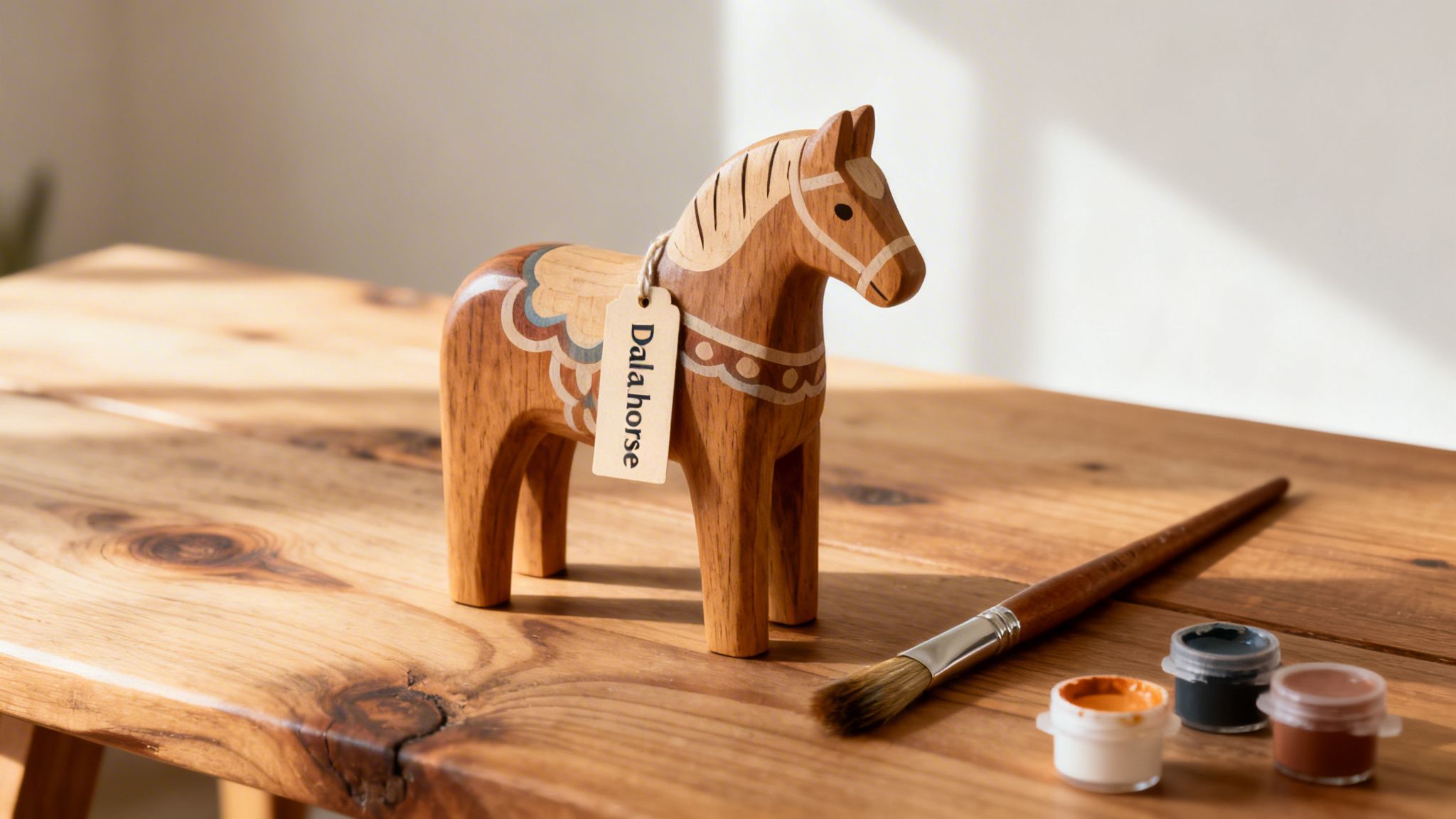
The same spirit you find in a Swedish grocery store—that deep respect for quality, tradition, and sustainability—doesn't just stop at the food aisles. It's a thread that runs through the entire culture, connecting a simple loaf of rye bread to the nation's most cherished symbols. Once you’ve filled your basket with groceries, it’s a natural next step to see how these very same principles shape Sweden's iconic handicrafts.
This is where the line between the supermarket and the artisan's workshop begins to blur. The meticulous care a farmer puts into growing local, seasonal food is mirrored in the creation of timeless folk art. It all comes from a shared mindset that values meaningful, well-made items over things that are just fleeting or mass-produced.
It’s like choosing a special cheese from a small local dairy instead of a generic factory brand. One is just a product; the other tells a story of place, skill, and heritage.
Perhaps no single item captures this spirit better than the Dala horse (or Dalahäst). This brightly painted wooden figure is so much more than a simple souvenir. An authentic Dala horse is a piece of living history, handcrafted by skilled artisans in the Dalarna region—the very heartland of Swedish folk culture.
The process behind a genuine piece is completely rooted in tradition and sustainability.
Just as you learn to spot quality ingredients in a store, you can learn to recognise genuine craftsmanship. An authentic Dala horse feels substantial, shows the subtle, perfect imperfections of a handmade object, and carries the weight of a centuries-old tradition.
Telling the difference between a meaningful craft and a tourist trinket is everything. Mass-produced copies might look similar from a distance, but they are hollow—they lack the story and soul of an original. When you invest in a piece from a dedicated workshop like Dalaart, you're directly supporting the local artists and communities that keep these traditions alive.
This ensures the money goes right back to the people who dedicate their lives to this beautiful art form. If you're looking for inspiration on what to bring home, exploring different kinds of authentic gifts from Sweden can help you find something that truly resonates.
Ultimately, whether you are shopping for groceries or for crafts, the goal is the same: to connect with the true heart of Swedish culture by choosing things made with care, purpose, and a deep respect for heritage.
Stepping into a Swedish grocery store for the first time can bring up a few questions. Don't worry, we’re here to clear up any doubts so you can shop like a local.
Whether you're just visiting or setting up a new home, getting a handle on the basics like costs, language, and opening times is key. This quick guide will have you navigating the aisles with total confidence.
Key Insight: Grabbing a loyalty card from a major chain like ICA or Coop is a smart move. On average, it can knock about 12% off your monthly grocery bill.
Here are a few insider tips to make your shopping trip even smoother:
And a final pro-tip: always give the dates on dairy and meat a quick check for freshness and scan the packaging for allergen information.
Once you’ve got these basics down, shopping in Sweden goes from being a bit of a mystery to a genuinely pleasant experience. You’ll be free to focus on the fun part: discovering delicious new Swedish foods and enjoying the calm, organised atmosphere.
Ready to bring authentic Swedish craftsmanship into your home? Explore unique Dala horses and companion animals at Dalaart: https://dalaart.com


.svg)


.png)


