December 24, 2025
Albanian traditional clothing is more than just fabric and thread; it's a vibrant, living story of the nation's history, its values, and its very soul. These garments are like chapters in a book, telling tales of ancient Illyrian tribes, centuries of resilience against outside forces, and a fierce sense of regional pride.
Imagine a language spoken not with words, but with wool, silk, and silver. That's the heart of Albania's traditional attire. Every outfit is a powerful statement, a visual encyclopaedia where each pattern and colour holds a specific meaning, preserving a culture that has endured for millennia.
This guide will take you on a journey through this rich sartorial landscape. We’ll explore how geography, social status, and major historical events shaped the diverse costumes found from the northern mountains to the southern coast. You're about to discover a world where clothing is a language all its own.
The roots of Albanian clothing run deep, with many elements tracing all the way back to ancient Illyrian and pagan beliefs. These traditions weren’t static; they absorbed influences from Roman, Byzantine, and Ottoman periods, yet always held onto a distinctly Albanian character. This resilience is a key theme you can see woven into the very fabric of the garments.
Take the powerful symbols embroidered onto vests and aprons—many have prehistoric origins.
Albanian clothing acts as a personal and communal archive. An outfit can instantly tell you a person's village, clan, marital status, and social standing without a single word being spoken. It’s a testament to identity in its most tangible form.
Colour plays a massive role in this visual language. The bold use of red and black, for instance, is deeply symbolic, speaking to national themes of bravery, life, mourning, and heritage. But the specific shades and combinations often varied by region, creating a complex map of local identities.
To really appreciate these nuances, it helps to understand the fundamentals of how these vibrant hues were created and combined. For a deeper dive, you can learn more about crafting the perfect shades in our guide to using a color mixing chart. This knowledge of colour theory truly illuminates the incredible artistry behind every single garment.
To really get to the heart of Albanian traditional clothing, you first need to understand the country’s two major cultural groups: the Ghegs in the north and the Tosks in the south. This split, which roughly follows the path of the Shkumbin River, is more than just a line on a map; it's a cultural fault line that has created two completely distinct clothing traditions. They're like two dialects of the same language – related, yet worlds apart. Each style tells a unique story about the land, the lifestyle, and the history of its people.
The rugged, imposing mountains of the north forged the Gheg identity, and their clothing reflects that. It’s built for resilience and function, often made from heavy wool to fend off brutal winters. You'll see these garments decorated with dramatic silver ornamentation and powerful, ancient symbols that speak to a history of fierce independence and tight-knit clan societies.
Head south, and the Tosk tradition paints a different picture. The milder climate and closer connections to Byzantine and Ottoman trade routes fostered a style defined by flowing elegance. Lighter materials like linen and silk are far more common, with a real emphasis on delicate, colourful embroidery and a more refined, graceful aesthetic.
The most iconic garments from each region really drive this point home. For Gheg women, the formidable Xhubleta, a heavy, bell-shaped skirt, is a powerful statement of northern heritage. Crafted from stiff wool felt and almost always a symbolic black, it's an imposing and utterly unique piece of folk art.
In contrast, the star of the southern Tosk male wardrobe is the Fustanella. This pleated, kilt-like skirt is a cloud of white, made from hundreds of pleats of light cotton that symbolise both bravery and grace. The stark difference between the dark, heavy Xhubleta and the light, flowing Fustanella perfectly captures the Gheg-Tosk cultural split in a single glance.
This diagram helps visualise how Albanian garments are shaped by the core pillars of history, identity, and these crucial regional distinctions.
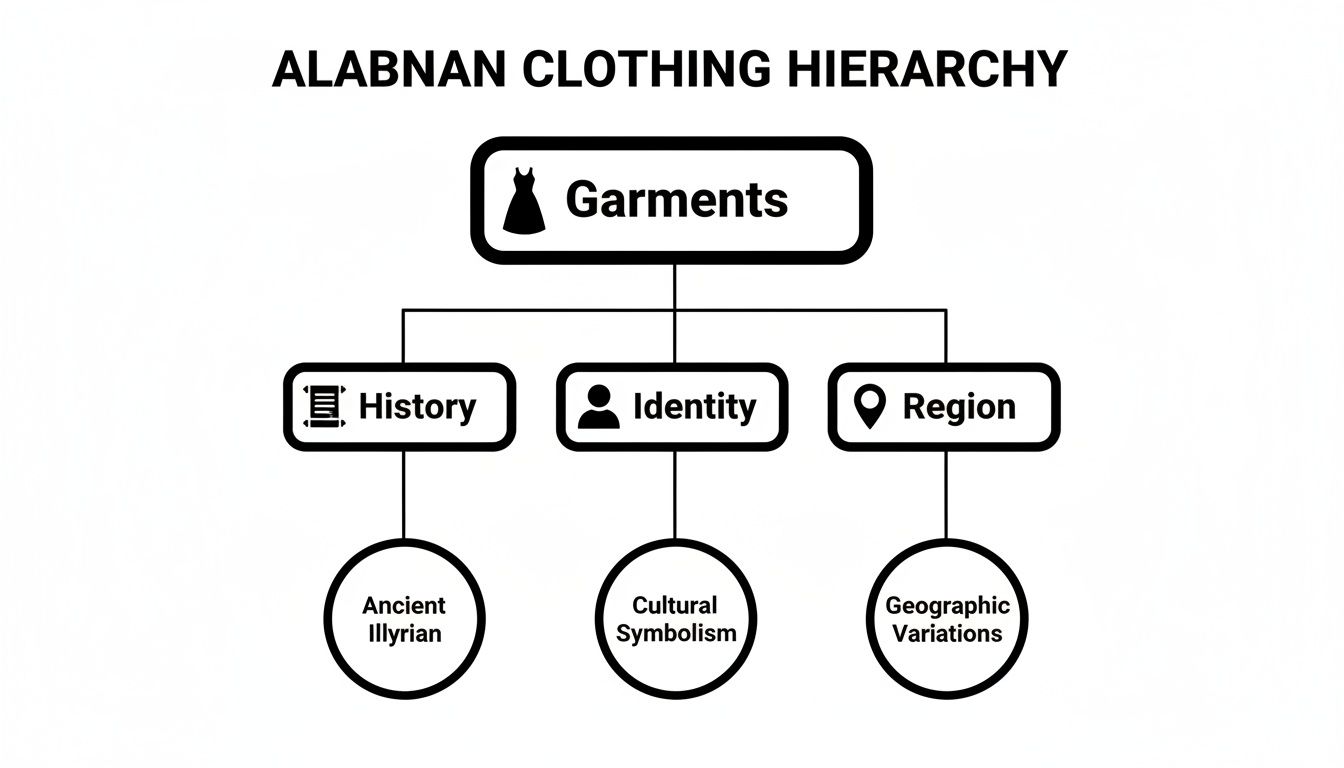
As you can see, where someone is from is just as important as their broader heritage in defining what they wore.
You could think of it like this: Gheg clothing is like a sturdy mountain fortress, built to protect and project strength. Tosk clothing is more like an ornate manor, designed to display elegance and artistry. Both are beautiful and culturally vital, but they serve different expressive purposes rooted in their unique histories.
Grasping this fundamental north-south divide gives you a clear framework for appreciating the incredible diversity woven into Albanian traditional clothing. It’s the foundation for all the regional variations and specific garment styles, making it the essential first step in exploring this rich and fascinating world.
Within the incredible diversity of Albanian traditional clothing, two garments stand out as true national symbols. Each one tells a profound story about its home region.
The Xhubleta from the north and the Fustanella from the south aren't just pieces of clothing; they are powerful icons of heritage, artistry, and identity. Though they look like complete opposites, they both carry a deep cultural weight that you can still feel today.
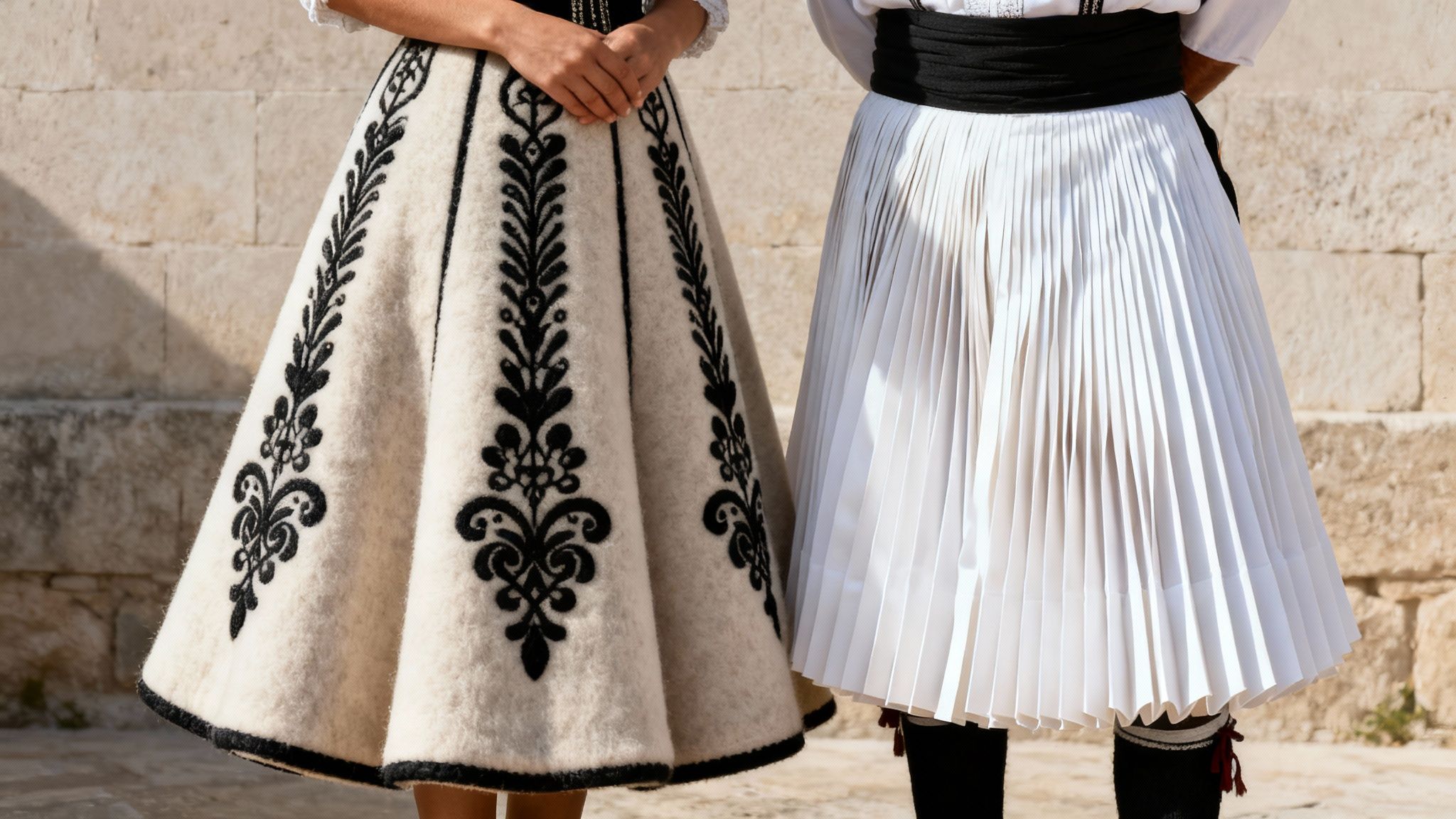
These two garments perfectly capture the Gheg-Tosk cultural divide in a way you can see and touch. The Xhubleta’s dark, heavy form speaks of the rugged northern highlands, while the Fustanella’s light, flowing pleats bring to mind the open landscapes of the south. To explore them is to get a glimpse into the very soul of Albania, woven right into the fabric.
Hailing from the northern highlands, the Xhubleta is a completely unique bell-shaped skirt made from stiff, hand-woven wool felt. Its sculptural shape is unlike anything else in Europe—a living testament to its ancient Illyrian roots. This isn’t just a skirt; it’s a wearable piece of history.
Its construction is an incredible feat of textile engineering. Multiple felt panels are painstakingly sewn together to create that signature undulating shape. The typical black colour is deeply symbolic, often tied to the earth and the resilience of the people.
In 2022, UNESCO recognised the Xhubleta’s extraordinary cultural importance, placing it on the List of Intangible Cultural Heritage in Need of Urgent Safeguarding. This wasn’t just an award; it was a global acknowledgement of its status as a living artefact of immense value to humanity.
The Xhubleta is a mini-museum of a dress. It carries generations of stories, beliefs, and social codes in its very structure. Every embroidered symbol serves as a form of protection or blessing for the woman who wears it.
The intricate embroidery covering the skirt is a visual language that communicates a woman’s life story. Specific ancient motifs—like serpents, suns, and eagles—weren’t just for decoration. They were powerful pagan symbols believed to offer protection and blessings. Even the colours told you about a woman's stage in life:
In sharp contrast to the dark, formidable Xhubleta is the Fustanella—a cloud of white pleats worn by men, particularly in the south. This pleated, kilt-like garment is a powerful emblem of bravery, honour, and national identity that men in the Balkans have worn for centuries.
Its most stunning feature is the sheer number of pleats. Tradition says there should be 400, one for each year of Ottoman occupation, representing the enduring spirit of Albanian resistance. Making a Fustanella is a meticulous art, demanding metres of cotton or linen fabric to be carefully folded and stitched into its flowing, dynamic form.
While the Xhubleta tells the story of a woman’s life and her community, the Fustanella is a bold declaration of masculine pride and warrior heritage. It was the historic uniform of Albanian freedom fighters and remains a central part of ceremonial dress today, instantly bringing to mind images of courage and national pride.
While the Gheg and Tosk divide is a great way to start understanding Albanian traditional clothing, it really only scratches the surface. The reality is far more intricate and localised. Think of it less like two distinct styles and more like a massive, interconnected tapestry where every single town and city has woven its own unique threads into the design. Southeastern Albania is a particularly rich example of this, where centuries of history, trade, and local artisanship created a breathtaking fusion of styles.
Major urban centres like Tirana, Berat, and Vlora became sartorial melting pots. Here, the native Illyrian and Byzantine traditions didn't just vanish; they blended with new influences, especially from the Ottoman period. This cultural give-and-take resulted in fascinating hybrid costumes that tell a story of adaptation, identity, and a community's place in a much larger world.
One of the most striking changes in these urban areas was the adoption of certain garments that created a very distinct city look. Women started wearing Shalvara—a type of loose, flowing trouser—along with their traditional chemises and richly decorated vests. Known locally as turmane or dimi, these trousers offered comfort and modesty while also signalling a more cosmopolitan flair.
The resulting silhouette was undeniably Albanian at its core but also reflected the wider cultural currents of the era. It was a layered, elegant style that stood in stark contrast to the more austere, functional clothing you’d find among the remote mountain clans.
The introduction of Ottoman-influenced garments like Shalvara didn't erase Albanian identity; it enriched it. Women skillfully paired these new items with traditional pieces like the xhamadan (vest) and intricate aprons, creating a unique sartorial dialogue between the local and the foreign.
Another major factor that set southeastern Albania apart was its thriving silk production. This industry brought a whole new level of luxury and colour to the local wardrobe, moving away from the heavy wools that were so dominant up north. The lustrous sheen of silk became a hallmark of southern attire, allowing for much more delicate embroidery and a richer, more vibrant palette. You can see how the local economy was literally woven into the fabric of the clothing.
In southeastern regions like Vlora and Berat, this history is especially deep, with roots stretching all the way back to the 14th century when silk production became an economic powerhouse. This heritage shaped garment styles by introducing luxurious fabrics that mixed Illyrian heritage with Byzantine elegance, creating something entirely different from the northern wool traditions. This fusion sparked a huge array of local styles.
For men, headwear like the tall, woollen Qylafë became a powerful symbol of regional identity. Even when Ottoman influence brought in items like the fez, core Albanian elements like the xhamadan vest and brez belts held strong, creating a rich hybrid fashion that continues to inspire designers today. If you're curious about this evolution, you can find more insights on garment production in Southeastern Europe on deepwear.info.
The incredible diversity you find across these regions just goes to show that Albanian traditional clothing was never static. It was a living, breathing art form that constantly evolved—absorbing new ideas while fiercely preserving its ancient soul and ensuring every town had its own story to tell.
Albanian traditional clothing is so much more than just beautiful garments; it’s a living language, where every single thread tells a story. Think of each outfit as a canvas, painted with a rich symbolic vocabulary that turns the wearer into a walking chronicle of their own identity, beliefs, and place in the world.
To look at this clothing is to read a visual story. The powerful combination of red and black, for instance, is instantly recognisable. These aren't just random decorative choices; they are deeply tied to the national flag, representing powerful themes of bravery, sacrifice, mourning, and the unshakeable Albanian spirit.
Many of the symbols you'll see embroidered onto vests, aprons, and headpieces are ancient, with roots stretching all the way back to pagan and Illyrian beliefs. These motifs weren't simply art—they were powerful talismans meant to protect, bless, and empower the person wearing them.
Some of the most common and potent symbols include:
These incredible designs connect modern Albanians to their most distant ancestors. The art of weaving these symbols into clothing is a cherished practice, preserving ancient beliefs through the generations. If you're interested in the detailed craft of creating such designs, you can explore guides on how to make cross-stitch letters, which follows similar principles of pattern and precision.
Beyond these universal symbols, Albanian traditional clothing served as an immediate social identifier. It was essentially a visual CV that could tell you a person’s entire life story in a single glance.
Every element of an outfit—from the style of embroidery to the type of head covering worn—was a deliberate statement. It could instantly signal a person's village, clan affiliation, social standing, wealth, and, most importantly, their marital status.
For instance, the amount and quality of silver jewellery, especially on a woman's belt or vest, was a clear indicator of her family's wealth. The specific way a woman wore her headscarf could immediately differentiate a young, unmarried girl from a married woman or a widow. This intricate visual language ensured social roles and identities were understood and respected within the community, making clothing a vital part of Albania's cultural fabric.
Albanian traditional clothing is far from a relic gathering dust in a museum. Instead, it’s a living, breathing part of the nation's contemporary identity, a vibrant thread connecting today’s generation to their deep ancestral roots.
These magnificent costumes are worn with immense pride during life’s most significant moments.
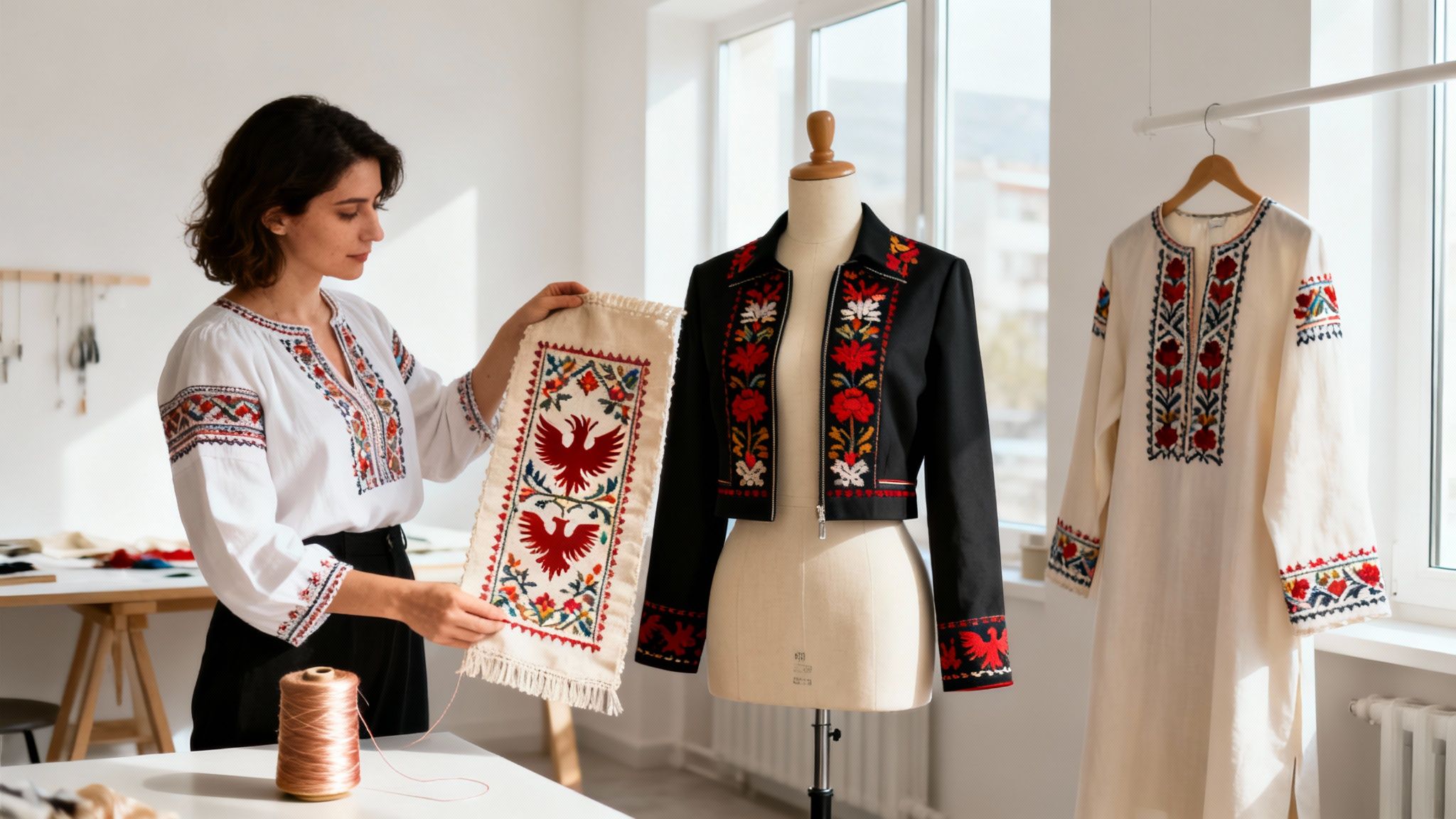
You’ll see these historic garments come to life during weddings, boisterous folk festivals, and national holidays like Flag Day on 28 November. On days like these, the intricate embroidery and bold colours aren’t just beautiful—they’re a powerful declaration of cultural heritage and national pride.
A new wave of artisans and designers is working tirelessly to keep these traditions alive. They're not just preserving ancient techniques passed down through families; they're also reinterpreting timeless motifs for contemporary fashion, ensuring the legacy continues for generations to come.
This work is absolutely vital, bridging the gap between history and modern life. By celebrating these garments, Albanians honour their past while carrying its beauty forward into the future. It’s fascinating how cultural symbols travel and transform, a journey you can explore in our article on the Dala horses of the world.
The enduring power of traditional clothing serves as a cornerstone of Albanian identity in a rapidly changing world. Each garment worn today is a testament to the resilience and richness of the nation's cultural fabric.
For anyone inspired to see these masterpieces firsthand, several museums house stunning collections. The National Museum of Ethnography in Berat and the National Historical Museum in Tirana offer incredible opportunities to appreciate the artistry and history woven into every single piece.
Got questions about Albanian traditional clothing? You're not alone. It's a deep and fascinating subject, so let's clear up some of the most common curiosities.
At a high level, the traditional garments fall into two main families, mirroring the old cultural divide between the Ghegs in the north and the Tosks in the south.
Gheg clothing, from the mountainous north, is exactly what you’d expect from a rugged landscape: heavy wools, powerful, ancient symbols, and the unforgettable Xhubleta skirt. Down south, Tosk clothing reflects a different environment, favouring lighter materials like linen and cotton, with a focus on elegant, flowing embroidery and the world-famous Fustanella kilt.
These two colours are the soul of the Albanian flag, and that connection runs deep into the clothing. It's a powerful visual shorthand for national identity. Red is often seen as the colour of bravery, blood, and life itself, while black can speak to resilience, the richness of the homeland's soil, and even solemn remembrance. Put them together on a garment, and you have an unmistakable statement of Albanian heritage.
Absolutely! While you won't see it on the street every day, Albanians bring out their traditional dress with immense pride for life's most important moments. These incredible garments are the star of the show at weddings, national holidays like Flag Day (Dita e Flamurit), vibrant folk festivals, and major family celebrations. It’s a beautiful way of keeping these traditions alive and breathing for the next generation.
At its heart, Albanian traditional clothing is a visual language. An outfit can communicate a person's regional origin, marital status, and social standing without a single word being exchanged, making it a powerful form of cultural expression.
The Xhubleta is one of the most unique and ancient garments in Europe, hands down. It's a heavy, bell-shaped skirt worn by women in the northern Albanian highlands, crafted from stiff wool felt. Its form is truly ancient, and it's so significant that it's recognised as a UNESCO Intangible Cultural Heritage item. The intricate embroidery isn't just decoration; it's a symbolic map telling the story of the wearer's life.
The Fustanella is the iconic, pleated kilt-like garment worn by men, most famously in southern Albania and among the Arbëreshë communities in Italy. A true symbol of bravery and national pride, a traditional fustanella might have hundreds of pleats—some say one for every year of Ottoman occupation, representing incredible resilience.
At Dalaart, we celebrate the artistry and deep cultural stories behind traditional folk crafts. Explore our collection of hand-carved Swedish treasures and bring a piece of authentic heritage into your home. https://dalaart.com


.svg)


.png)


