May 25, 2026
A large teddy bear in a quiet room changes the atmosphere before anyone says a word. It softens corners, invites touch, and often brings back the kind of comfort people thought they'd outgrown.
A big teddy bear works on two levels at once. It's familiar enough to feel safe, yet oversized enough to feel a little theatrical. That combination is why it suits so many lives: a child's reading corner, a guest room that needs warmth, or a collector's home where objects are chosen for story as much as for function.

The teddy bear also has a more precise origin story than many people realise. Its name is linked to a documented event in November 1902, when Theodore Roosevelt refused to shoot a tethered bear because he considered it unsportsmanlike. A political cartoon of that episode inspired a Brooklyn shop owner to sell “Teddy's bears”, according to the National Park Service history of the teddy bear.
That matters because it gives the object cultural weight. The teddy bear didn't drift into being through hazy folklore. It arrived through a real incident, a newspaper image, and a maker who recognised that tenderness could be turned into form.
A large bear often feels less like a toy and more like a companion object. People keep them for comfort, but also for memory.
For readers drawn to handcraft, that emotional pull often leads to curiosity about how decorative animals are made at all, from pattern cutting to carving and paintwork. A useful glimpse into that maker's world appears in this behind-the-scenes look at artisan process, where the object's charm comes as much from the hand that shaped it as from the finished silhouette.
The phrase big teddy bear sounds simple, but it covers several different desires. One person wants a cuddle-sized gift with soft paws and a sweet face. Another wants a bold decorative piece that acts almost like sculpture. A collector may want age, provenance, or a famous maker's label.
That range is part of the charm. Oversized bears can be playful, sentimental, stylish, or nostalgic. The best ones usually manage at least two of those qualities at once.
The oversized bear world is broader than most shop categories suggest. If you only browse by colour or height, you miss the deeper differences in purpose, feel, and lifespan. It helps to separate them into three families: classic plush companions, vintage bears, and handcrafted decorative bears.
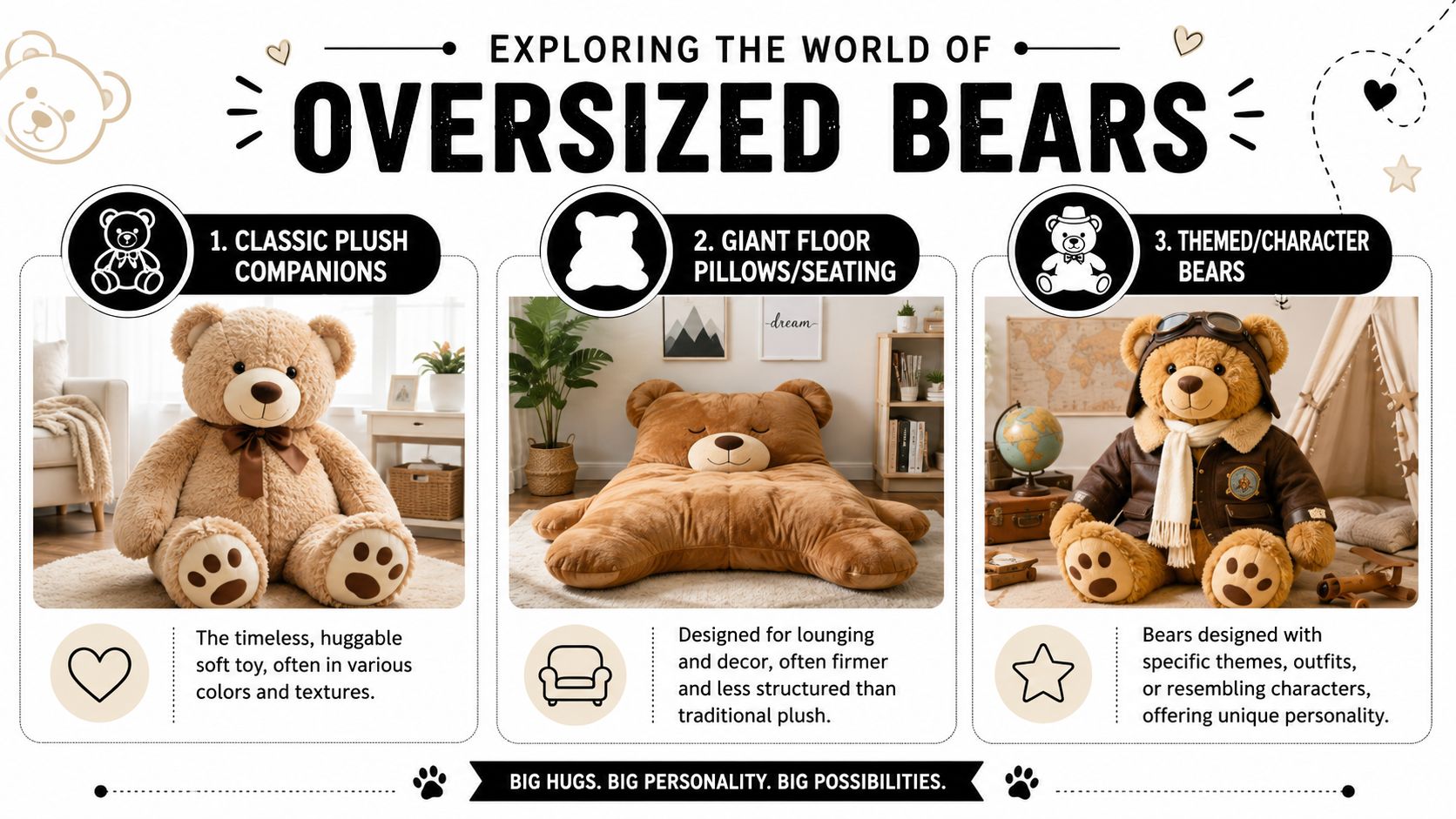
This is often the first form that comes to mind. A plush bear is built for softness, tactile comfort, and presence. In larger sizes, the details matter more than many buyers expect. Fur length changes the bear's visual bulk. Fibre fill changes whether it sits upright or slumps into a loungey shape. Paw construction affects how polished or toy-like it appears.
If the bear is meant for repeated hugging, look closely at practical build features:
Some oversized plush bears also blur into floor cushions or novelty seating. They may be charming, but they don't behave like traditional teddy bears. A lounging piece can be perfect in a den or playroom, while a more upright bear suits gifting and display.
A vintage bear brings a different kind of appeal. You're not just buying softness. You're buying wear, patina, and the marks of another era's making. A repaired ear, a slightly faded muzzle, or a fabric patch can add personality rather than reduce it, provided the condition is stable.
Collectors usually care about authenticity, original materials, and whether the bear has kept its character. A vintage bear that has been over-restored can lose the very qualities that made it compelling. In decor terms, these older bears often suit bookshelves, benches, and guest bedrooms better than children's daily use.
Collector's instinct: Don't ask only whether a vintage bear is old. Ask whether its age is visible in a beautiful way.
The third group is where folk art, interior styling, and sustainability meet. These aren't always soft. Some are carved from wood, painted by hand, or shaped as decorative companions rather than cuddle toys. They can still satisfy the emotional wish behind a big teddy bear because the bear form itself carries comfort, friendliness, and familiarity.
This category matters for adults who want bear imagery without a nursery feel. A carved or painted bear can sit among ceramics, textiles, and Scandinavian furniture with ease. It reads as decor first, yet still keeps the kindness of the teddy bear tradition.
Size is where many buyers go wrong. They search for the biggest option, then realise too late that the bear can't pass through a stairwell, overwhelms the room, or looks oddly small because it collapses when seated. With a big teddy bear, scale matters more than label.
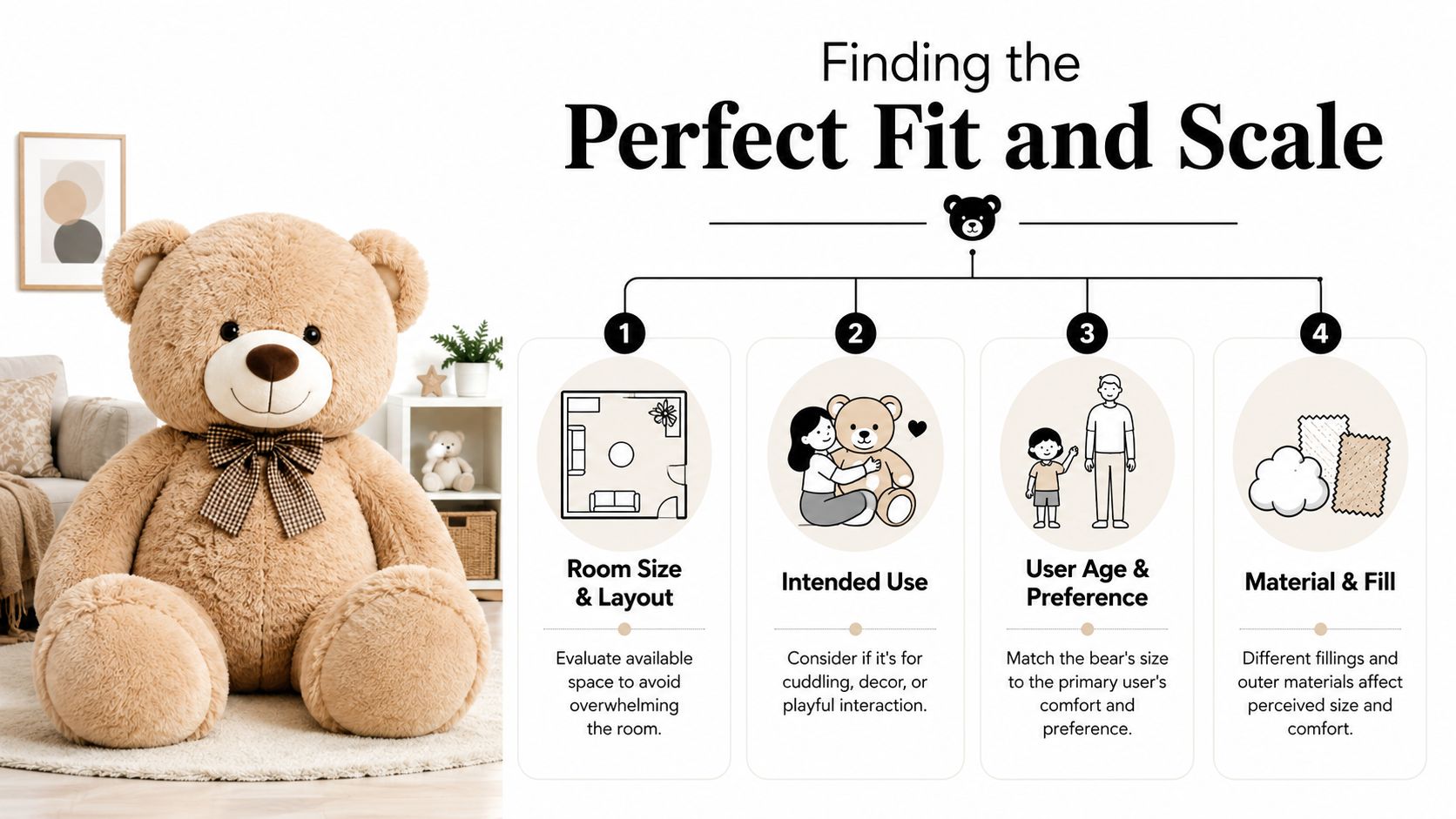
A useful fact keeps expectations grounded. The term isn't standardised. Retail examples may start around 4 feet, while custom-built extremes can reach 63 feet 8 inches, as noted in this discussion of big teddy bear size ranges and practical buying considerations. That's why a large bear often behaves more like furniture than like a simple plush toy.
Before choosing style or colour, decide where the bear will live. Place a chair, folded blanket, or stack of cushions in the intended spot. This gives you a rough sense of visual weight. A standing measurement on a product page doesn't tell you how much floor space a seated bear will command through spread legs, rounded belly, and extended arms.
Think in furniture terms:
The most charming bear is still frustrating if delivery turns into a wrestling match. For flat living, narrow lifts, winter outerwear, and shared stairwells, bulk matters. Packaging dimensions matter too. A compressed parcel may arrive smaller than expected, then expand unevenly and need time to settle.
Measure the doorway, then measure the turn into the room. A bear can fit through one and still fail at the next corner.
A few details often get missed:
Not every room wants monumentality. Sometimes a slightly smaller bear feels larger because it holds its form and sits well. A floppy giant can visually disappear, while a compact, well-shaped bear can become the room's focal point.
For Swedish homes in particular, where many interiors favour clean lines and restrained palettes, proportion is everything. The right big teddy bear should soften the room, not swallow it.
A statement bear works best when it has a role. It shouldn't look like an afterthought dropped into a corner. It should look chosen.

In a modern living room, a large bear can soften hard edges from glass, metal, and straight-lined sofas. Brown, cream, oat, and muted grey tones usually integrate more gracefully than loud novelty colours. If the room already contains natural textures like wool, linen, birch, or boucle, the bear starts to read less as toy and more as tactile decor.
One of the loveliest placements is beside a low armchair or near a bookshelf. The bear doesn't need to dominate. It only needs enough presence to make the corner feel inhabited and kind. Add a lamp with warm light, a woven basket, and a folded throw, and the area begins to feel like a retreat.
Textiles help the bear belong. If you're layering a nook with cushions and blankets, these ideas for pillows and throws in Scandinavian interiors can help you keep the space cohesive rather than cluttered.
A minimalist bedroom can handle whimsy when the palette stays calm. A single oversized bear in soft beige or caramel can sit on a bench, in an empty corner, or beside a chest of drawers without breaking the room's composure. It adds tenderness to a space that might otherwise feel too severe.
This is especially effective when the bear has a simple face and clean silhouette. Overly shiny fabric or exaggerated cartoon details can pull the piece away from decor and back into novelty.
A short visual example can help you think about placement and presence in a lived room:
In a nursery, the bear becomes an anchor. It can sit near a shelf of board books or beside a nursing chair and lend the room gentleness without needing busy colours. In family rooms, a large bear can also act as a transition object between child-focused and adult-focused decor.
A statement bear looks most elegant when it echoes the room's texture story, not when it competes with it.
That's the central styling principle. Match tone, scale, and texture, and a big teddy bear can feel surprisingly refined.
A large bear is rarely an impulse object in the fullest sense. Even when bought for fun, it asks for space, care, and intention. That's why the best purchases usually come from evaluation rather than excitement alone.
The collector's side of this story has deep roots. Teddy bears became a commercial force very quickly. In 1903, Steiff sold 3,000 bears to a New York department store, and by 1906 one Manhattan store sold more than 60,000 bears, according to Smithsonian Magazine's account of the teddy bear's early boom. That early spread helped establish bears as collectibles almost from the beginning.
The right gift bear isn't just large. It's reassuring to handle and built to endure affection. If it's intended for a child, softness matters, but so does structural integrity. If it's intended for an adult, finish and expression often matter more than sheer scale.
Use this lens when comparing options:
For broad inspiration across the world of plush gifts and keepsakes, this overview of stuffed animal toys and their appeal is a helpful companion.
Collectors often look beyond cuteness. They notice maker identity, period features, repairs, labels, and whether the bear still feels truthful to itself. A famous name can matter, but so can a strong silhouette, original materials, and signs that the object has endured authentically.
Provenance also changes how a bear is read. A documented older bear from a respected maker sits in a different category from a recent oversized plush bought for seasonal gifting. Both can be worth having. They answer different desires.
Emotional value and collector value aren't opposites. Sometimes the same bear carries both.
That's why thoughtful buying matters. A large bear takes up physical space, but it also takes up emotional space. Choose one that earns both.
A large bear often stays in a home long after the occasion that brought it there. It sits in a reading corner through winter, appears in family photos, or becomes the object a child reaches for during difficult weeks. That long life changes the buying question. Size and softness still matter, but so does whether the bear was made to last, to be repaired, and to age with some dignity.
Sustainability belongs in that conversation. Many guides treat a big teddy bear as a novelty purchase, yet buyers who want a decorative piece often care about responsible sourcing, recycled content, and whether an object can remain useful instead of quickly becoming waste, as described in this discussion of sustainability questions around large teddy bear purchases in Sweden. A bear then becomes more than a playful accent. It becomes part of the home's values as well as its visual character.
With oversized plush bears, sustainability starts with durability. A strong seam, resilient filling, and fabric that can be cleaned without falling apart all help the bear stay in use longer. Repairability matters too. If an ear loosens or a side seam opens, a mendable bear has a very different future from one that is cheaper to discard than fix.
Decorative handcrafted bears follow a different logic. They are closer to a quilt, a carved spoon, or a painted Dala horse than to a fast seasonal gift. Small-batch production, visible handwork, natural material presence, and surfaces that invite simple care all support a slower form of ownership. Wood is especially interesting here because it asks to be displayed, dusted, and kept in view. It becomes part of the room's daily life.
That is why carved bears deserve a place in a guide about big teddy bears. They carry the same familiar silhouette and emotional warmth, but they speak in the language of craft and interior design. For adults who love the symbolism of a bear yet want a more composed room, a handmade wooden version can do the work of both companion object and decorative statement.
Dalaart is one example worth noting in factual terms. The brand offers Swedish Dala horses and companion animals, including bears, made in Sweden from recycled wood and environmentally safe paints according to the publisher information provided for this article. In this category, folk art, interior styling, and sustainability meet. A buyer drawn to the comfort of a large bear can therefore choose an object that also belongs to a longer craft tradition.
A sustainable bear earns its place by staying useful, visible, and loved.
That idea widens the category in a helpful way. The oversized bear can still be soft, generous, and emotionally reassuring. It can also be artisan-made, rooted in regional craft, and suited to a thoughtfully designed home.
Once a large bear comes home, care determines whether it stays lovely or starts to look tired. This matters even more because size labels can mislead. Retailers use inconsistent thresholds for “giant”, with some using 4 feet and others 5 feet, and larger plush pieces are more vulnerable to seam stress and compression over time. That's why construction matters more than marketing language, as noted by Vermont Teddy Bear's discussion of giant bear sizing and durability features.
For plush bears, regular light care beats dramatic deep cleaning. Dust them with a clean upholstery brush or a low-suction vacuum attachment covered with thin fabric. Spot clean first, especially on pale fur and muzzle areas. If the bear has dense fill, avoid soaking it unless the maker clearly says it can be washed safely.
Vintage bears need a gentler hand. Don't scrub worn areas to “brighten” them. Age marks are part of the object's character. Loose stitching should be stabilised carefully, and replacement fabric should never overpower the original material.
A simple routine helps:
Personalisation doesn't need to be loud. A ribbon in washed linen, a knitted scarf, or a removable bow can shift the mood from nursery-sweet to subtly decorative. For a gift, an embroidered tag or handwritten note tucked into the wrapping often matters more than gimmicks.
If you prefer decorative bear forms in wood, customisation becomes even more interesting. Unpainted carved animals can be stained, painted in traditional folk patterns, or kept plain for a restrained look. That turns the object from a purchase into a collaboration between maker and owner.
The best big teddy bear, or bear-inspired decorative piece, is the one that gathers history after it arrives. Care gives it longevity. Personalisation gives it a place in your own story.
If you're drawn to bear-shaped decor with craftsmanship, provenance, and Swedish folk character, explore Dalaart for hand-carved companion animals and other artisan-made pieces that suit collecting, gifting, and thoughtful interiors.


.svg)


.png)


