January 22, 2026
Step into the charming, earthy world of Gabriel Sweden stengods, a true cornerstone of Scandinavian ceramic heritage. This beautiful, durable stoneware has a special way of capturing the hearts of collectors, blending rustic folk art traditions with a design sense that just never goes out of style. Think of it as functional art that tells a story of Swedish craftsmanship.
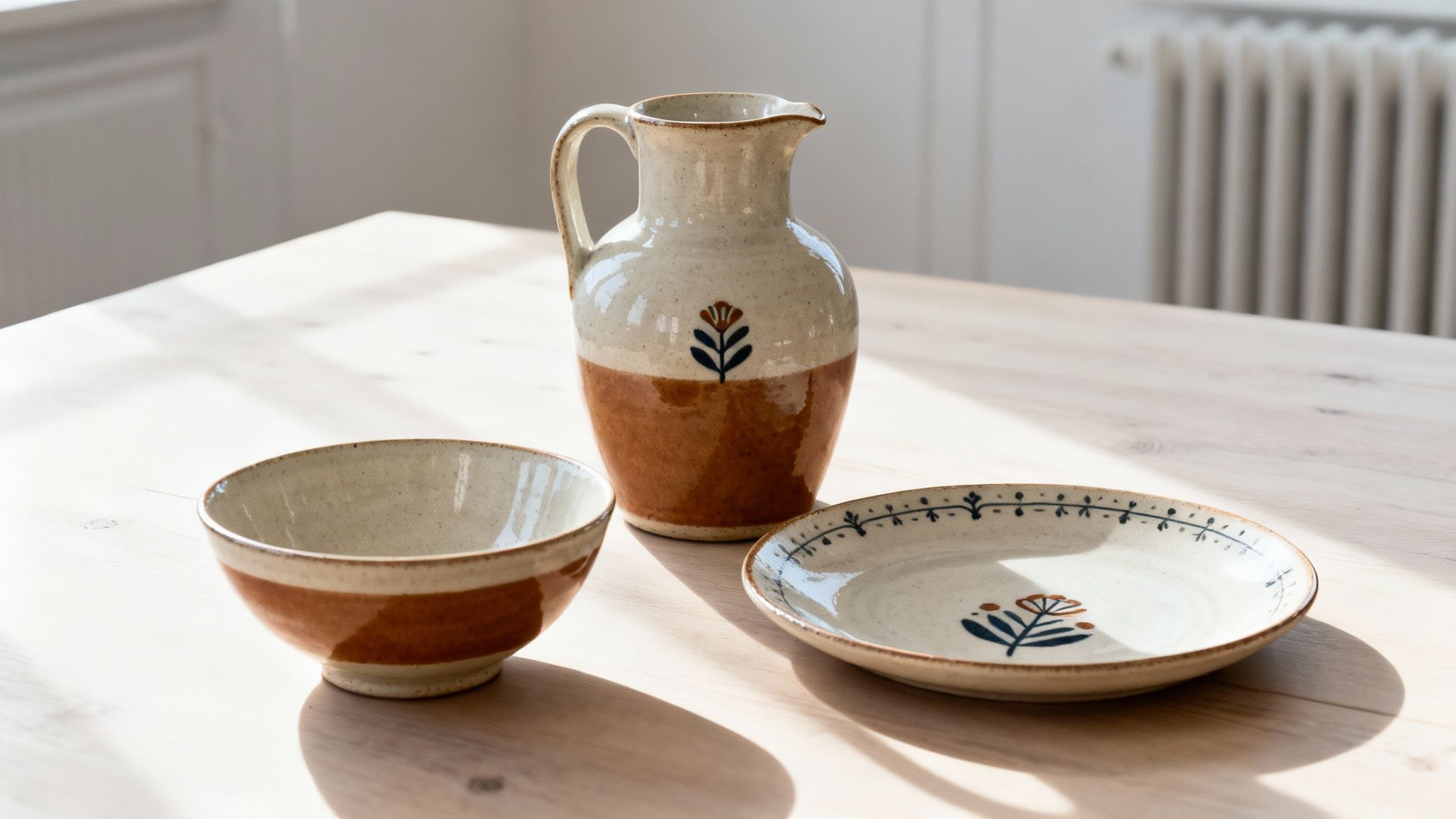
Gabriel Sweden stengods, or stoneware, represents a significant chapter in the story of Scandinavian design. This isn't just any pottery; it's a tangible piece of cultural history. Each item masterfully blends incredible durability with an earthy, often whimsical, aesthetic that feels both nostalgic and perfectly modern. This guide is your complete journey into its world, from its humble origins to valuing your own pieces.
For many, the real appeal lies in how approachable it is. Unlike delicate porcelain, Gabriel stoneware was made for living. It was designed to be used, held, and enjoyed every single day, bringing a touch of handmade warmth right into the home. That perfect blend of artistry and utility is a core principle of the entire Scandinavian design philosophy.
The pottery’s charm extends far beyond its good looks. For collectors and decorators alike, Gabriel Sweden stengods offers a unique combination of qualities that keep it popular in a crowded market.
This unique combination secures its place in the hearts of those who appreciate well-made, beautiful objects with a rich history behind them. Understanding what makes this pottery such a treasured find really begins with recognising its story and the hands that shaped it.
To collect Gabriel stoneware is to connect with a legacy of Swedish folk art. It’s about appreciating objects that were created not just for function, but to bring joy and beauty into everyday life, a principle that remains incredibly relevant today.
Let's dive in. This guide will help you spot authentic items and understand what they're truly worth.
To really appreciate a piece of Gabriel Sweden stengods, you have to know its story. The journey of Gabriel Keramik is a fantastic tale of Swedish craftsmanship and clever adaptation, one that started long before its famous name was even a whisper. The company's roots go all the way back to 1859, with the founding of a humble tile and stove factory in Timmernabben, a small coastal town in Sweden.
This early factory, known then as Timmernabben Fajansfabrik, laid the practical groundwork for everything that followed. But the real magic happened in 1925 when Gabriel Burmeister, an artist with a clear and ambitious vision, took over the factory. It was under his watch that the focus pivoted sharply from industrial production to artistic ceramics, and the company was reborn as Gabriel Keramik.
This change marked the true beginning of its legacy in the decorative and functional pottery that collectors treasure today. Gabriel Burmeister didn't just run the factory; he breathed an artistic soul into it. Production soon began to centre on the beautiful, hard-wearing stoneware that has since found a place in homes across Sweden and beyond.
The factory's evolution from making practical building materials to creating beloved household items is a classic story of artistic reinvention. Burmeister saw the incredible potential in the local clays and the skills of his workers, steering the company in a whole new creative direction. This was a critical move that helped establish Gabriel Keramik as a major name in the Swedish pottery scene.
This period of creative growth mirrors the journey of other famous Swedish potteries. If you're interested in the bigger picture of Swedish ceramics, you can dive deeper into the history of Höganäs Keramik stoneware in our detailed article.
The factory started churning out a wide array of items—vases, bowls, figurines, and dinnerware—each piece a perfect blend of traditional folk art and the modern design sensibilities of the time.
Like so many historic companies, Gabriel Keramik passed through several hands over the decades. Each new chapter brought subtle shifts in style and production focus. Different designers were brought in, introducing new product lines and glaze techniques that kept the brand feeling fresh and relevant through changing times.
The core identity of Gabriel Keramik, however, always stayed true to Burmeister’s original vision: to create beautiful, high-quality stoneware that was accessible to everyone. This commitment to artistic integrity and functional design is exactly why Gabriel Sweden stengods has remained a cherished part of Swedish homes for nearly a century.
This resilience allowed the factory to adapt while holding on to the high standards of craftsmanship that defined its name. That history is baked into every single piece, from the texture of the clay to the signature on the base, telling a quiet story of enduring Swedish creativity.
Flipping over a piece of Gabriel Sweden stengods to look at its base is a bit like opening a passport to its past. The little marks, stamps, and signatures etched into the clay are a direct line to the factory's history, giving you crucial clues about when and where it was made. For a collector, learning to decipher this language is half the fun.
Think of these marks as a timeline. Pieces made in the early days often have completely different markings than those from later decades, which makes sense when you consider how production and branding change over time. This is the detective work that separates a casual admirer from a knowledgeable collector, and it’s what gives you real confidence when you’re hunting for treasures in antique shops or browsing online.
On most Gabriel Sweden pottery, you'll be looking for the brand name, a distinct symbol, and a series of numbers. Each element tells part of the story. When you learn to read them together, you can accurately place your piece within the factory's long and varied history.
The key to identification is learning to recognise a few core elements that popped up again and again over the company's production years. You’ll find variations, of course, but most authentic pieces will feature a combination of the following.
These marks are rarely just random scribbles. Their combination and placement were part of a very systematic way of cataloguing the factory's designs, making them incredibly reliable tools for today's collectors.
For a new collector, the most important takeaway is to look for a combination of these marks. A single, unclear mark might be questionable, but a clear "Gabriel" stamp alongside the trident and a model number is a strong sign of authenticity.
Just as the distinct carving and painting styles of Dala horses can tell you which village in Dalarna they came from, the specific combination of marks on a piece of Gabriel Sweden stengods pinpoints its place in time. That hyperlocal pride you see in the craft of Dalarna is mirrored in the subtle, nuanced changes in Gabriel Keramik's markings over the years. You can learn more about the rich history of the iconic Dala horse and its origins on Wikipedia.
Getting to grips with Swedish terms like stengods (stoneware) or fajans (faience) is also part of the journey. To help with this, our Swedish-English lexicon for collectors is an invaluable resource for translating common pottery terms you're likely to find. By familiarising yourself with these marks and terms, you transform a simple ceramic object into a historical artefact with a story you can actually verify.
When you hold a piece of Gabriel Sweden stengods, you’re not just touching clay. You're connecting with the creative minds who shaped its timeless style.
One of the pioneers was Ingegärd Burmeister. Her organic patterns and earthy glazes brought a gentle, folk-art feel to the pottery. Even today, her work from the 1940s is highly sought after by collectors and decorators who appreciate its soft elegance.
Each designer left their own unique mark on Gabriel Keramik, making their pieces feel distinct.
The artists at Gabriel Keramik were also masters of glazing. They would often layer matte and glossy finishes to give their work a wonderful sense of depth and dimensionality. These unique glaze combinations often act as a kind of creative signature for enthusiasts trying to identify a piece.
Sometimes, the artists even left little hidden autographs, like monogram stamps or hand-painted initials next to the model numbers. If you’re lucky enough to spot one of these tiny marks, you can often pinpoint both the date and the designer in an instant.
This timeline shows how the pottery marks used by Gabriel Keramik evolved over the years, from simple signature scripts to the iconic trident emblem and various numbering systems.
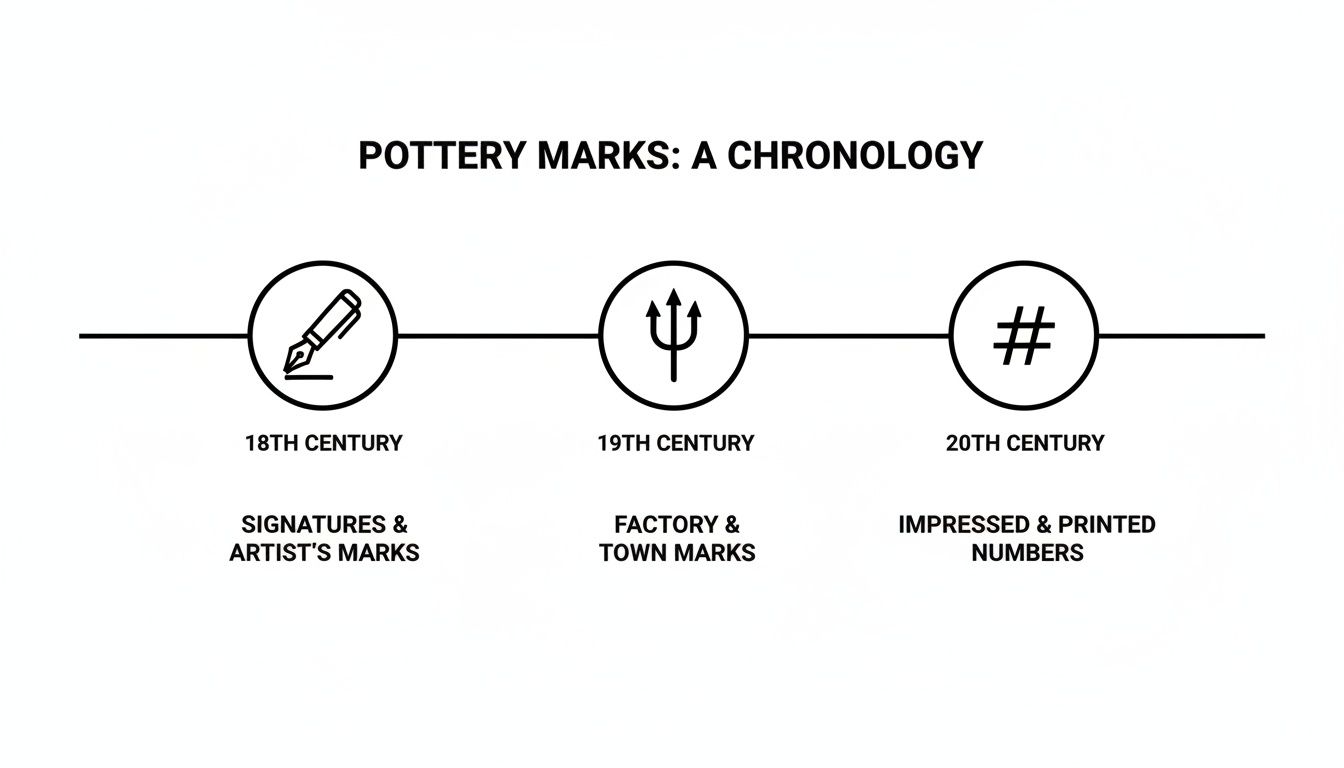
As the timeline shows, learning to read the markings on the base of a piece can tell you a lot about its history, revealing subtle shifts in branding and design across the decades.
In the 1960s, Eke Bjerén introduced a playful modernism to Gabriel Keramik. She loved to experiment with asymmetric forms and pop colour combinations, creating designs that feel as much like sculptural art as they do functional tableware.
Another unforgettable collection is the vibrant Solros series. Inspired by sunflower fields glowing in the summer sun, it features sweeping petal patterns in bright yellows and deep blues that make every piece instantly recognisable.
Recognising a piece’s creator transforms a simple vessel into a story of artistry and heritage, enriching every collector’s experience.
The global excitement around Swedish crafts at the 1939 New York World’s Fair didn't just boost the fame of Dala horses; it shone a spotlight on the entire industry. In 1940 alone, 20,000 Dala horses were shipped to the US, a massive 500% surge in exports that showed a growing appetite for authentic folk designs.
If you’re interested in exploring the impact of other Swedish artisans, you might enjoy our article on another creative force. Explore Anne Nilsson’s glass designs in our Orrefors guide.
Connecting a piece of pottery to its creator adds a gallery-like depth to your Gabriel Sweden stengods collection. When you understand who shaped these forms, functional pottery becomes a genuine artefact of Swedish design history.
By learning to recognise Ingegärd’s subtle brushwork or Eke’s bold silhouettes, you'll start to appreciate each vessel as a unique conversation between the artist and the clay. It’s time to dive into your collection with fresh eyes and uncover the human stories etched into every glaze and contour.
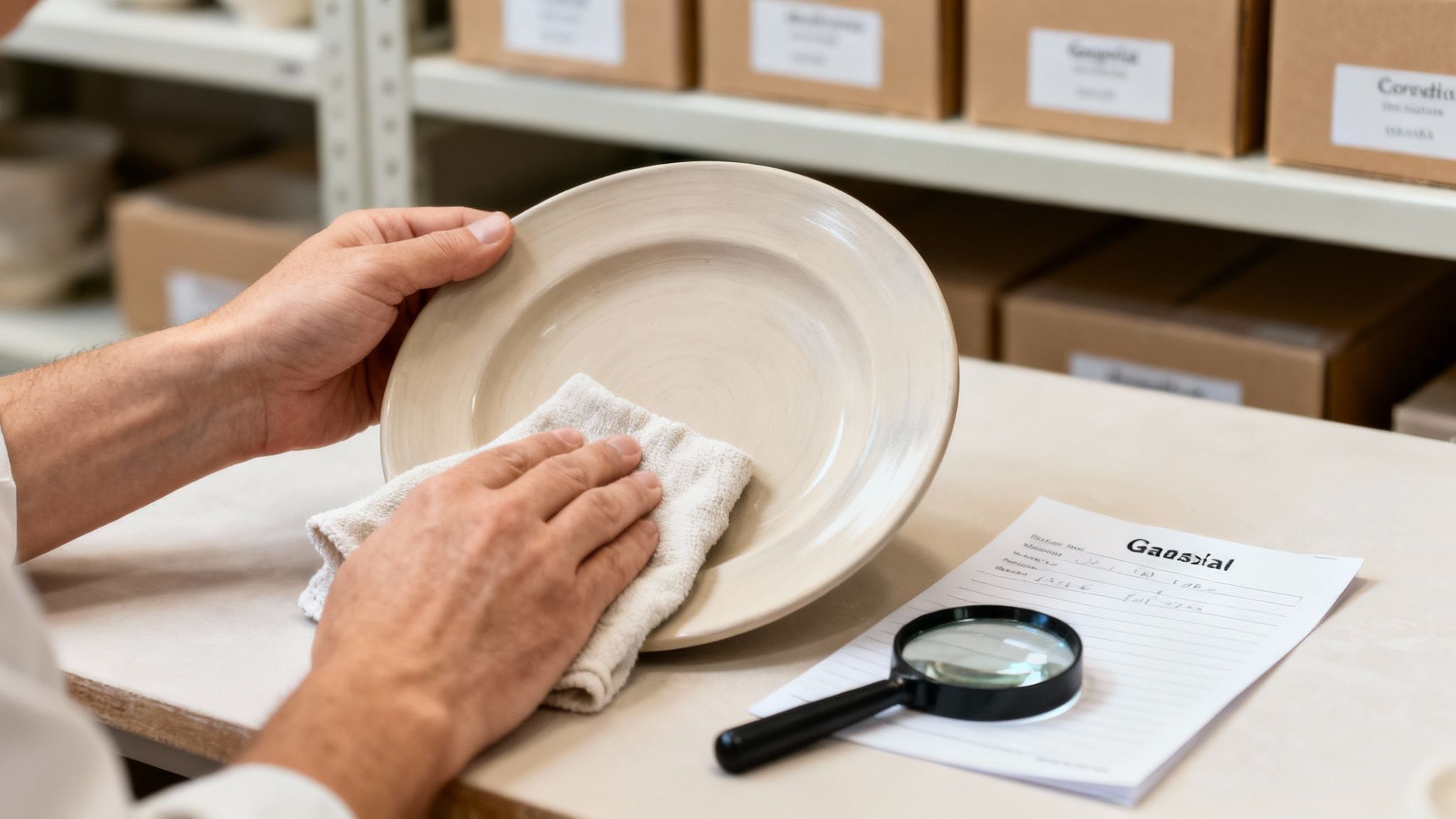
Starting a Gabriel Sweden stengods collection is a truly rewarding journey into the heart of Swedish design. But to collect smartly, it helps to understand what separates a simple decorative item from a prized find. Three key factors really determine a piece's value: its condition, its rarity, and the artist behind its creation.
Condition is king. Always aim for pieces that are free from chips, cracks, or serious crazing in the glaze. While a little bit of wear can tell a story, major damage will always bring down the value. Rarity also plays a massive part; limited-run items or pieces from the factory's early days are naturally much more desirable than mass-produced dinnerware.
And finally, the designer's touch adds a significant premium. A piece you can clearly attribute to a celebrated artist like Ingegärd Burmeister or Eke Bjerén will always command more attention—and a higher price—than an unsigned or standard factory item.
Finding authentic Gabriel Sweden stoneware is a bit of a treasure hunt. Some of the best spots to look are Swedish loppis (flea markets), antique shops, and specialised online marketplaces. As you start your search, here’s what to keep in mind:
This dedication to sourcing authentic, handmade crafts is a value shared across Sweden. Take the Dala horse from Dalarna, for example. The tradition of carving them began way back in the 17th century, with artisans turning leftover wood into beautiful folk art. Today, workshops like Grannas A. Olssons Hemslöjd, founded in 1922, carry on this legacy, preserving skills passed down through generations. You can discover more about the rich history of the Swedish Dala horse.
Taking proper care of your Gabriel stoneware will ensure it stays beautiful for years to come. Because it's stengods, it is remarkably durable, but a gentle touch is still needed to preserve its finish and integrity.
For cleaning, a soft cloth with a bit of mild, non-abrasive soap and warm water is all you need. Steer clear of harsh chemicals or scouring pads, as they can easily scratch the glaze and damage any painted details. If you have a stubborn stain, a simple paste of bicarbonate of soda and water can be gently applied.
When you're displaying your collection, try to keep pieces out of direct sunlight for long periods. Over time, the sun can cause some of the older, more vibrant glazes to fade. With just a little bit of attention, your collection will continue to tell its story for generations.
As you get more familiar with Gabriel Sweden stengods, a few questions always seem to pop up. Whether you're just starting your collection or have been admiring these pieces for years, this section is your quick-reference guide for the practical stuff.
We'll tackle the real-world curiosities that come with owning these beautiful ceramics. From whether you can actually eat your dinner off them to figuring out what makes one piece a prized find, these answers will help you feel more connected to your collection.
Absolutely. The name itself, stengods, literally means "stoneware," and it’s built to last. This type of ceramic is fired at incredibly high temperatures, making it dense, strong, and perfect for the rough and tumble of daily life. This was a core part of the Scandinavian design philosophy Gabriel Keramik embraced: beautiful things should also be useful.
So yes, most of those dinner plates, bowls, and mugs are more than capable of handling your daily meals. They’re generally quite resistant to chipping. That said, it's always a good idea to treat vintage pieces with a little extra gentleness to keep them looking their best for decades to come.
Figuring out the value of a Gabriel Sweden piece comes down to a few key things. While prices can shift with trends in the market, some qualities almost always make an item more desirable. Rarity is a huge factor. A limited-edition vase or an item from a line that was only produced for a short time will naturally be more sought-after than a common dinner plate.
The designer's name also carries a lot of weight. A piece you can confidently say was designed by a big name like Ingegärd Burmeister or Eke Bjerén will often fetch a higher price. And of course, condition is everything—a piece without any chips, cracks, or heavy crazing will always be worth more.
The sweet spot for value is finding a piece in pristine condition, from a rare series, designed by a notable artist. This combination elevates an item from a lovely decorative object to a genuine collector's prize.
This is a great question, and one that often trips up new collectors. The main difference is all in the clay and the firing process, which gives each type its unique personality.
A good way to think about it is that stoneware is the dependable workhorse of the ceramic world. Faience is more like a decorative art piece—beautiful to look at, but it needs a bit more careful handling. Understanding this distinction is key to appreciating the full spectrum of Swedish pottery.
Not every single piece, but a huge amount of it does feature hand-painted details, which is a big part of its charm. Many of those lovely floral patterns and decorative stripes were carefully applied by artisans right at the factory. If you look closely, you can often spot the tiny variations in the brushstrokes that are the tell-tale sign of a human touch, making each piece unique.
The factory also used other methods, though. Sometimes they used transfers for more uniform patterns or experimented with complex glazes that would create their own beautiful, unpredictable designs in the kiln. The presence of hand-painting really adds to the appeal, creating a direct link between you and the craftsperson who made it all those years ago.
At Dalaart, we celebrate the rich legacy of Swedish craftsmanship by curating a collection of authentic, handmade Dala horses and folk art from the heart of Dalarna. Explore our unique selection and bring a piece of Scandinavian heritage into your home. Discover your next treasure at https://dalaart.com.


.svg)


.png)


