March 12, 2026
A Swedish calendar is far more than a simple grid of dates. It's a cultural roadmap, a beautiful guide that maps out the unique rhythm of life in Sweden. For 2024, a typical Swedish calendar will be filled not just with public holidays, but also with charming cultural observances like name days (namnsdagar) and official flag days (flaggdagar).
The Swedish calendar is woven deeply into the nation’s culture, reflecting a society that moves in perfect step with its distinct seasons and treasured traditions. To understand it is to get a glimpse into the soul of Sweden, whether you're planning a visit, connecting with your heritage, or simply curious about a different way of life.
Think of it less as a rigid schedule and more as a reflection of the country's collective mood. The calendar reveals how the dramatic shift from long, dark winters to the endless light of summer shapes everything from daily routines to grand national celebrations.
To truly get a feel for the Swedish year, a few special concepts are essential:
Iconic moments like Midsummer, with its joyful maypole dances under the midnight sun, and the serene, candlelit processions of Lucia in the heart of December, are true highlights of this annual cycle. These events are tied to a deep sense of cultural identity and are often celebrated with traditional crafts, including the beloved Dala horse. You can discover more about these and other typical Swedish things in our detailed guide.
The Swedish calendar is a living document. It shows how ancient pagan traditions, Christian feast days, and modern civic life have all blended together over centuries to create the unique cultural pulse that defines the Swedish experience.
The real heart of any Swedish calendar, including for 2026, is its list of official public holidays. We call them röda dagar or "red days," and for good reason—they're often marked in red ink. These are the days when the entire country seems to take a collective breath, with schools and most businesses closing their doors.
If you’re living in or travelling to Sweden, getting a feel for these dates is essential. They set the rhythm for work, travel, and, most importantly, celebration throughout the year. It's not just a simple list, either; the Swedish approach is a fascinating blend of fixed dates and movable feasts, creating a unique pattern steeped in cultural tradition.
This visual gives you a quick glimpse of how key holidays like the röda dagar, name days (namnsdagar), and iconic celebrations like Midsummer are scattered across the Swedish year.
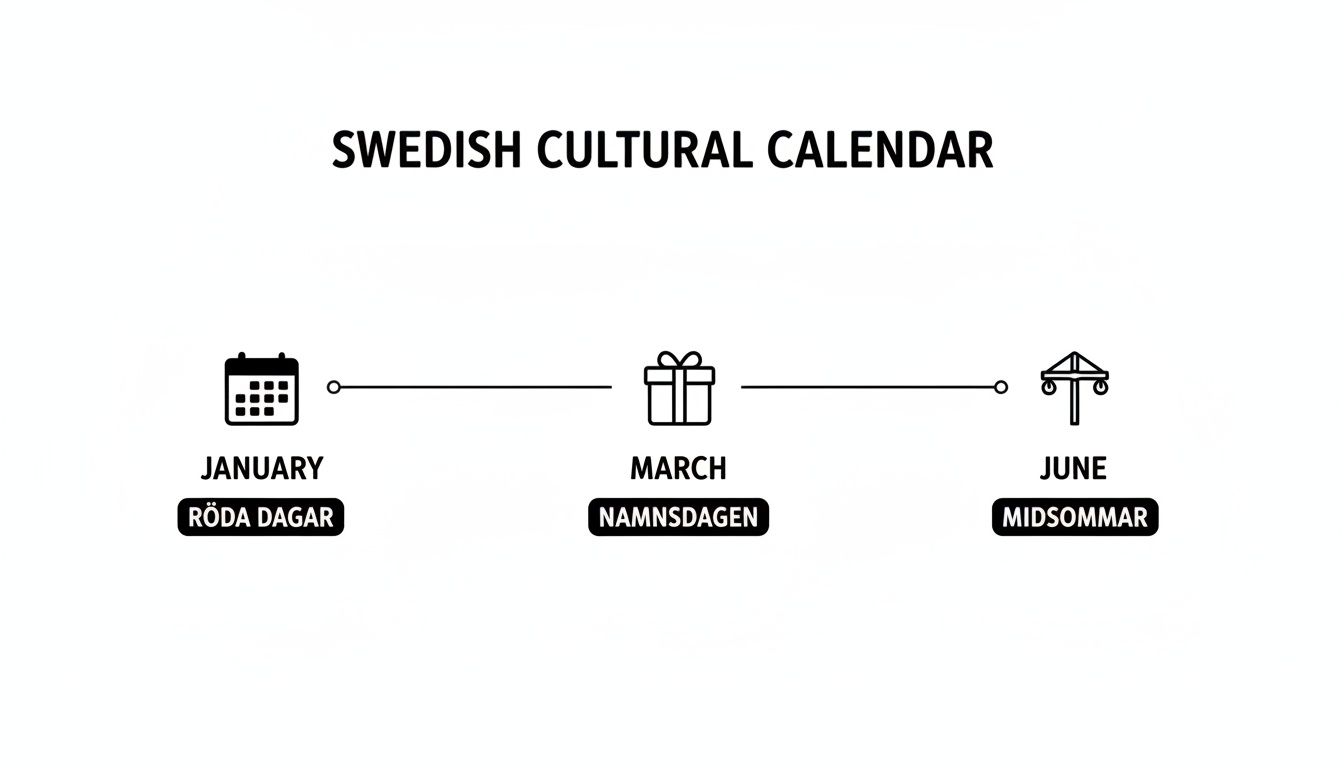
You can see how these important events anchor the year, guiding everything from big national festivities right down to our personal plans.
Some "red days" are locked into place, giving us predictable and welcome breaks. These dates typically honour historical moments or religious events that are foundational to Swedish culture.
This is where things get interesting. Other major holidays shift their dates from year to year, mostly following the lunar cycle that determines when Easter falls. These are easily some of the most anticipated events on the Swedish calendar 2026.
For many Swedes, the day before a major holiday—like Midsummer's Eve or Easter Eve—is actually more important than the official red day itself. These are often treated as "half-holidays," and it's when the real celebrations kick off.
One of our most cherished traditions is Easter (Påsk). In 2026, the key dates to mark are Good Friday (Långfredagen) on April 3, Easter Sunday (Påskdagen) on April 5, and Easter Monday (Annandag Påsk) on April 7. You’ll see kids dressing up as Easter witches (påskkärringar), going door-to-door to trade their drawings for sweets.
Then there's the big one: Midsummer. While Midsummer's Day is always a Saturday, the real party happens on Midsummer's Eve (Midsommarafton). In 2026, that's June 19. Swedes head for the countryside in droves to dance around the maypole, sing traditional songs, and feast on pickled herring and schnapps. It is, arguably, the most Swedish holiday of them all.
Once you look past the major public holidays, you’ll discover the real soul of the Swedish calendar 2024: the small, daily observances that colour everyday life. Two traditions you'll encounter almost immediately are Name Days (namnsdagar) and Flag Days (flaggdagar). They might seem minor at first, but they're a wonderful window into the nation's culture.
A Name Day is a delightful custom where almost every day of the year is dedicated to one or two specific names. It’s like a mini-birthday shared by everyone with that name, a lovely excuse for a small, spontaneous celebration. It's not a day off work, but rather a moment of simple, warm connection.
When a colleague's or friend's Name Day comes around, you might hear a cheerful "Grattis på namnsdagen!" (Happy Name Day!). This is often the perfect reason to share a fika—that essential Swedish coffee and pastry break—or perhaps bring them a small flower. It’s a subtle but heartwarming tradition that weaves a personal touch right into the fabric of the year.
The official list of names isn't random; it's carefully maintained by the Swedish Academy. While many names have deep historical roots tied to saints or royalty, the list is also updated to include more modern names, keeping the tradition alive and relevant.
This tradition fosters a quiet sense of community, sprinkling small, personal celebrations for people all across the country throughout the entire year.
Another detail you’ll spot on a Swedish calendar 2024 is the list of official Flag Days, or allmänna flaggdagar. On these dates, you'll see the iconic blue and yellow Swedish flag flying proudly from public buildings and private flagpoles all over the country. These days commemorate important events, royal birthdays, and national milestones.
It's a common point of confusion for visitors, but a Flag Day is not usually a public holiday. Most flaggdagar are normal work days; they are simply designated as days for showing national pride and respect by raising the flag.
For example, the flag is flown for the King's and Queen's birthdays, the Day of the General Election, and even United Nations Day. These observances act as visual cues, reminding everyone of Sweden's history, monarchy, and its role in the wider world. They add a layer of civic meaning to the calendar that is distinct from both religious holidays and the personal cheer of a Name Day.
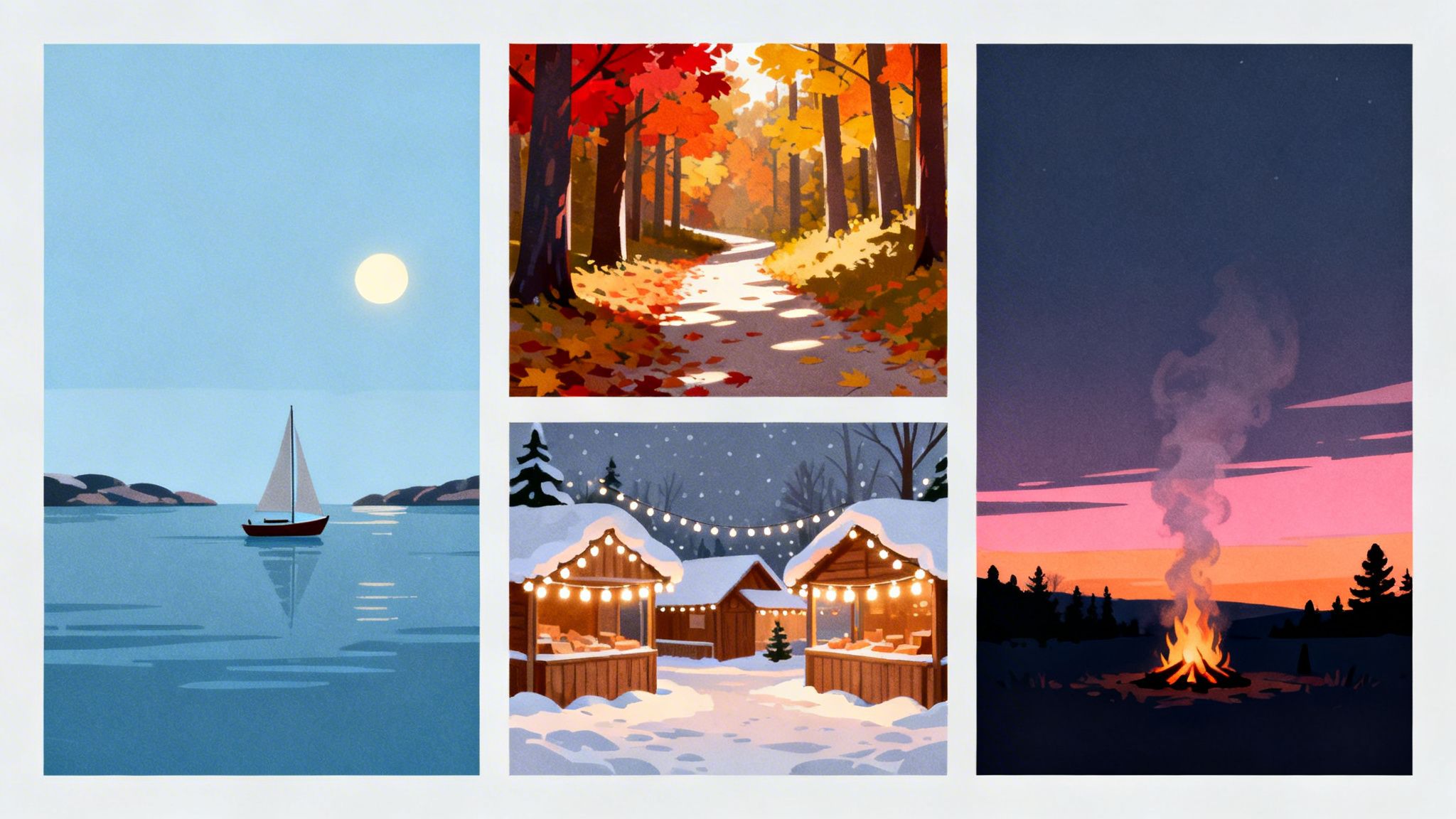
Choosing when to visit Sweden isn't really about finding the "best" time. It’s about deciding which version of Swedish magic you want to experience. The Swedish calendar 2024 is completely intertwined with the country's four distinct seasons, and each one offers a totally different atmosphere, a unique set of traditions, and its own special charm.
Summer is, without a doubt, the most popular season, defined by long, bright days and an energy that feels almost electric. It’s a time for living life outdoors, from sailing in the Stockholm archipelago to celebrating the iconic Midsummer festival. The season’s draw is clear in the numbers; in a recent year, August accommodation revenues topped five billion Swedish kronor as visitors flocked to enjoy the warmth. Aligning your trip with this seasonal rhythm is the real secret to an unforgettable adventure.
This is the season of endless light. From late June to early August, Swedes pour outside for festivals, crayfish parties (kräftskivor), and long evenings spent by the water.
As summer’s vibrancy fades, Sweden is painted in the rich, warm colours of höst (autumn). The air turns crisp, and a wonderful sense of calm settles over the land. It’s a fantastic time for cosy experiences and appreciating the quiet beauty of the changing landscape.
The shift from summer's social buzz to autumn's quiet reflection is a core part of the Swedish year. It's when fika—the beloved coffee and cake break—moves indoors, and candles begin to appear in windows, heralding the cosy season ahead.
This is the perfect season for long walks in the forest, mushroom foraging, and visiting cities after the summer crowds have thinned. The golden light creates stunning photo opportunities, capturing a more serene and thoughtful side of the country.
Winter transforms Sweden into a magical, snowy wonderland, especially in the north. The days might be short, but they're countered by a culture of cosiness (mys) and enchanting, candlelit traditions that bring warmth and light to the darkness.
This season is defined by festive Christmas markets, especially in Stockholm's Old Town (Gamla Stan), and the beautiful Lucia processions on 13 December. For those seeking true winter magic, a trip north offers a real chance to witness the breathtaking Northern Lights. You might also enjoy our guide on authentic Swedish Christmas decorations to bring a touch of that winter feeling into your own home.
Vår (spring) is a time of pure, joyful reawakening. As the snow melts and the daylight hours stretch longer and longer, Swedes celebrate its return with gusto. The most significant event is Walpurgis Night (Valborg) on 30 April, when huge bonfires are lit across the country to finally welcome spring and chase away the last of winter's chill.

While this digital guide is a great start, there’s nothing quite like having a physical Swedish calendar in your home. It’s a tangible way to connect with the year’s unique cultural rhythm. Thankfully, finding an authentic one is easier than ever, with many well-known Swedish stationery shops and museum gift stores now offering international shipping.
The real trick is knowing what makes a calendar genuinely Swedish. A true Swedish calendar 2024 isn’t just a grid of dates; it’s a cultural tool that reflects the very way life is organised in Sweden.
When you're browsing, keep an eye out for three key features you’d find in any Swedish home or office. Without them, a calendar is just missing that authentic character.
Owning a Swedish calendar is like holding a piece of the culture in your hands. It’s a daily reminder of the small traditions and seasonal shifts that define the year, from celebrating a "Gustav" on its name day to noting the start of week 25 for Midsummer planning.
Beyond these practical details, many calendars are also beautiful pieces of art. Look for ones that feature stunning nature photography capturing Sweden's dramatic landscapes, or those that showcase designs from beloved Swedish artists. Others celebrate traditional folk art, like the intricate kurbits patterns you might find on a Dala horse.
This connection to culture feels especially important as interest in Sweden flourishes. In fact, 2024 saw 8.7 million international visitors—a huge post-pandemic success that boosted tourism spending to US$10.7 billion. This boom has brought even more attention to culturally rich regions like Dalarna, where visitors seek out authentic crafts. You can explore more about this tourism triumph on Hotelagio.com.
For anyone wanting to buy directly from a trusted source, you might be interested in exploring Leksands Hemslöjd’s webshop. It’s a wonderful place to find genuine Swedish crafts.
Getting to grips with the Swedish calendar can feel a little different at first, with its unique quirks and traditions. Let's clear up some of the most common questions that pop up when looking at the Swedish calendar for 2024.
You'll often hear Swedes talk about a 'red day' or röd dag. This is simply what they call an official public holiday. The name is quite literal, coming from the age-old tradition of printing these special dates in red ink on physical calendars to make them stand out.
On any red day, you can expect schools, banks, and the vast majority of businesses to be closed, giving the whole country a well-deserved day off.
This is a classic point of confusion, even for some Swedes! While Midsummer's Day (which always falls on a Saturday) is the official red day, the real party happens the day before, on Midsummer's Eve.
Although it’s not technically a public holiday, almost everyone treats it like one. Most shops and offices either close for the entire day or shut down around noon as the entire country heads off for the quintessential Swedish celebration.
The movable feasts on the Swedish calendar, like Easter and Midsummer, are determined by ancient patterns. Easter follows the lunar cycle, specifically the first Sunday after the full moon that occurs on or after the spring equinox. This is why its dates change every single year.
In Sweden, week numbers, or veckonummer, are a huge part of everyday planning, especially in business and professional life. The year is neatly divided into 52 or 53 numbered weeks.
It’s completely normal to schedule a meeting for "week 34" rather than a specific set of dates. The system is quite logical: week 1 is defined as the first week of the year that contains at least four days. It’s a small detail, but one that’s essential for navigating scheduling in Sweden.
For a piece of authentic Swedish culture that lasts all year long, explore the handcrafted Dala horses and other traditional art at Dalaart. Each piece is a unique celebration of heritage, perfect for your home or as a meaningful gift. Discover your own beautiful piece at https://dalaart.com.


.svg)


.png)


