March 25, 2026
Graffiti wallpaper does more than just cover a wall; it brings the raw, unfiltered energy of street art right into your living space. It’s a way to turn a simple room into a bold statement, infusing it with an authentic, creative spirit that’s uniquely you.
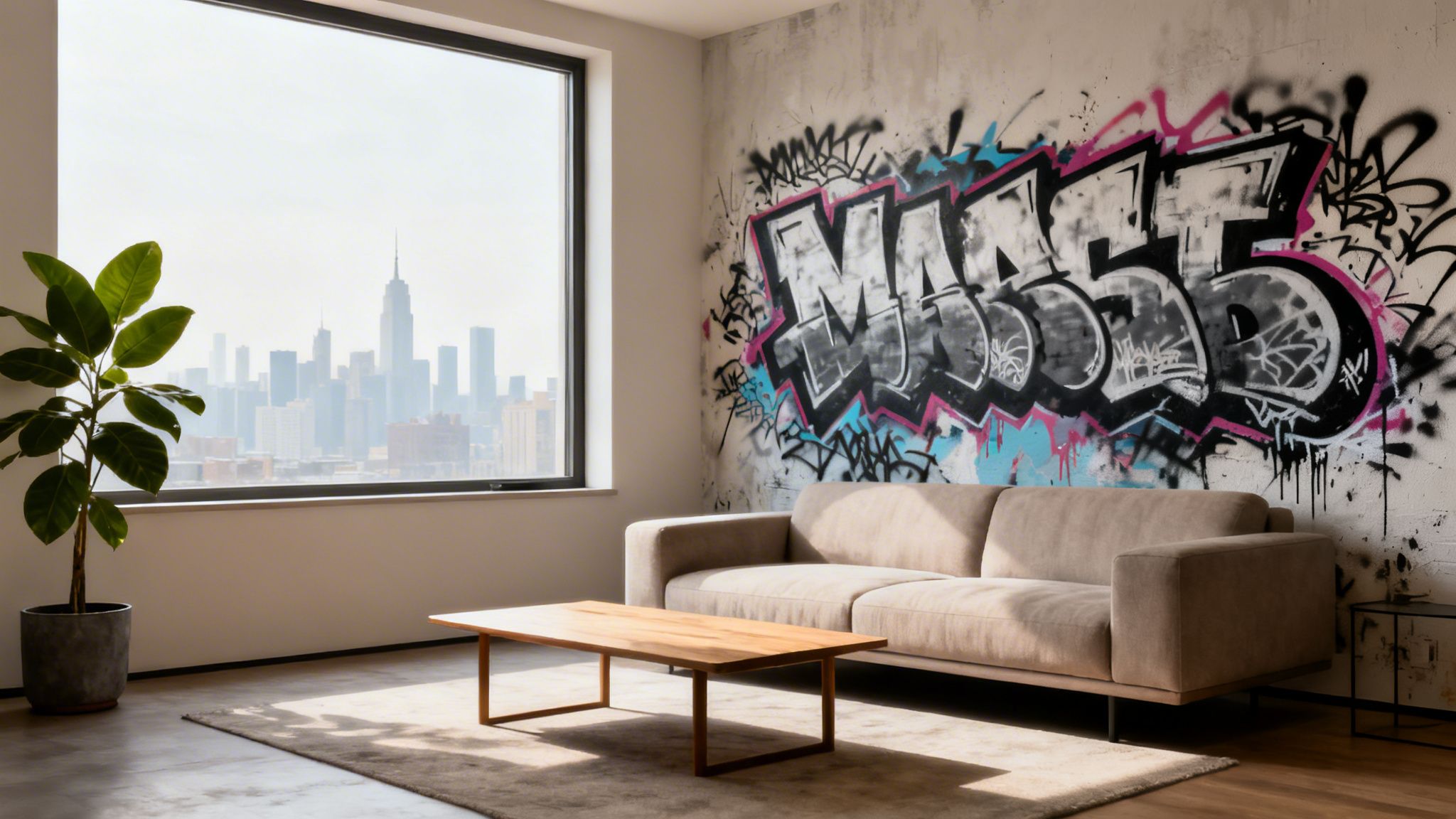
The journey of graffiti from gritty city streets to chic living rooms marks a real turning point in interior design. More and more, we're seeing homeowners and designers use graffiti wallpaper to craft spaces that feel personal and alive, a far cry from the cookie-cutter looks of the past. It’s all part of a bigger desire to make our homes a true extension of who we are.
When you think about it, choosing a powerful graffiti mural isn't so different from acquiring a piece of fine art. It immediately becomes the room's centrepiece, setting the entire mood and showing off your personal style. This works especially well in modern city apartments, where a vibrant graffiti wall can create a stunning backdrop, adding layers of depth and edgy sophistication.
This isn’t just some fleeting fad; it’s a genuine movement towards designing spaces that feel like they belong to you. The trend has really taken off across the globe, especially in places where self-expression is a big part of home decor. In Southeast Asia, for instance, the appetite for graffiti-inspired wallpaper has been on a steady rise since 2018.
In fact, projections suggest that by 2026, this style could make up 15-20% of the niche urban decor market in countries like Indonesia and Thailand, a surge led by young millennials putting their stamp on city apartments. What’s more, with 62% of regional consumers now putting sustainability first, the availability of eco-friendly prints using non-toxic inks is giving the trend an extra push. You can discover more about this urban decor movement and its market growth on globalsources.com.
Choosing graffiti wallpaper is a commitment to individuality. It’s about telling a story on your walls and creating an environment that sparks creativity and conversation every single day.
This idea of making a bold statement with wall art has parallels in other decor choices. For example, our guide on choosing the perfect pop art poster explores how different art forms can define a room's entire character. Ultimately, whether it's a poster or a full mural, the goal is the same: to create a home that is an authentic reflection of you.
Choosing the right graffiti wallpaper can feel like a monumental decision, but the key is to approach it methodically. By breaking the process down into three core elements—material, finish, and scale—you can confidently select a design that not only looks incredible but also suits your lifestyle, your room, and your budget. Let's delve into how you can select the perfect paper for your space.
The first point to consider is the wallpaper’s material, and its intended location plays a massive role in this choice. For a busy hallway, a child’s playroom, or even a kitchen, a durable vinyl wallpaper is an excellent choice. It is scrubbable, resistant to moisture, and can handle the daily wear and tear that comes with high-traffic areas.
On the other hand, if you are a renter or someone who simply loves to refresh their decor frequently, peel-and-stick wallpaper will be your greatest asset. This self-adhesive option is designed for straightforward application and, more importantly, clean removal that won’t damage your walls. It’s a wonderfully low-commitment way to embrace a bold new look.
Once you have a material in mind, your next decision is the finish. The two primary options are matte and gloss, and each creates a distinctly different atmosphere in a room.
A matte finish is completely non-reflective, giving the artwork a flat, almost chalky appearance that feels very authentic to street art. It is also brilliant at hiding minor imperfections on your walls and works beautifully in well-lit rooms where you want to avoid any glare.
Conversely, a gloss finish has a reflective sheen that truly makes colours pop and can add a touch of modern glamour to a space. While this finish is often more durable and easier to clean, it will highlight any bumps or texture on your wall. A gloss finish is best suited for a sleek, contemporary room where you want the graffiti wallpaper to serve as a high-impact, polished feature.
A simple tip I've learned over the years is to always order samples of both finishes. Viewing them in your own home's unique lighting can make the decision so much clearer. A finish that looks perfect online might feel completely different on your wall.
Finally, let's discuss scale. The size of the graffiti artwork in relation to your room's dimensions is absolutely crucial for creating the right atmosphere. The goal is impact, not chaos.
For a large, open-plan living room, a full-mural graffiti wallpaper can be a truly breathtaking focal point. It defines the entire space, acting as a massive, singular piece of art. For more inspiration on how to select art that fits your walls, you can check out our guide on choosing paintings for your wall.
In smaller spaces, like a home office or a bedroom, a full mural might feel overwhelming. Here, a subtle accent panel is a much smarter choice. For instance, applying a narrower strip of a vibrant graffiti print behind a headboard or a desk creates a powerful visual punch without dominating the room. This approach draws the eye and injecks personality while maintaining a sense of balance and space.
So, you’ve picked out the perfect graffiti wallpaper and you’re ready to transform your space. It’s a genuinely satisfying project you can absolutely pull off yourself. Don’t let any installation horror stories you've heard put you off; with the right prep work and a little patience, you can get a finish that looks completely seamless and professional. It’s all about getting the fundamentals right before you even think about unrolling that first strip.
The secret to a great wallpaper job doesn’t actually start with the paper. It starts with your wall. A successful application hinges entirely on a perfectly prepared surface, because even the tiniest imperfections can telegraph through the paper once it’s up. Taking the time to create a smooth, clean base is non-negotiable.
First things first, give your wall a good, thorough clean. A simple mix of mild soap and water is usually all you need to get rid of any dust, grime, or oils that could prevent the adhesive from sticking properly. Let the wall dry completely before you move on.
Next, run your hand over the surface and inspect it closely. You'll want to fill any cracks or holes with a good quality filler. Once it's dry, sand the patches down until they’re perfectly flush with the rest of the wall. A flawlessly smooth surface is what ensures your graffiti wallpaper lies flat, without any annoying bumps or ridges showing through.
The final, and most-skipped, step is to apply a coat of wallpaper primer. Primer is your best friend here, doing two critical jobs: it seals the porous wall so the adhesive doesn't just soak right in, and it creates a better surface for the wallpaper to grip. This little bit of extra work makes positioning the paper so much easier and, believe me, will save you a massive headache if you ever decide to remove it down the line.
A well-primed wall is the foundation of a great wallpaper job. It's the single most important step for preventing bubbles, ensuring strong adhesion, and making the entire process less stressful.
With your wall prepped and ready, it's time to measure. Measure the height of your wall from ceiling to skirting board, then add at least 10 cm to that number. This extra bit of length is your trim allowance, and it gives you some crucial wiggle room for a perfectly clean cut at the top and bottom.
Now, roll out your first strip of wallpaper on a clean, flat surface (a pasting table is ideal). Using your measurement, mark a faint cutting line with a pencil. For a dead-straight cut, always use a long straight edge and a very sharp craft knife. Trust me, resisting the temptation to use scissors will give you a much cleaner, more professional edge.
When you cut the next strips, the pattern repeat is everything. You’ll need to carefully align the design on the new strip with the one you’ve just cut to make sure the graffiti art flows unbroken across the wall. Bold, abstract graffiti designs can be quite forgiving, but a little precision here really pays off in the final look.
The kind of adhesive you need will depend on your specific wallpaper. Some traditional papers require you to paste the paper itself, but many modern non-woven wallpapers use a "paste-the-wall" method. I find this technique is often much easier for beginners; you just roll the adhesive directly onto the wall and hang the dry paper right over it.
Whichever method you’re using, apply a thin, even coat of adhesive. I always suggest starting your first strip in an inconspicuous corner or right next to a door frame. Use a plumb line or a spirit level to make absolutely certain that first piece is perfectly vertical. This strip is the guide for all the others, so getting it straight is critical.
As you hang each strip, use a wallpaper brush or a plastic smoothing tool to work out any air bubbles. Always work from the centre of the strip outwards to the edges.
This simple process flow highlights the key decisions you will make when choosing your graffiti wallpaper.
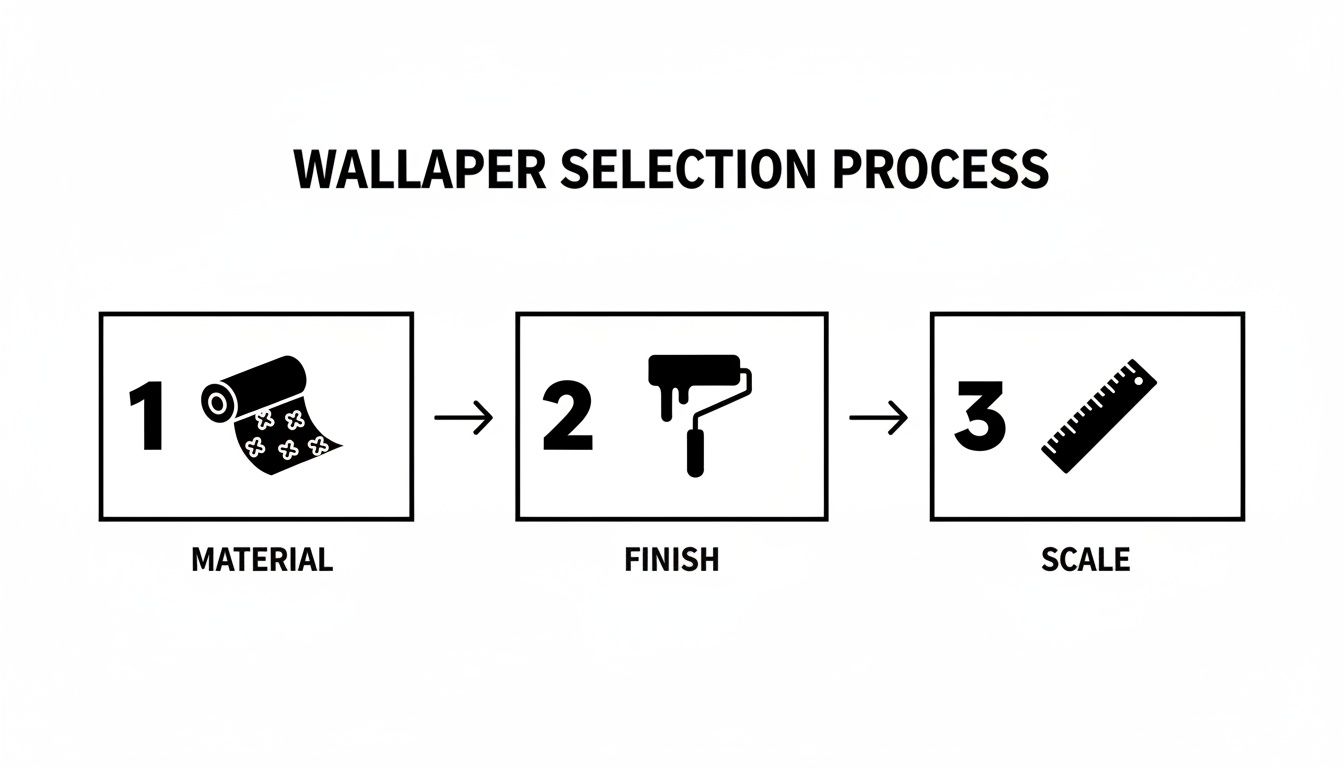
This visual guide reminds us that material, finish, and scale are the core pillars of a successful selection.
Finally, trim the excess paper at the ceiling and skirting board with your straight edge and a fresh, sharp blade in your knife. When you get to outlets and switches, make sure to turn off the power at the mains. Remove the faceplates, hang the paper directly over the opening, and then carefully cut an 'X' from corner to corner over the fixture. This allows you to neatly trim away the excess before screwing the faceplate back on for a perfect finish.
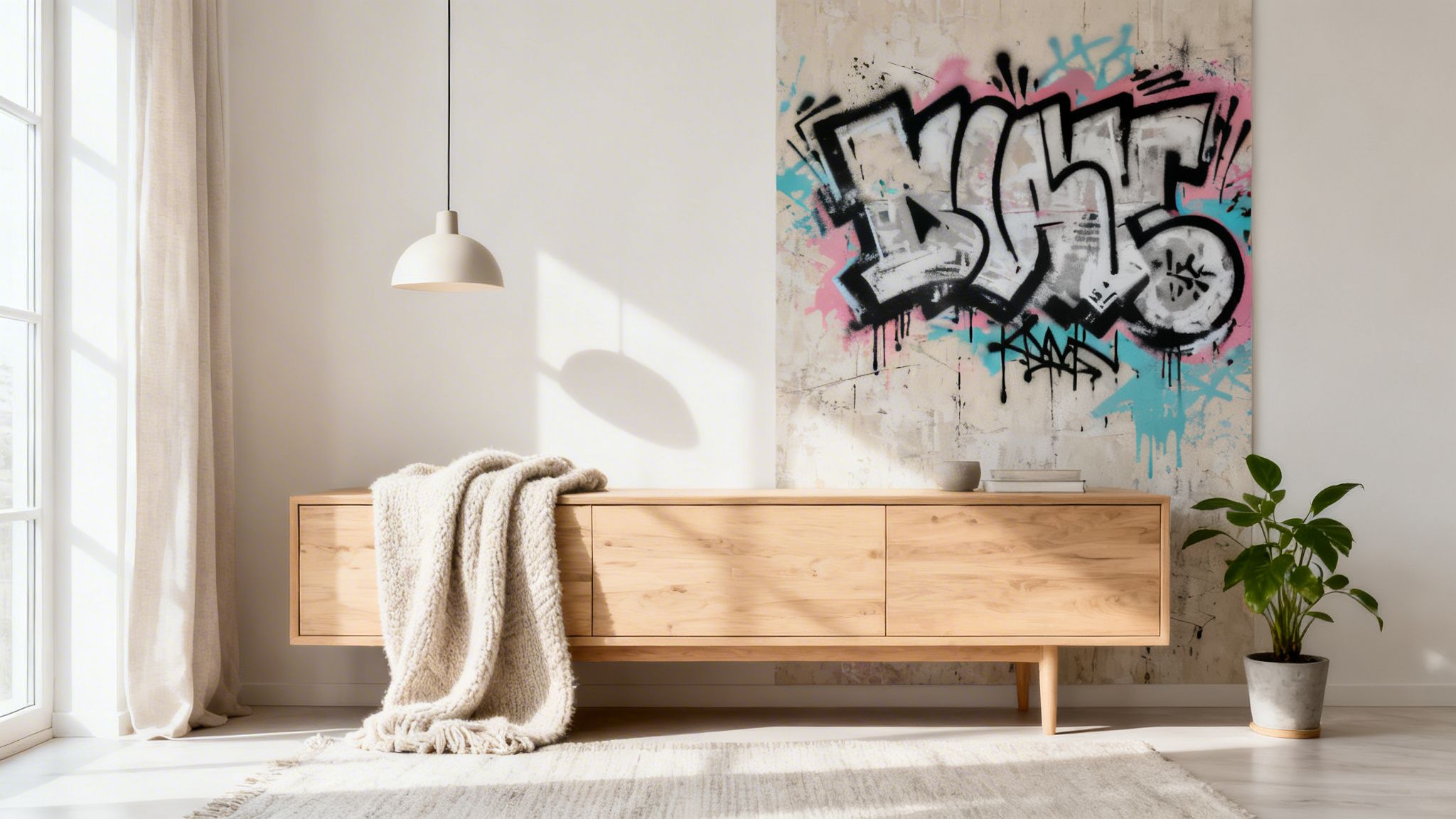
Pairing an edgy graffiti wall with the quiet calm of Scandinavian design might sound like an odd couple. But trust me, it’s a design secret that works beautifully, creating spaces that feel both sophisticated and full of personality. The entire trick is finding the right balance.
Think of your vibrant wallpaper as the main event—the big, bold piece of art in the room. Once you have that anchor, you can build a serene, harmonious environment around it. The undeniable energy of a striking graffiti mural becomes the perfect backdrop for classic Scandinavian elements. We're talking minimalist furniture with clean lines, the pale tones of natural wood, and layers of cosy, neutral textiles. Instead of clashing, the two styles actually complete each other.
The real magic happens when you start tying the room together. My favourite technique, and it's incredibly simple, is to pull accent colours directly from the graffiti wallpaper itself. Just look for one or two of the less dominant colours in the artwork and sprinkle them throughout your decor.
Here are a few ways I’ve seen this work wonders:
This simple step makes it obvious that the edgy wallpaper and the calm furniture are part of a single, deliberate vision.
The rise of digitally printed wallpaper has been explosive, and styling trends are catching on. In places like Singapore and Malaysia, for example, graffiti motifs made up a surprising 22% of custom wallpaper orders in recent years. It’s also telling that 25% of urban millennials are now using graffiti walls to nail this exact 'Scandi-street' aesthetic. You can discover more about the growing wallpaper market and its influences on design, visit fortunebusinessinsights.com.
Ultimately, this look is all about celebrating two very different vibes in a single space. It creates a style that feels deeply personal, showing off a love for modern urban energy right alongside an appreciation for timeless, calming design. You’re letting the raw creativity of street art live in harmony with the mindful simplicity of Scandinavian living.
The most successful 'Scandi-street' rooms feel layered, not just decorated. The graffiti provides the soul and the story, while the Scandi elements provide the comfort and peace.
This combination of bold art and minimalist decor is also a fantastic strategy for personalising other unique spaces in your home. If you're searching for more ways to create a distinctive retreat, you might find some good ideas in our article offering man cave inspiration. The principle is exactly the same: use a strong visual anchor to build a room that is completely and uniquely your own.
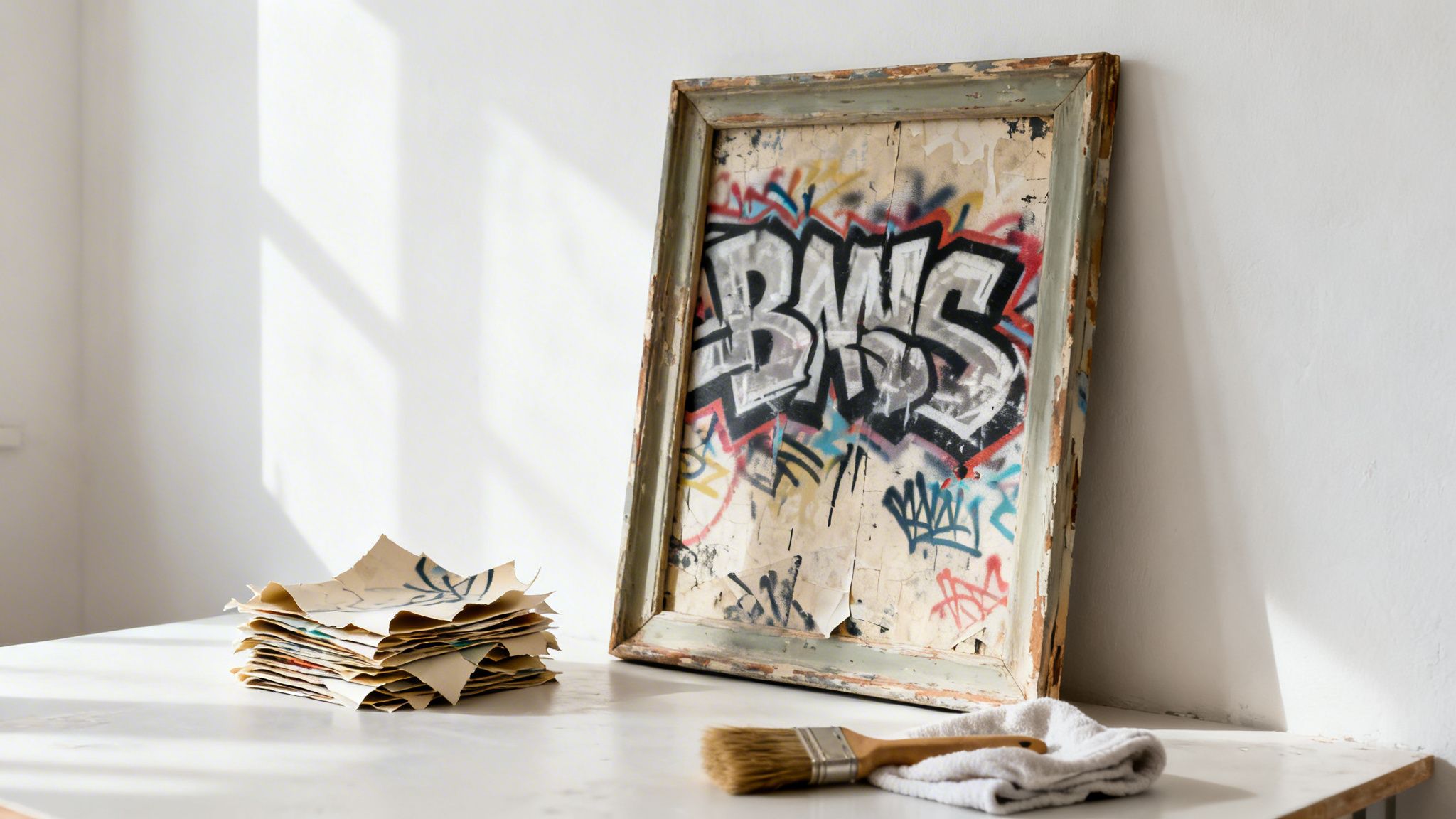
So, your graffiti masterpiece is on the wall. The bold colours and dynamic lines have completely transformed the room. Now, how do you keep it looking just as incredible for years to come?
Thankfully, looking after modern wallpaper isn't the chore it used to be. If you’ve chosen your material well, long-term care is refreshingly simple. Most high-quality papers today are built for real life.
For everyday dust that settles on the surface, a gentle sweep with a dry microfibre cloth or a feather duster is all it takes. If you spot a small scuff or a stray mark, don't panic. Just take a slightly damp sponge with a tiny bit of mild soap and carefully dab the area.
A word of caution, though: always test any cleaning method on a hidden spot first—perhaps behind the sofa or a tall bookshelf. This quick check ensures you won't accidentally affect the colour or finish.
The biggest enemy of any bold artwork is sunlight. If your graffiti wall is bathed in direct sun for hours each day, fading is a real risk. Protecting that vibrant design is key.
Sheer curtains or UV-filtering window films are brilliant for this. They diffuse the harshest rays, protecting your wallpaper without plunging the room into darkness.
The durability of the paper itself also plays a huge part here. Especially in humid climates like those across Southeast Asia, the right material is everything. Vinyl-based papers, which recently held a 36.3% market share, are a popular choice for their superb moisture resistance. This not only helps them last longer but also makes them much easier to clean. You can find more analysis on the Asia-Pacific wallpaper market and material trends on kenresearch.com.
The longevity of your wallpaper isn't just about cleaning; it's about preventative care. Thinking ahead about factors like sunlight and humidity when you install will make maintenance significantly easier down the line.
When the time eventually comes for a change of scenery, don’t just reach for the scraper. That stunning graffiti wallpaper can have a second life. It’s a wonderful approach that's both sustainable and lets you hang on to a design you truly loved.
Here are a few of our favourite ideas for upcycling leftover or removed wallpaper:
When considering a bold design element like graffiti wallpaper, it's natural for a few practical questions to arise. We've addressed the most common concerns, providing the clarity and confidence you need to bring this dynamic art form into your home.
Making a strong statement with your decor is exciting, but it's wise to be prepared. Let's walk through these final details so you can feel completely ready for your project.
Absolutely. For those in rented accommodation, the solution lies in peel-and-stick graffiti wallpaper. These products are engineered specifically for temporary application, allowing for removal without causing damage to the wall surface or leaving any sticky residue behind.
This makes them a superb choice for personalising a flat or home without putting your security deposit at risk. As a best practice, we always recommend testing a small sample on an out-of-the-way area, like behind a door or a large piece of furniture, to confirm it removes cleanly from your particular walls.
Yes, this is entirely possible, but your choice of material is the most critical factor. In spaces prone to moisture, such as kitchens and bathrooms, you must select a vinyl-coated or solid vinyl wallpaper. These materials are designed to be scrubbable and to withstand the humidity common in these environments.
You should avoid standard paper or non-woven wallpapers, as they are susceptible to peeling, bubbling, and water damage over time. It's also vital to ensure the room has proper ventilation, as this will significantly extend the life and preserve the appearance of your wallpaper.
"To select a design that endures, approach it as you would a piece of art. Prioritise strong artistic merit over fleeting trends. A composition with a solid colour theory will remain timeless, whereas a design based on a passing fad will quickly date the space."
To ensure your chosen design has lasting appeal, think of yourself as an art curator for your own home. Opt for prints with a timeless, artistic quality rather than those featuring trendy slang or pop culture references which can feel dated surprisingly fast. Abstract or monochromatic graffiti styles often possess greater staying power.
A practical way to approach this is by evaluating the overall colour palette. When you select a design with colours that already harmonise with your home's existing furniture and decor, you create a more cohesive and enduring aesthetic. This strategy helps ground the bold artwork within your space, making it feel purposeful and ensuring your graffiti wall paper remains a feature you love for years to come.
Ready to bring a touch of unique Scandinavian heritage and artistry into your home? Explore the authentic, hand-crafted collection at Dalaart and find a piece that tells a story. Visit us at https://dalaart.com to discover your next treasure.


.svg)


.png)


