January 21, 2026
When you imagine Swedish jewelry, you might picture stark, simple designs. But the reality is a rich tapestry of artistry and philosophy, a world where minimalism meets genuine meaning. Every piece tells a story of nature, balance, and intentional living.
This guide will walk you through the core principles that make this craft so distinct and celebrated around the globe.
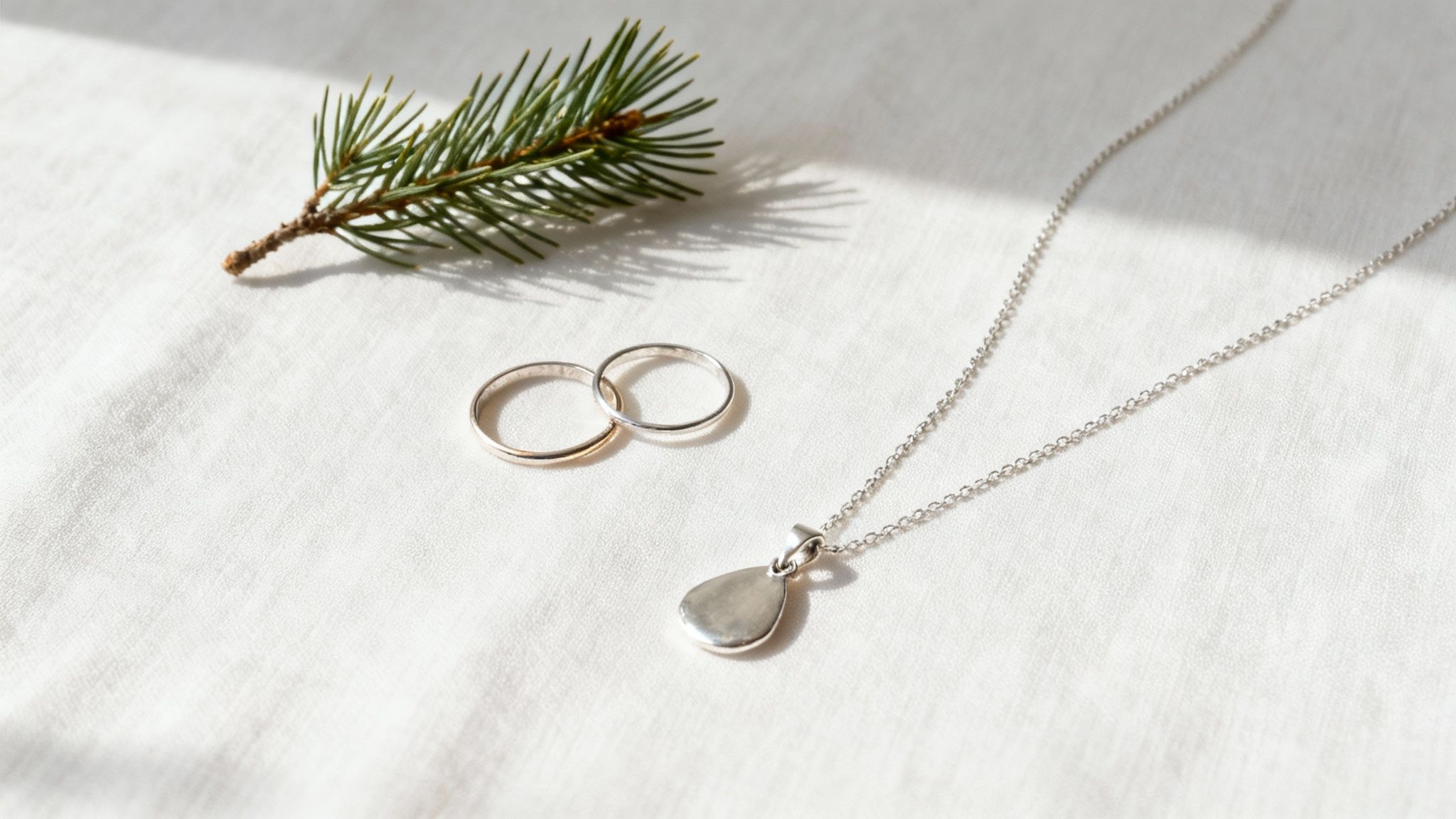
Swedish jewelry is more than just an accessory; it’s a wearable expression of a cultural mindset. Unlike styles that shout for attention with opulent gems and intricate patterns, Swedish design speaks in a quiet, confident voice. It puts form, function, and feeling ahead of fleeting trends.
This whole approach is deeply rooted in core Swedish values. Concepts like simplicity and a profound connection to the natural world aren’t just aesthetic choices—they are guiding principles. The result is jewelry that feels both modern and timeless, deeply personal yet universally appealing.
The defining trait of many swedish jewelry brands is their devotion to a design philosophy that values understatement above all else. Picture a beautifully crafted silver ring that follows the natural curve of your finger, its form so intuitive it feels like an extension of you. That’s the heart of it—this is jewelry made to be lived in, not just displayed.
This philosophy is built on a few key pillars:
To really get Swedish design, you need to understand lagom. It’s a Swedish term that translates roughly to "not too little, not too much, just right." It’s the art of finding perfect balance.
In jewelry, lagom shows up in pieces that are substantial without being heavy, detailed without being cluttered, and elegant without being flashy. It’s a design that complements the wearer rather than overpowering them.
This idea of "just enough" is why Swedish jewelry often feels so intentional. Each element has a purpose, creating a harmonious whole that is both beautiful and deeply satisfying to wear. As we go on, we'll explore how this unique philosophy shapes the creations of iconic and emerging brands, offering a new way to appreciate wearable art.
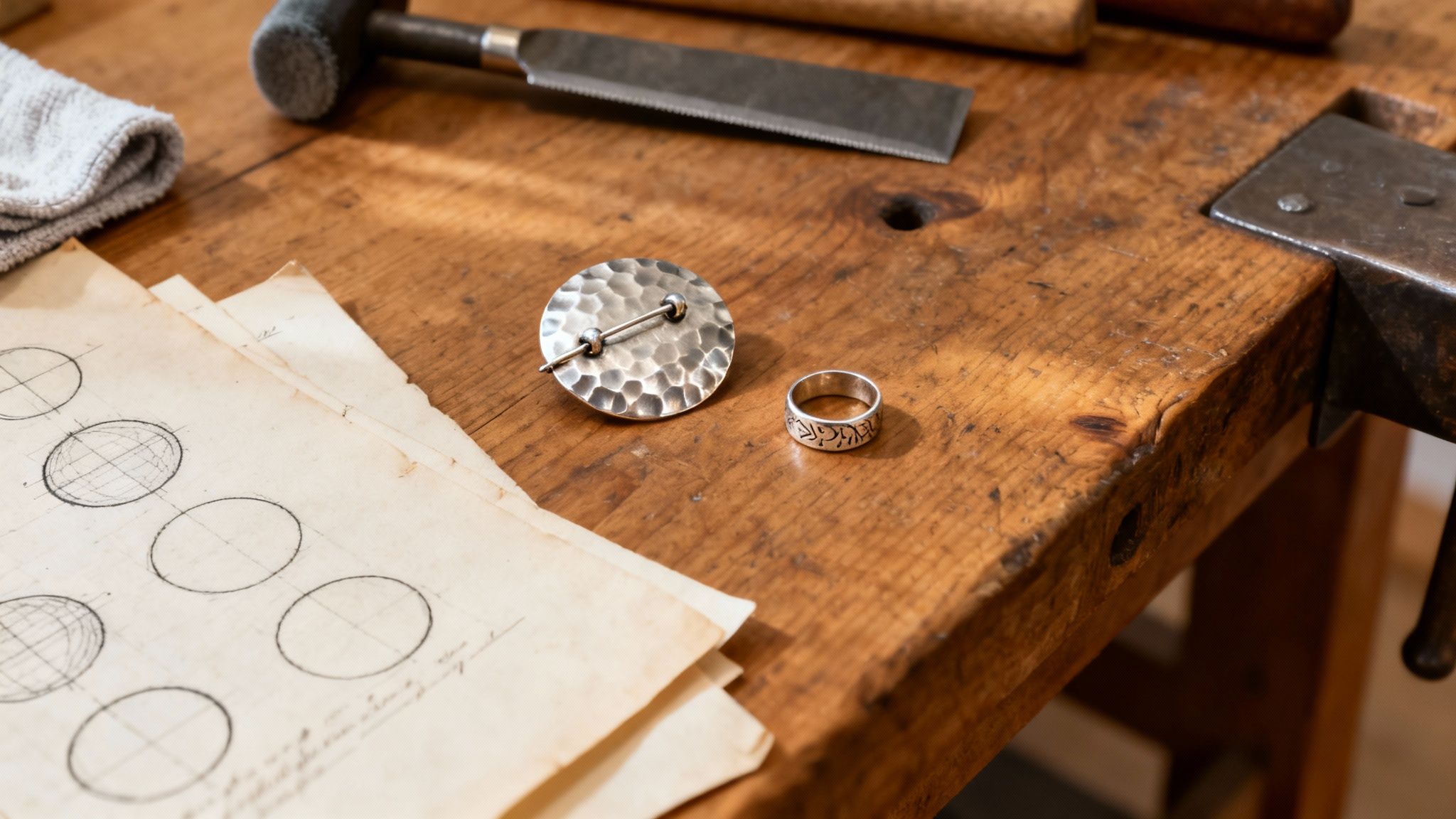
To really get to the heart of today’s sleek swedish jewelry brands, you have to look back through centuries of craft. This isn't just a story about style; it’s about a cultural identity shaped by the rugged Nordic landscape and the currents of history. The clean, minimalist lines we see today have deep roots, drawing from a powerful and storied past.
The story starts way back in the Viking Age (around 793-1066 AD), a time famous for its formidable metalwork. For the Vikings, jewelry was so much more than decoration. It was a clear symbol of a person’s status, wealth, and even spiritual protection. Pieces like heavy arm rings, intricate brooches, and detailed pendants, usually made from silver, bronze, or gold, were bold statements of power and loyalty.
These early pieces were known for their robust shapes and complex patterns, often weaving in animal figures and mythological symbols. This period forged a deep respect for metal as a storytelling medium—a tradition that still echoes in the work of today’s designers, who clearly value the raw beauty of their materials.
As the Viking era faded, a new aesthetic started to bloom in Sweden's rural communities. This was the era of folk art, or allmogekonst, a vibrant expression of local life and identity. The movement was all about celebrating handcrafted objects made for daily use, from brightly painted furniture to textiles and, of course, jewelry.
Unlike the fierce symbols of the Vikings, folk jewelry was intimately tied to nature, community, and life’s biggest moments. Think bridal crowns, silver buttons, and heart-shaped pendants, often decorated with colourful glass beads or simple, heartfelt engravings. This tradition nurtured a love for pieces that were both beautiful and useful, carrying personal and shared meaning.
This focus on craftsmanship and function is a common thread in Swedish design. To see how this blend of heritage and practicality comes alive in other crafts, you can explore the lasting charm of Höganäs Keramik stoneware, another iconic example of the nation’s artistic soul.
This period cemented a core belief in Swedish design: that an object’s true value is found not in its flashiness, but in its authenticity, its craftsmanship, and its connection to everyday life. It's the art of finding extraordinary beauty in ordinary things.
This philosophy of handmade purpose laid the groundwork for everything that followed, creating a cultural appreciation for things made with care and intention. The focus on local materials and artisanal skill became a true hallmark of Swedish creativity.
The early 20th century was a major turning point, bringing with it the "Swedish Grace" movement. This style, which shone brightest in the 1920s, blended Neoclassicism with the new ideas of functionalism. It was a refined, elegant look that put clean forms and high-quality materials first, moving away from the fussy, ornate styles popular across Europe at the time.
Jewelry from this period became more streamlined and geometric but still held onto a sense of classical balance. This sophisticated simplicity perfectly set the stage for the mid-century modernism that would soon capture the world’s attention. After World War II, Swedish designers went all-in on functionalism, stripping away every non-essential detail to focus purely on form.
This was the moment that truly defined the minimalist Scandinavian look we know and love today. The guiding principles were simple and clear:
This entire journey—from Viking strength and folk-art warmth to modernist purity—reveals a conversation that has spanned centuries. Each era added something to a design language that values simplicity, function, and a profound connection to its cultural roots. Contemporary swedish jewelry brands are the keepers of this incredible legacy, reinterpreting these traditions for a new generation.
What is it that makes a piece of jewellery feel so distinctly Swedish? The answer isn't just in what you see, but in a quiet, deeply held design philosophy that prizes balance, practicality, and a real connection to the natural world. It’s an approach that transforms simple metals into wearable art, guided by principles handed down through generations.
At the very heart of this is the idea of 'Lagom'. There’s no perfect English translation, but it’s a uniquely Swedish concept that means ‘just right’ or ‘perfectly balanced’. This is the subtle force behind the understated elegance you see in so many designs; it's about saying no to excess and yes to thoughtful intention.
In practice, it means a necklace will hang with just the right weight. A ring will have a single, perfectly placed detail instead of a dozen. A bracelet will feel completely harmonious on your wrist. Lagom is about making sure each piece complements the person wearing it, becoming part of their story instead of shouting over it. It’s the art of quiet confidence, forged in silver and gold.
Another cornerstone of Swedish design is the unwavering belief that form must follow function. This isn't just a catchy phrase; it's a genuine commitment that ensures every piece is as comfortable to wear as it is beautiful. A pair of earrings might look like a miniature sculpture, but you can bet they'll be light and balanced enough to wear all day without a second thought.
This practical mindset means beauty never comes at the cost of usability. The clasp on a necklace will be secure but simple to fasten yourself. The profile of a ring won't snag on your favourite jumper. It’s this focus on thoughtful ergonomics that helps a piece of jewellery slide seamlessly into your daily life.
The ultimate goal is to create something beautiful that feels so natural and intuitive to wear it becomes like a second skin. It’s a subtle but powerful approach that elevates jewellery from a simple accessory to a cherished daily companion.
You can see this dedication to function across all Swedish crafts, not just in jewellery. Take glassmaking, for instance. The work of artists like Anne Nilsson for Orrefors shows this same beautiful blend of form and purpose, bridging the gap between art you admire and objects you use every day.
It's impossible to separate Swedish design from Sweden’s landscapes—the dense forests, the rocky archipelagos, the stillness of a frozen lake. This reverence for nature is a constant well of inspiration, translating directly into the organic shapes and raw textures you find in the country's jewellery. You can see it in a pendant that mimics the gentle curve of a birch leaf or a cuff that captures the rugged surface of a coastal stone.
This influence is about more than just shapes. It also guides a preference for honest, unadorned materials. Many swedish jewelry brands celebrate the inherent beauty of sterling silver, recycled gold, and natural gemstones. They often leave surfaces with a matte or brushed finish to echo the textures found out in the wild.
You’ll notice this approach in a few key ways:
This deep respect for the environment creates pieces that feel grounded, honest, and truly timeless. It’s like carrying a small piece of the serene Swedish landscape with you—a constant, quiet reminder of nature’s simple, enduring beauty. Once you understand these core ideas—Lagom, function, and nature—you start to see the poetry in every piece.
The world of Swedish jewellery is a captivating mix of deep-rooted heritage and distinctly modern design. It’s a place where hundred-year-old ateliers work alongside bold, contemporary studios, each adding their unique voice to what Swedish style means today. Getting to know this landscape is about more than just finding beautiful objects; it's about discovering the creators who live and breathe the core principles of Swedish design.
This guide shines a light on the key players shaping the industry. We'll explore the legacy houses that have defined luxury for generations, as well as the emerging designers who are fearlessly pushing creative boundaries. The idea is to help you connect with the artisans whose stories and styles resonate with you personally.
The diagram below breaks down the foundational ideas that influence so many of these brands.
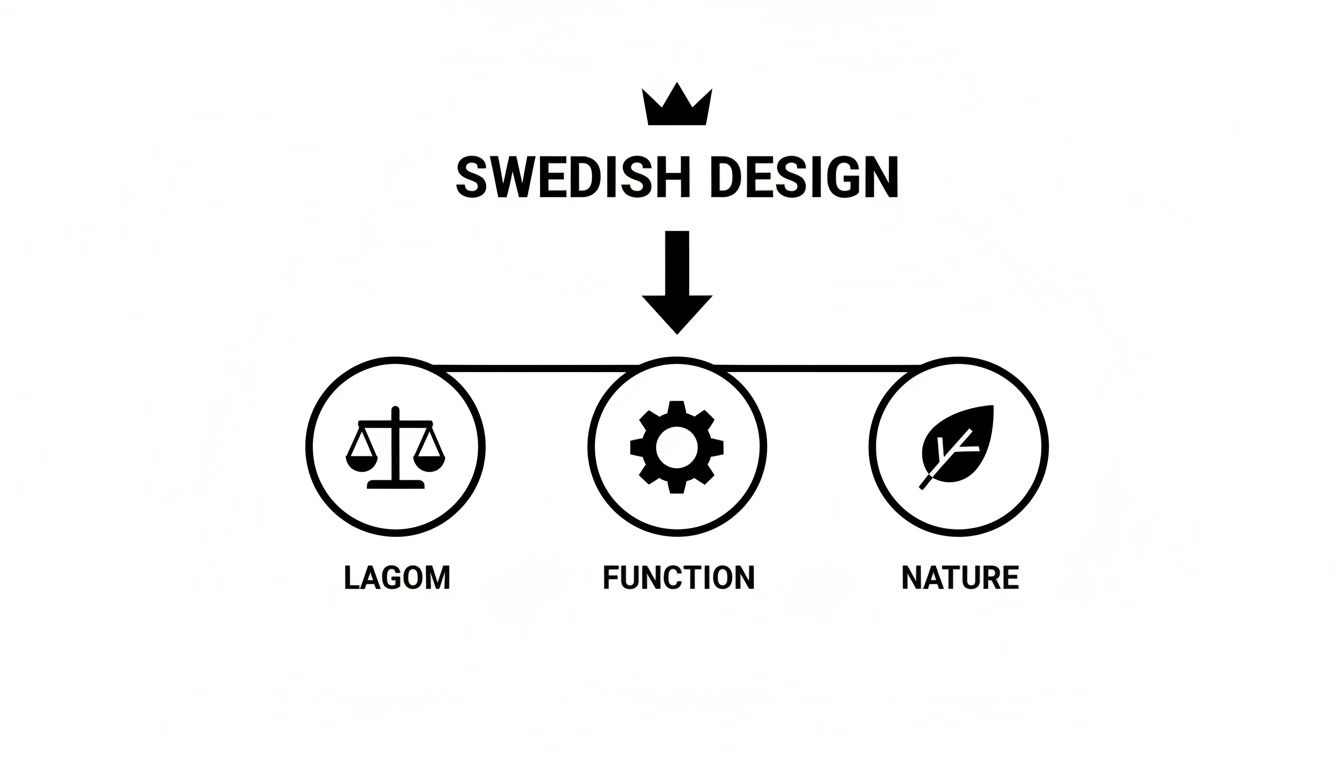
You can see how the philosophy of Swedish Design rests on three pillars: Lagom (finding that just-right balance), Function, and a profound connection to Nature. You'll notice these elements woven into the work of the brands we're about to explore.
A few names are simply synonymous with Swedish luxury. These are the brands that have built their reputations over decades on flawless craftsmanship and timeless elegance. They haven't just preserved traditional techniques; they've become institutions, representing the absolute pinnacle of fine jewellery in Sweden.
Engelbert Stockholm is a perfect example. Founded way back in 1920, this family-run house has become a true symbol of sophisticated Scandinavian design. Their work is known for its bold yet clean lines, often showcasing exceptional diamonds and gemstones in settings that feel both modern and eternal. Engelbert’s collections are a masterclass in balance, making substantial forms feel incredibly light and graceful.
Another revered name is Efva Attling. Though the brand was founded more recently in 1996, Attling's background as a model and musician gives her work a powerful personality. Her pieces often feature words and phrases, weaving meaning and emotion into her clean, minimalist designs. She calls her creations "beauty with a thought," a phrase that perfectly captures the blend of aesthetics and personal storytelling that defines her work.
These legacy brands offer more than just jewellery; they offer a piece of Swedish design history, crafted to be passed down through generations.
In recent years, a new wave of designers has reimagined what Swedish jewellery can be. These contemporary brands pay respect to the minimalist tradition but give it a fresh, often sculptural, and sometimes raw twist. They are pushing the boundaries of form and material, creating pieces that speak to a global audience.
All Blues is a Stockholm-based studio that has earned international acclaim for its unique approach. Founded by Fredrik Nathorst and Jacob Skragge, the brand creates jewellery with a distinctly sculptural feel. They often work with recycled sterling silver and 18k gold, casting pieces with organic, almost molten textures that are simultaneously raw and refined. Their work proves that minimalism can be incredibly expressive and compelling.
In a similar vein, Cornelia Webb creates jewellery that explores the relationship between the body and its adornment. Her designs often have an architectural quality, wrapping around a finger, wrist, or ear in beautiful and unexpected ways. Webb's pieces are known for their delicate yet strong presence, blurring the line between jewellery and wearable art.
These modern brands aren't just making accessories; they are crafting statements. Their work captures the essence of contemporary Scandinavian style—it is thoughtful, innovative, and unapologetically confident in its simplicity.
This movement signals a shift toward more personal and artistic expressions within the minimalist framework, attracting a whole new generation of collectors.
Beyond the well-known names, Sweden is home to a vibrant community of independent artisans and smaller studios. These creators often work on a much smaller scale, allowing them to focus deeply on masterful craftsmanship and create unique, limited-edition pieces. They are the heart and soul of the Swedish craft tradition.
One such creator is Malaika Cotton, whose work is deeply inspired by nature and ancient symbolism. Her pieces are often handcrafted with a distinct, tactile quality, featuring rough-hewn textures and ethically sourced stones. Choosing a piece from an artisanal studio like hers means you're getting something with a personal touch and a real story behind it.
Exploring these smaller studios is a chance to discover truly one-of-a-kind treasures and support the artisans who are keeping traditional skills alive while forging their own creative paths.
This dedication to craft and design has helped position Sweden as a dominant force in the regional market. Sweden's jewellery market has shown consistent growth, making it the largest market for jewellery and watches in Scandinavia. In 2022, Sweden accounted for 36.31% of the entire Scandinavian jewellery and watches market, which was valued at $3.8 billion in total. This significant market share reflects Sweden's prominence in luxury goods, with the sector growing at a compound annual rate of 1.7% between 2017 and 2022. You can delve into more details by exploring the full analysis of the Scandinavian jewellery market.
The health of this market allows a diverse ecosystem of creators to thrive, from large heritage houses to independent makers. This ensures that the world of swedish jewellery brands remains dynamic and exciting, offering a rich spectrum of styles for every taste. Whether you're drawn to the timeless allure of a legacy brand or the innovative spirit of a modern studio, there is a Swedish creator waiting to be discovered.
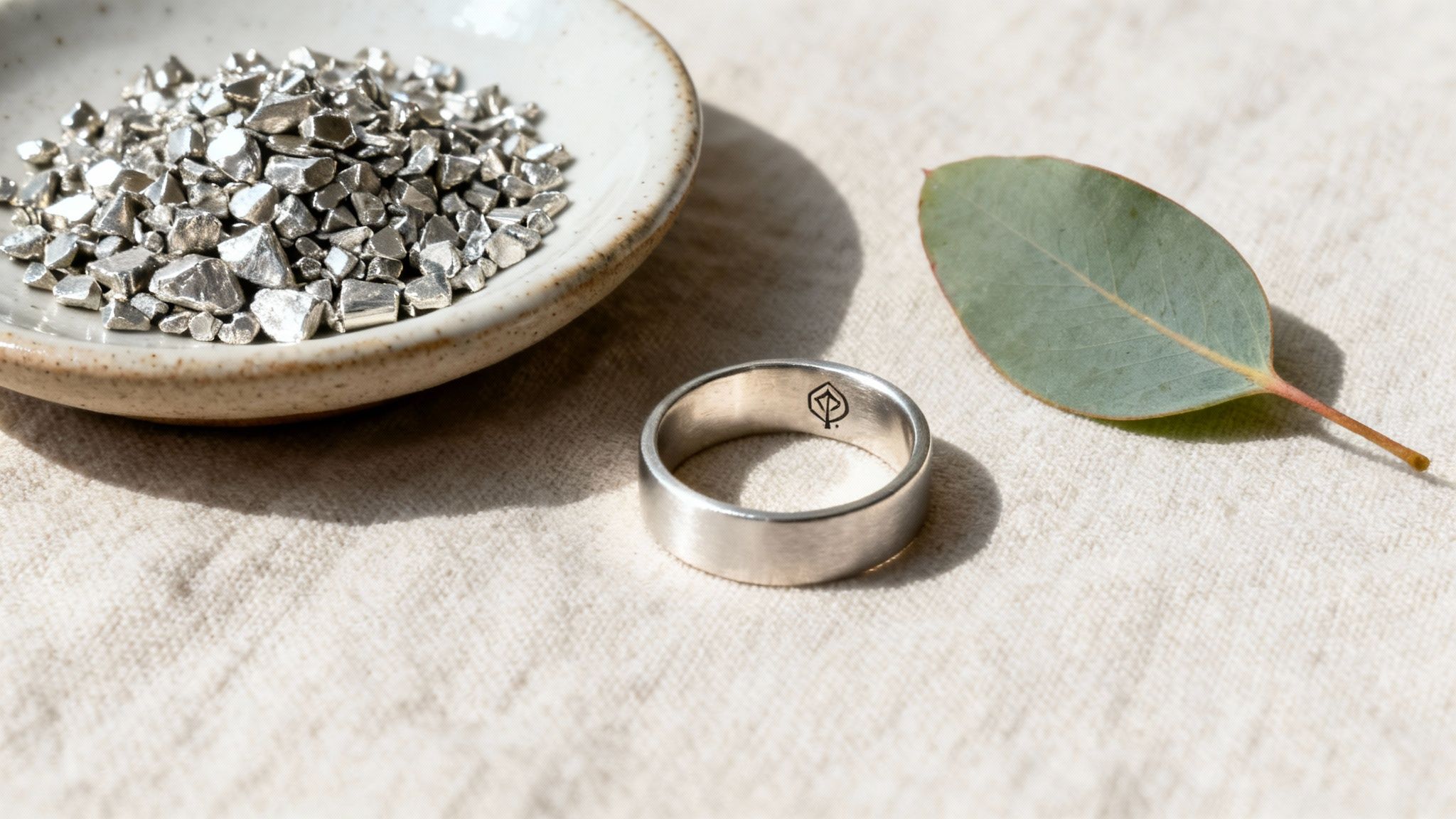
When it comes to Swedish jewelry brands, how a piece is made—and what it’s made from—is just as important as the final design. Beauty is never just skin deep. This commitment to conscious creation feels like a natural extension of a culture that holds nature and social responsibility in such high regard.
It all starts with a preference for high-quality, long-lasting materials. Swedish designers don’t just choose sterling silver and gold for their shimmer; they choose them for their staying power. This mindset is the polar opposite of throwaway fashion. It’s about crafting future heirlooms, pieces meant to be passed down through generations, which in turn reduces waste and encourages us to connect more thoughtfully with the things we own.
The modern Swedish jewelry world is at the forefront of the push toward sustainability. A growing number of brands are now making recycled precious metals their first choice. You can think of it like building a stunning new structure with carefully reclaimed historical materials—it honours the inherent value of the resources we already have.
Using recycled gold and silver drastically cuts down on the environmental footprint of making new jewelry. It sidesteps the destructive effects of new mining, like soil erosion and water contamination, and it uses far less energy. This isn't just a fleeting trend; it's a fundamental shift in how materials are sourced and valued.
For anyone buying with a conscience, this means looking for brands that are open about their materials. When a brand proudly states its use of 100% recycled silver or gold, it’s a clear signal of a commitment that goes well beyond aesthetics.
This focus on sustainability echoes the cultural idea of döstädning, or "death cleaning." It’s a Swedish practice of mindfully decluttering your life so you don’t leave a burden for others. By choosing sustainable materials, designers are ensuring their creations leave behind a positive legacy, not an environmental debt.
This philosophy is woven right into the fabric of the Swedish approach to design and life itself.
Beyond just using recycled metals, true ethical sourcing looks at every single element of a piece, especially gemstones. The best Swedish brands know that real sustainability demands a transparent supply chain. It’s about being able to trace a stone all the way from its origin to the final piece of jewelry.
This means working with suppliers who can guarantee their gems are conflict-free and were mined under fair working conditions. To make sure you’re investing in a piece that aligns with your values, keep an eye out for these signs:
This dedication to ethical craftsmanship ensures that the beauty of a piece of Swedish jewelry is reflected in its entire journey. It gives us the power to make choices that are not only stylish but also responsible, investing in pieces made with integrity from start to finish.
Choosing a piece of Swedish jewellery is an intimate journey. Whether you’re building a collection or searching for that one signature item, it starts with your own style.
First, ask yourself: do you gravitate towards the crisp, sculptural lines of modern designers, or does the timeless elegance of a heritage brand call to you?
Then, picture how your chosen piece will integrate into your daily life. A favourite necklace or a pair of stud earrings should sit comfortably on you—versatile enough for weekend brunches and workdays alike. That way, your selection becomes a long-term companion, not just an occasional treat.
Swedish design often embodies the principle of lagom—just the right amount. The aim is to highlight your jewellery, not drown it in accessories.
Here are a few styling ideas to keep things balanced:
“Give each item room to breathe.”
This way, clean lines and expert craftsmanship take centre stage—embodying that understated Swedish confidence.
If you’re hunting for more inspiration, our guide to thoughtful gifts from Sweden offers plenty of ideas that echo this spirit of intentionality.
Great jewellery deserves a little TLC. Metals like sterling silver and gold will shine longer if you follow a few straightforward steps.
Stick to these rituals, and your pieces from Swedish jewellery brands will keep their lustre for years—just as they were meant to.
Stepping into the world of Swedish jewellery often sparks a few head-scratching moments. This FAQ digs into the queries that come up most, so you can spot what makes these pieces stand out.
Swedish jewellery thrives on lagom—that sweet spot of just-right. You’ll see it in the clean angles and quietly confident shapes. In contrast to its Nordic neighbours, Danish pieces tend to favour playful, organic curves, Norwegian designs often borrow from dramatic folk motifs, and Swedish creations rely on pared-back geometry and architectural poise.
There’s a range to suit every purse. Sterling silver delights can often be found in the £60–£160 bracket. Gold-plated works with semi-precious stones usually land between £160–£480. For solid gold and fine gems, expect prices from the high hundreds into the thousands. Each price reflects the materials, the skill behind the setting and the story the maker brings.
Finding the real deal is simpler when you know where to look. Brand websites and flagship boutiques are your safest options. Department stores like Nordiska Kompaniet (NK) showcase curated collections. Online shops specialising in Scandinavian or sustainable design often stock genuine pieces. For vintage treasures, choose dealers who verify maker’s marks and provenance. Always check return policies, especially if you’re ordering from abroad.
At Dalaart, we celebrate the artistry and heritage of Swedish craftsmanship through our curated collection of authentic, hand-carved Dala horses. Discover a piece of tradition at Dalaart.


.svg)


.png)


