November 25, 2026
Quick answer: The Mörksugga (say it roughly "MURK-soo-ga") is a creature from the folklore of Dalarna in Sweden. The name means "the dark sow". In the old stories she was a dark presence in the night, never quite seen. Today she is best known as a small wooden figure, painted by hand like the Dala horse.
The word is made of two Swedish words: mörk, dark, and sugga, a sow. So a Mörksugga is a dark sow. Swedes also say mörksuggan, "the dark sow", the same way they say dalahästen for the Dala horse.
Roughly MURK-soo-ga, with the stress on the first part. The ö sounds like the u in "murky", and the u in sugga is short. Swedes from Dalarna will forgive you if it is not perfect.
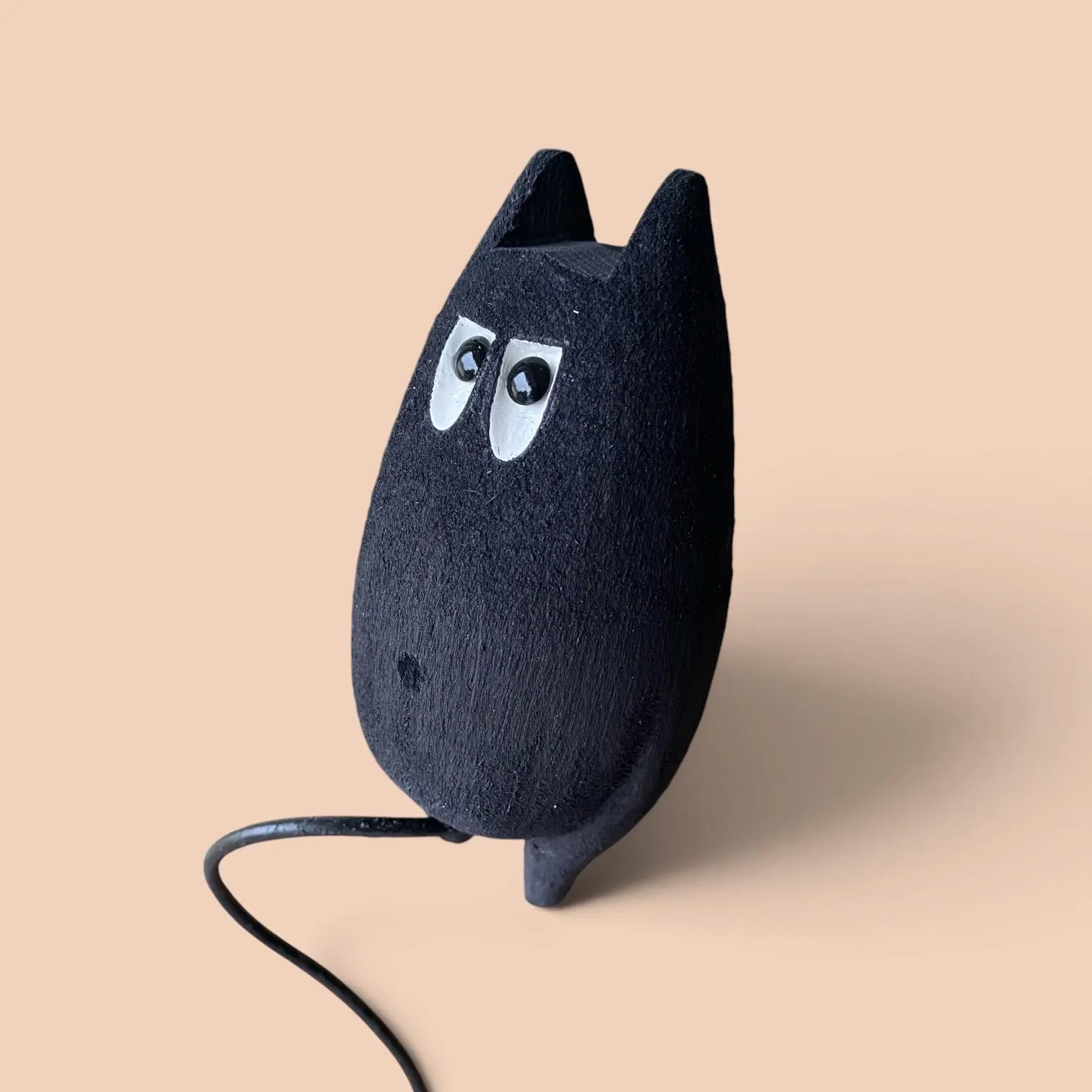
She belongs to the old folk beliefs of Dalarna, the same province in the heart of Sweden where the Dala horse comes from. The stories describe her in different ways: a black shape moving in the dark, or a log by the fire that would not catch, no matter how long you tried. She was never clearly good or evil. She was the unease you feel on a dark evening in the forest, given a name.
Very few people believe in her today, but the name stayed alive in stories, in paintings and in the small figures that are carved and painted in Sweden.
The Swedish painter Verner Molin put the Mörksugga in many of his paintings and made her known far beyond the old stories. The town of Avesta in Dalarna is where the toy version was born, and since 2018 a large Mörksugga statue stands on a roundabout in the town. It turns slowly, about one full turn every four hours.
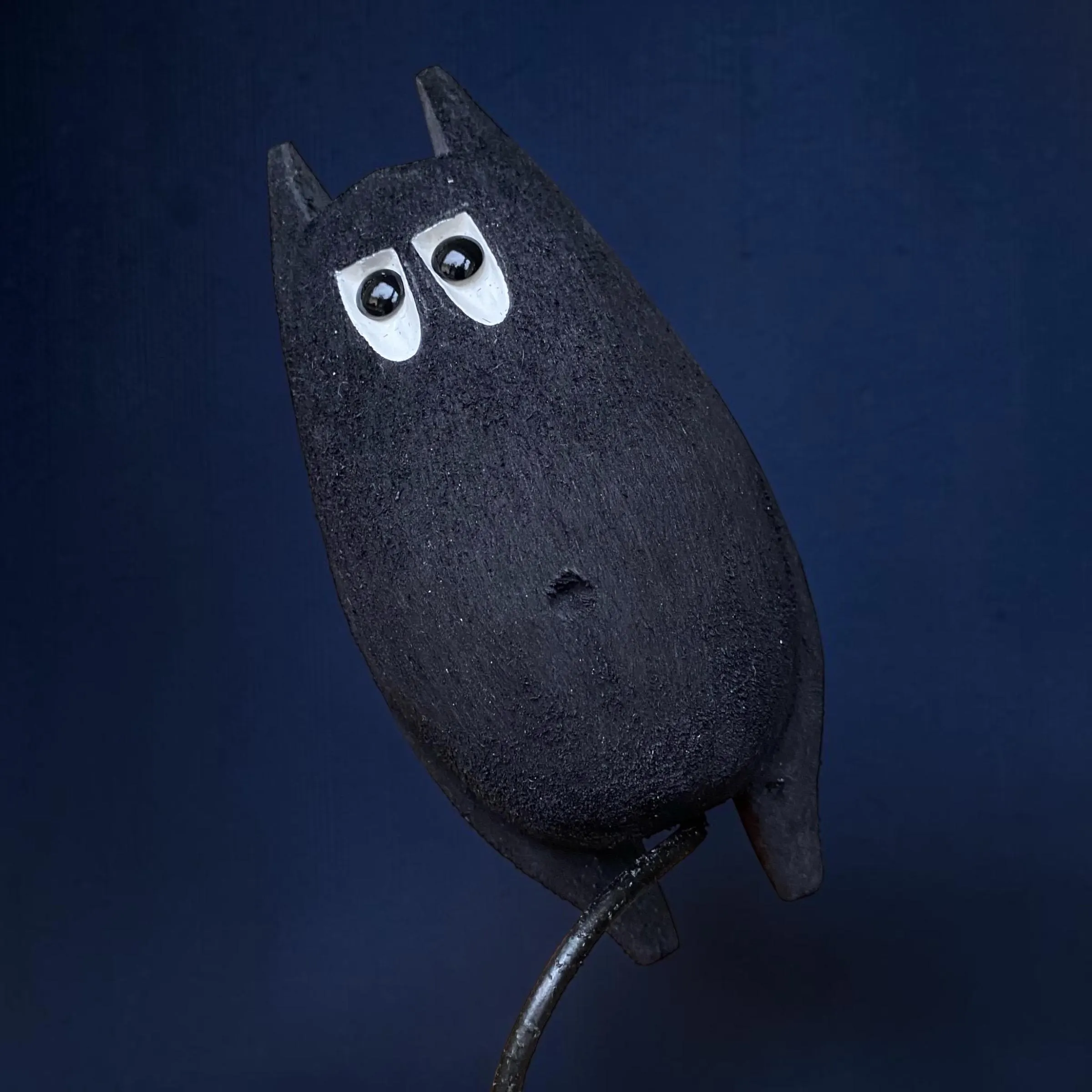
Today the Mörksugga is carved from wood and painted by hand, in the same craft tradition as the Dala horse. Every figure is a little different, with small changes in shape and paint. People who already have a Dala horse often add a Mörksugga for the story: she is the darker, stranger cousin on the shelf.
Our hand-painted Mörksugga comes in 7, 10 and 12 cm and ships from Sweden. You will find her with the other folk animals in our Dala animals collection.
Her name means "dark sow", and the figure has the shape of a pig, but in the stories she is more a dark presence than a farm animal.
Not really. In the old stories she brought unease rather than harm. Not evil, not harmless, something in between.
In Avesta, Dalarna, on a roundabout in the town, where it has stood since 2018.