December 11, 2025
There's a certain warmth and organic texture that wood wall art brings into a room, something mass-produced prints just can't touch. It has a way of adding a touch of natural elegance, turning a plain wall into a focal point that tells a story through its grain and craftsmanship.
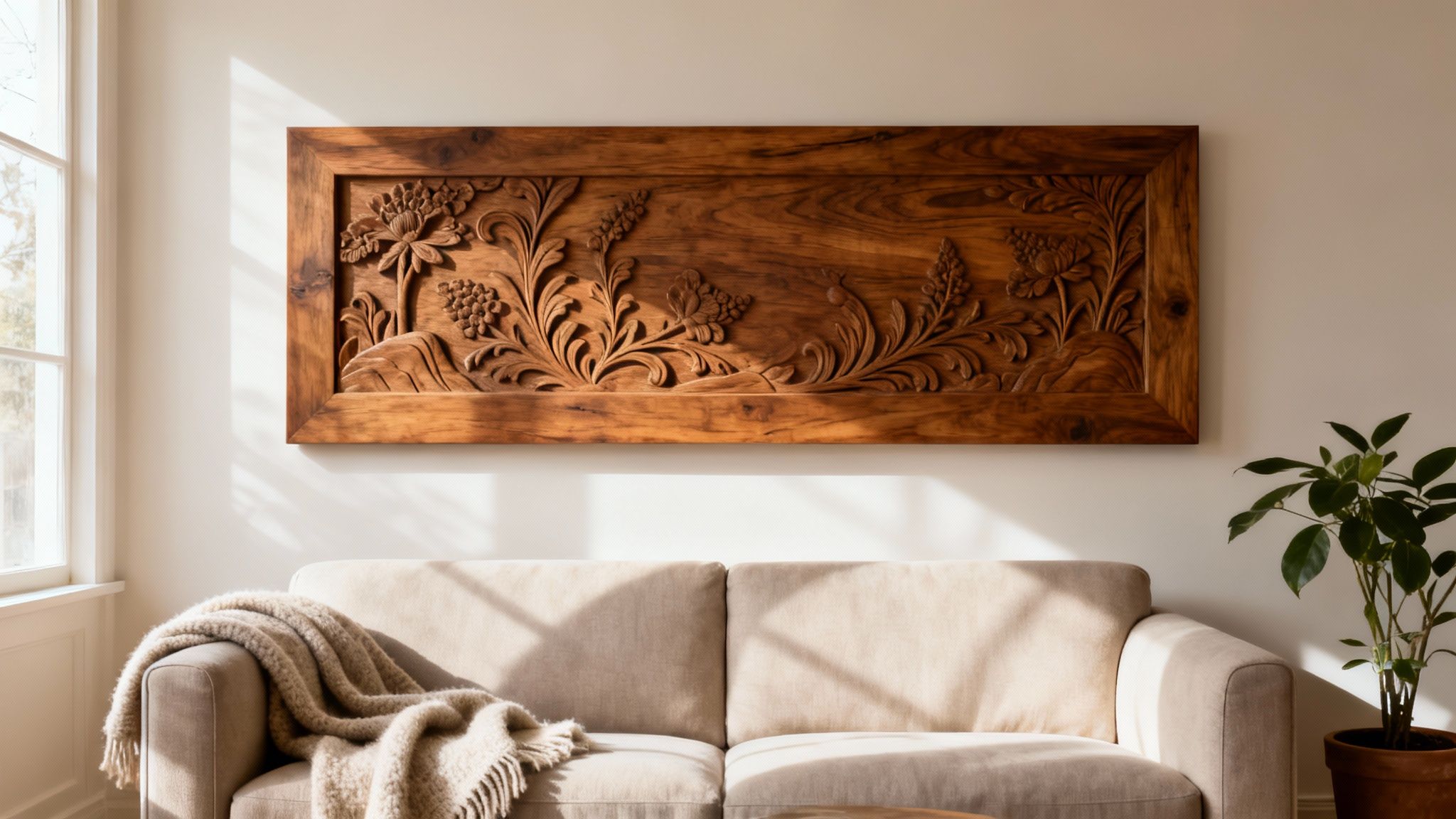
More than just decoration, wood wall art is a genuine connection to the natural world. Every piece, whether it's a rustic reclaimed plank or a sleek geometric design, carries the unique fingerprint of the tree it came from. This inherent character is what truly sets it apart.
Think of it as bringing a little piece of the forest indoors. A hand-carved panel might evoke centuries of tradition, while polished, modern shapes can create a feeling of sophisticated calm. The wonderful thing about wood is its versatility; it can complement almost any interior design scheme you can imagine.
This appreciation for wooden décor isn't just a feeling; it’s a major market trend. We're seeing a collective shift towards more sustainable and eco-friendly design, and as a result, wood wall art is one of the fastest-growing segments in the global wall art market.
That market, valued at a staggering $63.61 billion in 2024, is expected to climb to $118.79 billion by 2032, with natural materials being a huge driver of this growth. This is all part of a larger movement toward biophilic design—the idea of weaving natural elements into our living spaces to boost our well-being.
Choosing wood wall art is an investment in both the look and the feel of your home. The material has a depth and tactile quality that other mediums simply lack. It can make a large, cavernous room feel cosier or add a touch of organic softness to a minimalist space.
Its cultural significance is profound, too, with certain styles telling incredibly rich stories. For example, if you explore the journey of Swedish Dala horses, you'll see just how folk traditions can shape these beautiful objects. This guide is here to help you find that perfect piece that truly resonates with your personal style.
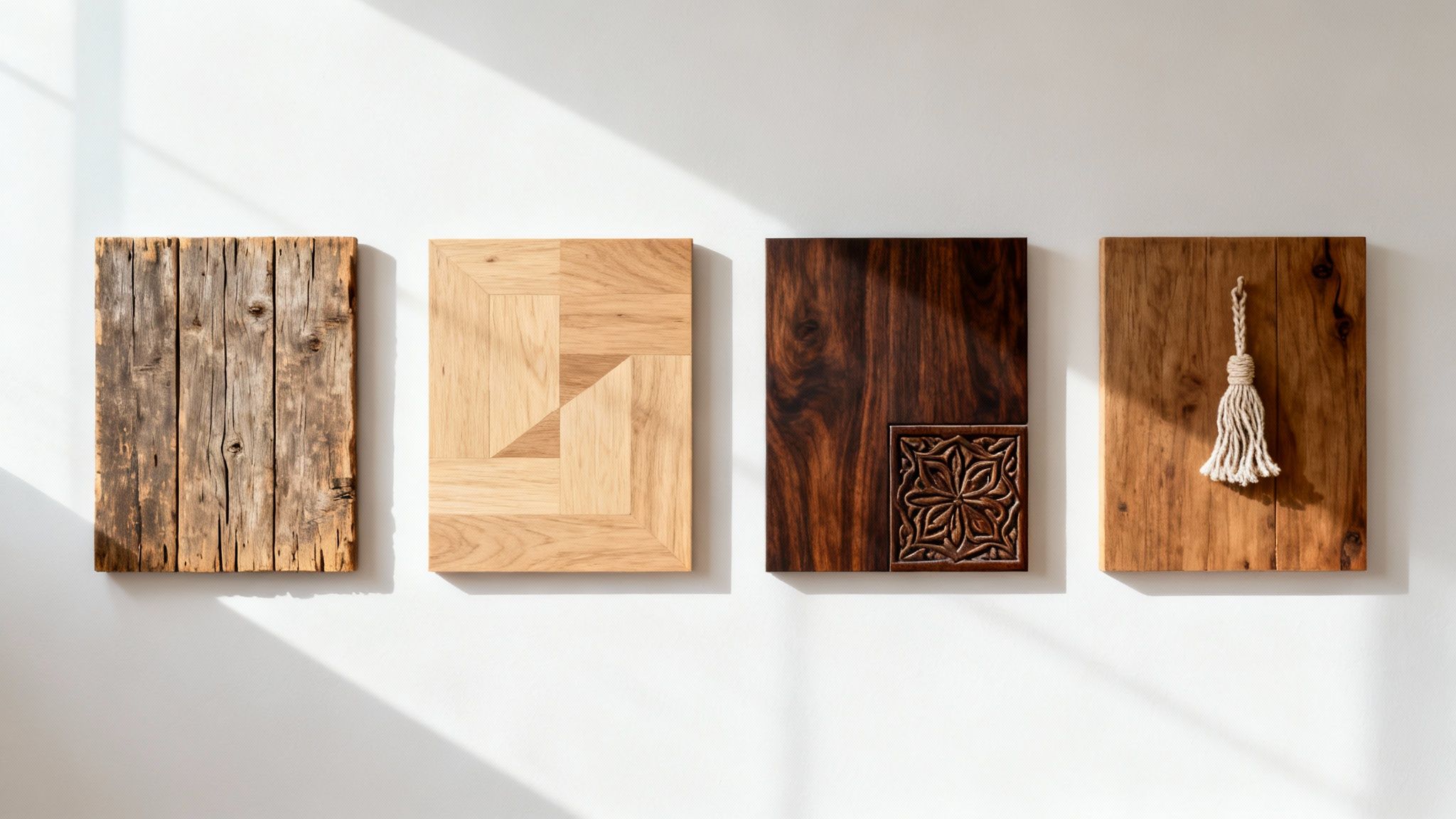
Diving into the world of wood wall art is like walking through a gallery with endless rooms. Each one holds a different character, texture, and story. When you can move past generic labels, you start to build a visual vocabulary, making it easier to pinpoint exactly what resonates with your own taste. This isn't just about picking a decoration; it's about finding an aesthetic that truly completes your space.
Just think of the contrast between two popular styles. On one hand, you have the rugged charm of reclaimed barn wood, with its weathered finish and rich past, which fits perfectly in a farmhouse or rustic home. On the other, the clean, crisp lines of a minimalist geometric piece, maybe in light oak, bring a sense of order and modernity to a contemporary room.
These examples barely scratch the surface. The spectrum of wood wall art is incredibly broad, offering something for every sensibility.
Hand-carved panels are one of the most traditional forms of wood art. Often featuring intricate floral, animal, or abstract motifs, these pieces are a testament to immense skill and patience. They can evoke a sense of history and global tradition, turning a simple wall into a showcase of fine craftsmanship.
Similarly, sculptural or 3D wood art brings a depth and dimension that flat prints just can't match. Picture layered wooden mountain ranges, abstract soundwave patterns, or interlocking blocks. These pieces play with light and shadow, creating a dynamic focal point that shifts and changes as the day goes on.
Wood art is unique in its ability to be both a visual and a tactile experience. The grain, the carvings, and the finish invite you to not just see the art, but to feel its connection to nature.
This tangible quality is especially clear in folk art traditions. To get a real sense of this, you can explore the meticulous process behind how artisans craft traditional Dala horses, where every single cut and brushstroke is steeped in cultural heritage.
Not all wood art has to be rustic or traditional. The medium has been enthusiastically embraced by modern and minimalist designers who appreciate its natural warmth and simplicity.
The type of wood an artist chooses is just as important as the design itself—it sets the entire tone and mood of the piece. Every species has its own distinct personality, defined by its colour, grain pattern, and texture. This choice is fundamental to the artist's vision and the artwork's final impact in your home.
Matching the right material to your decor is key. For instance, the deep, rich tones and elegant grain of walnut often give off a sense of luxury and sophistication, making it a popular choice for formal living rooms or studies.
In contrast, the lighter shades and prominent knots of pine create a casual, airy, and welcoming feel. This makes it ideal for relaxed family spaces, coastal-themed rooms, or rustic kitchens where you want an approachable vibe.
The story behind the material can add another layer of meaning, too. Reclaimed timber from old buildings carries a visible history in its imperfections, while sustainable options like fast-growing bamboo appeal to an eco-conscious mindset. Understanding these nuances helps you choose a piece with both aesthetic confidence and personal conviction.
Picking out the right wood wall art isn't about following a strict set of rules. It’s more about listening to your gut and making choices that feel right for you and your home. This is the part of decorating where you really start to transform a house into a home, making sure every piece tells a little bit of your story.
The idea is to find art that doesn’t just fill a space on the wall but actually completes the room's vision. Think of your existing furniture, wall colours, and lighting as the stage. The wood art you bring in should work with these elements, either by blending in beautifully or by creating a striking, intentional contrast.
The living room is usually where life happens. It’s where you host friends, relax with family, and make memories. The art you choose for this space should be a conversation starter—this is the perfect spot for a bold statement piece that can anchor the whole room's design.
Think about a large, sculptural 3D wood installation hanging above the sofa, or maybe a wide, panoramic carved panel. Scale is everything here. A piece that’s too small will feel lost and insignificant, but one that’s just the right size will define the entire area. Consider how the wood's tone plays with your upholstery, too. A rich, dark walnut piece can ground a room with light-coloured furniture, while something in a lighter maple or birch can keep a darker space from feeling too heavy.
The best living room art does more than just match the décor—it amplifies the room's energy. It should be the first thing that catches your eye and sets the tone for your entire home.
Your bedroom is a different story altogether. It's your personal sanctuary, a place to unwind and recharge. The art you select for this space should contribute to a feeling of calm and restoration. This is where pieces inspired by the natural world really come into their own.
Look for wood art that brings a sense of peace.
A piece hung over the headboard naturally becomes the focal point, so choose something that gives you a little moment of calm every time you look at it.
Your home’s overall aesthetic is your best guide for picking the right wood art. When you align your choices with your existing interior design style, you create a look that feels polished, thoughtful, and completely put-together. Sometimes, a single piece of wood art is the final touch that ties the whole theme together.
Take a Scandinavian-inspired home, for instance. Known for its clean minimalism and love of natural materials, it’s the perfect backdrop for simple, airy wood art. Think unpainted pine, crisp geometric lines, or even the traditional charm of Swedish Dala folk art, which introduces a welcome touch of heritage and colour.
If you lean more towards a mid-century modern aesthetic, look for striking geometric patterns and abstract forms in woods like teak or walnut. Their clean, intersecting lines are a perfect match for the iconic furniture of that era. On the other hand, if your space has more of an industrial loft vibe, raw, unfinished, or reclaimed wood art adds that perfect touch of rugged texture against metal and brick. When you start with your style, you ensure your new wood wall art feels like it was always meant to be there.
So, you’ve found the perfect piece of wood wall art. The next big step? Deciding exactly where and how to hang it. It's a detail that can make all the difference—even the most beautiful artwork can feel a bit lost if it's not placed with intention.
The good news is that professionals lean on a few straightforward design principles to make sure every piece feels balanced and purposeful. These aren’t strict rules, but more like intuitive guides to help you create a composition that just feels right. By getting a feel for concepts like scale, eye level, and grouping, you'll move beyond simply filling a blank space and start curating your walls with confidence.
One of the most common decorating slip-ups is hanging art way too high. A great rule of thumb to start with is the “57 inches on centre” guideline. What this means is the very centre of your artwork should hang about 57 inches (around 145 cm) from the floor. Why? Because that’s the average human eye level, and it creates an instant, natural connection between the viewer and the art.
Of course, this is just a starting point. If your ceilings are exceptionally high, you might want to nudge it up a bit. If you're hanging a piece above a low-slung sofa, you might bring it down a touch. The goal is to make the art feel grounded and part of the room, not like it's floating awkwardly towards the ceiling.
This simple infographic breaks down the core things to think about when choosing your art.
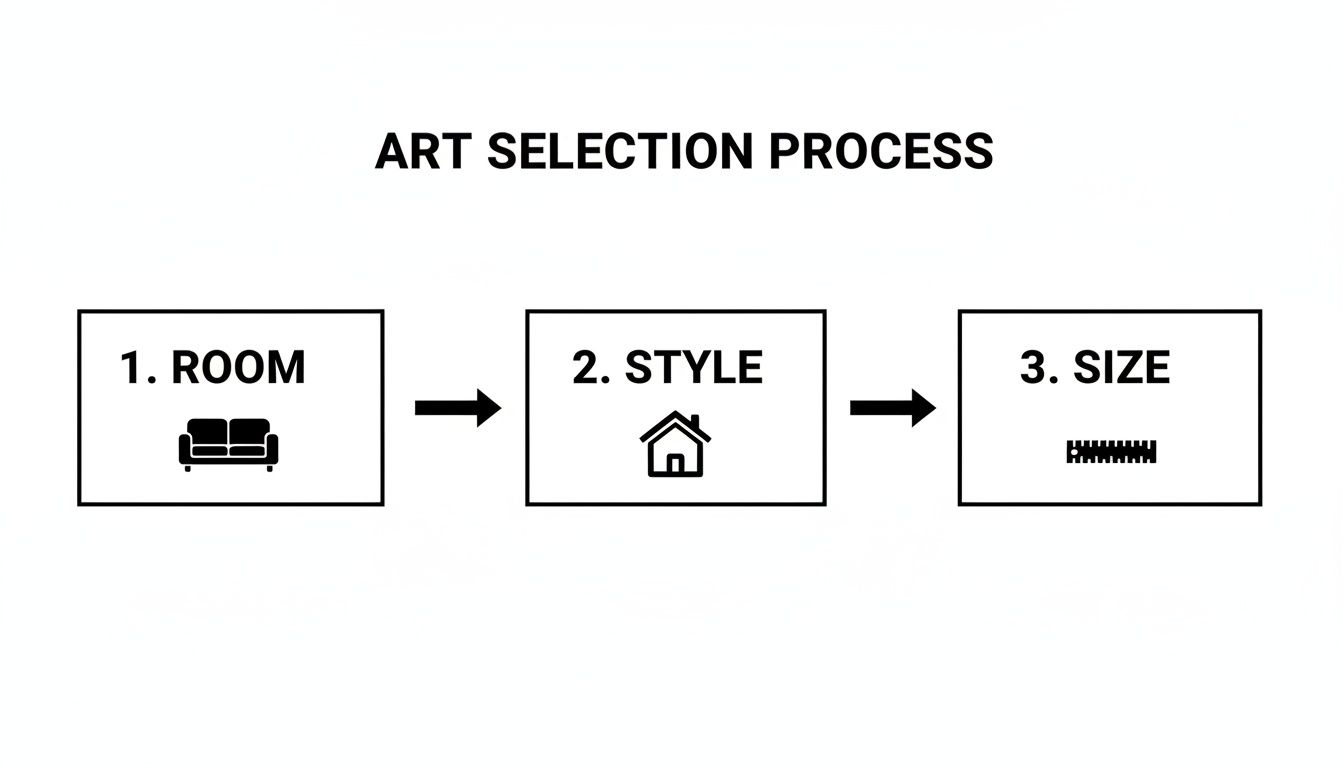
As you can see, taking a methodical approach—thinking about the room's function, then the style, and finally the right scale—almost always leads to a better outcome.
Another key guideline has to do with scale, particularly when hanging art above furniture. The “two-thirds” rule is your friend here. It suggests your wood wall art should be about two-thirds the width of whatever it’s hanging over, whether that’s a sofa, a console table, or a headboard. This creates a really pleasing visual relationship, ensuring the art is substantial enough for the space without completely overwhelming the furniture below it.
Not every wall is crying out for a single, massive statement piece. Sometimes, a thoughtfully arranged collection of smaller items can create an even more personal and dynamic display. This is where you can really let your creativity shine with your wood wall art.
Why not try one of these popular arrangement techniques?
Think of arranging art like telling a visual story. Whether it’s one grand chapter or a collection of short tales, the goal is to create a narrative that flows and engages the eye from one element to the next.
This idea of storytelling is deeply woven into many folk art traditions. The placement of objects often carries symbolic weight, much like how the gentle glow from traditional Scandinavian candles is used to build a specific atmosphere of warmth and welcome. Learning more about the role of light and warmth from the candles of Scandinavia can offer some wonderful inspiration for creating an inviting mood around your own art arrangements.
Think of your wood wall art as more than just decoration; it’s an investment in your home’s character and warmth. To keep it looking stunning for years, a little proper care is all it takes. A simple, consistent routine will preserve its beauty and integrity, preventing the subtle damage that can creep in over time.
This isn’t about complicated chores, but more of a gentle awareness of what wood needs. As a natural, organic material, wood responds to its environment, so protecting it is mostly about creating the right conditions. With just a bit of attention, you can keep your art looking as captivating as the day you hung it.
And it's an investment many are making. The desire for natural, unique home décor is booming globally. The Asia Pacific wall art market, for instance, has seen massive growth, reaching around 636.2 million units back in 2021. This surge, particularly in countries like China and India, is fuelled by a growing passion for home customisation, showing just how much people value these special pieces. You can discover more insights about the expanding wall art market on kbvresearch.com.
Regular, gentle cleaning is your first line of defence against a dull finish. For most wood wall art, especially pieces with intricate carvings or a textured surface, a soft, dry microfibre cloth or a classic feather duster is all you need. This lifts dust without scratching the wood or pushing grime into tiny crevices.
For pieces with a sealed or polished finish, you might occasionally need to go a step further.
Whatever you do, stay away from harsh chemical cleaners, furniture polish sprays, and abrasive pads. These can strip the finish, discolour the wood, or leave a sticky residue that just attracts more dust.
Beyond cleaning, the biggest threats to your wood wall art are invisible. Sunlight and humidity can cause irreversible damage over time, which makes thoughtful placement your most powerful tool.
Direct sunlight is especially tough on wood. Its ultraviolet (UV) rays act like a slow bleach, gradually fading the wood’s natural colour and breaking down its protective finish. Over months and years, a piece exposed to the harsh daily sun can end up looking washed out and brittle. To prevent this, try to hang your art on a wall that doesn’t get blasted by intense, direct sunlight, especially from south-facing windows.
Wood is a living material; it breathes. It expands when the air is humid and contracts when it's dry. Drastic or frequent swings are what lead to problems like warping, cracking, and splitting.
This is exactly why it’s a bad idea to hang your treasured pieces near sources of extreme temperature or moisture. Steer clear of placing valuable wood art directly above a radiator, next to an air conditioning vent, or in a naturally humid room like a bathroom—unless, of course, the piece has been specifically treated for that kind of environment. Stable, moderate conditions are the real secret to longevity.
Decorating with real intention means looking past a piece's surface beauty. It's about digging into its story, its origins, and the impact it has. When it comes to wood wall art, this thoughtful approach naturally leads you down two very rewarding paths: championing sustainability and uncovering the unique soul of vintage finds.
Both are ways to bring art into your home that isn't just beautiful, but is also rich with integrity and character.
Choosing sustainable wood art is a quiet but powerful way to make sure your home's style is kind to the planet. This means seeking out pieces carved from materials that are responsibly managed and sourced. It's a conscious decision to support a healthier environmental cycle.
One of the best signposts for sustainability is the FSC (Forest Stewardship Council) certification. When you spot this label, it's a guarantee that the wood was harvested from a forest managed to protect biological diversity and support the lives of local people and workers. It’s a simple, clear way to know your art isn’t contributing to deforestation.
Another brilliant option is art made from reclaimed or salvaged wood. This is timber rescued from old barns, factories, or even fallen trees, giving a second life to wood that would otherwise go to waste. These pieces wear their history right on the surface—in their grain, knots, and imperfections—adding a layer of rustic character that brand-new wood just can't match.
This focus on mindful buying is gaining momentum, especially where tradition and modernity collide. India, for instance, is seeing a huge surge in demand for high-end wall decor. The market there is predicted to hit around $8.33 million in 2025, with luxury homes driving the need for sophisticated wood art, often using beautiful indigenous hardwoods like teak. You can dig into more data on the Indian wall decor market on mordorintelligence.com.
Diving into the world of vintage and antique wood art feels like starting a treasure hunt. Every piece has a past, holding the stories of another era within its form and finish. Learning to authenticate these finds is part of the fun, and it just takes a keen eye and a bit of know-how.
When you're sizing up a potential vintage piece, look for the tell-tale clues that speak to its age and authenticity.
Investing in vintage wood art is about more than just aesthetics. It’s about becoming a custodian of a small piece of history, preserving the craftsmanship and story for the next generation to appreciate.
Always flip a piece over to look for a maker’s mark or signature, which is often stamped or carved on the back. Researching this mark can reveal the artisan or workshop behind it, adding immense value and a clear history to your find. Getting familiar with the characteristics of period woods—like the dark, heavy feel of Victorian oak compared to the lighter tones of mid-century teak—will also sharpen your eye for spotting genuine treasures.
Bringing a beautiful piece of wooden art into your home is exciting, but it's natural to have a few practical questions. Thinking about where to hang it, how to install it, and how to make it look its best is all part of the process. Let's walk through some of the most common queries I hear, so you can decorate with complete confidence.
This is probably the number one question I get, and the short answer is: it depends entirely on the finish. Raw, untreated wood is like a sponge for moisture, so putting an unfinished piece in a humid space like a bathroom is asking for trouble—it can lead to warping, swelling, or even mould.
However, most contemporary pieces are well-protected with a good sealant like varnish, polyurethane, or lacquer. If the art is properly sealed on all sides, it can stand up to humidity remarkably well. The best advice is to always check the artist's or maker's recommendation before hanging it in a steamy environment.
The weight can vary hugely, all depending on the size, thickness, and type of wood. A delicate, small pine carving might weigh just a kilogram or two, but a massive slab of solid oak could be seriously heavy.
For most standard-sized pieces, a good-quality picture hook that's rated for the art's weight and nailed securely into a wall stud will do the job perfectly. For anything heavier, you'll absolutely need to upgrade your hardware.
A crucial tip: Always use wall anchors or toggle bolts if you can't find a stud. This distributes the weight across the plasterboard and stops the art from pulling loose, keeping it—and your wall—safe and sound.
The right lighting can completely transform a piece of wood art, bringing out all the wonderful texture and depth. Your goal is to create subtle shadows that make the grain, carvings, and contours of the wood really stand out.
Mixing different woods is the secret to a rich, layered, and sophisticated room—as long as it's done with intention. Forget trying to match everything perfectly. Instead, you want to create a cohesive feeling by finding a common thread.
A great strategy is to pick a dominant wood tone in the room, like your floorboards or a big dining table. From there, choose your wall art and other accents in tones that are a few shades lighter or darker. Spreading these different tones around the space creates a sense of balance, so no single area feels too heavy or mismatched. Tying it all together with a neutral-coloured rug or wall paint is the final touch that makes all the different woods feel like they belong together.
Ready to find the perfect piece of handcrafted heritage for your home? Explore our curated collection of authentic Swedish Dala horses and folk art at Dalaart. Each piece is a unique story, lovingly made by master artisans. Discover your new treasure at https://dalaart.com.


.svg)


.png)


