March 24, 2026
So, what exactly is a macramé wall hanging? In simple terms, it's a piece of decorative textile art made by tying cords into a series of knots. Unlike knitting or weaving, there are no needles or looms involved—just hands, cord, and a little bit of creative knotting.
Think of it as a form of sculpture, but with fibre. Simple, repeating knots are used to build up incredibly intricate, textured patterns that bring a unique warmth and tactile feel to any room.
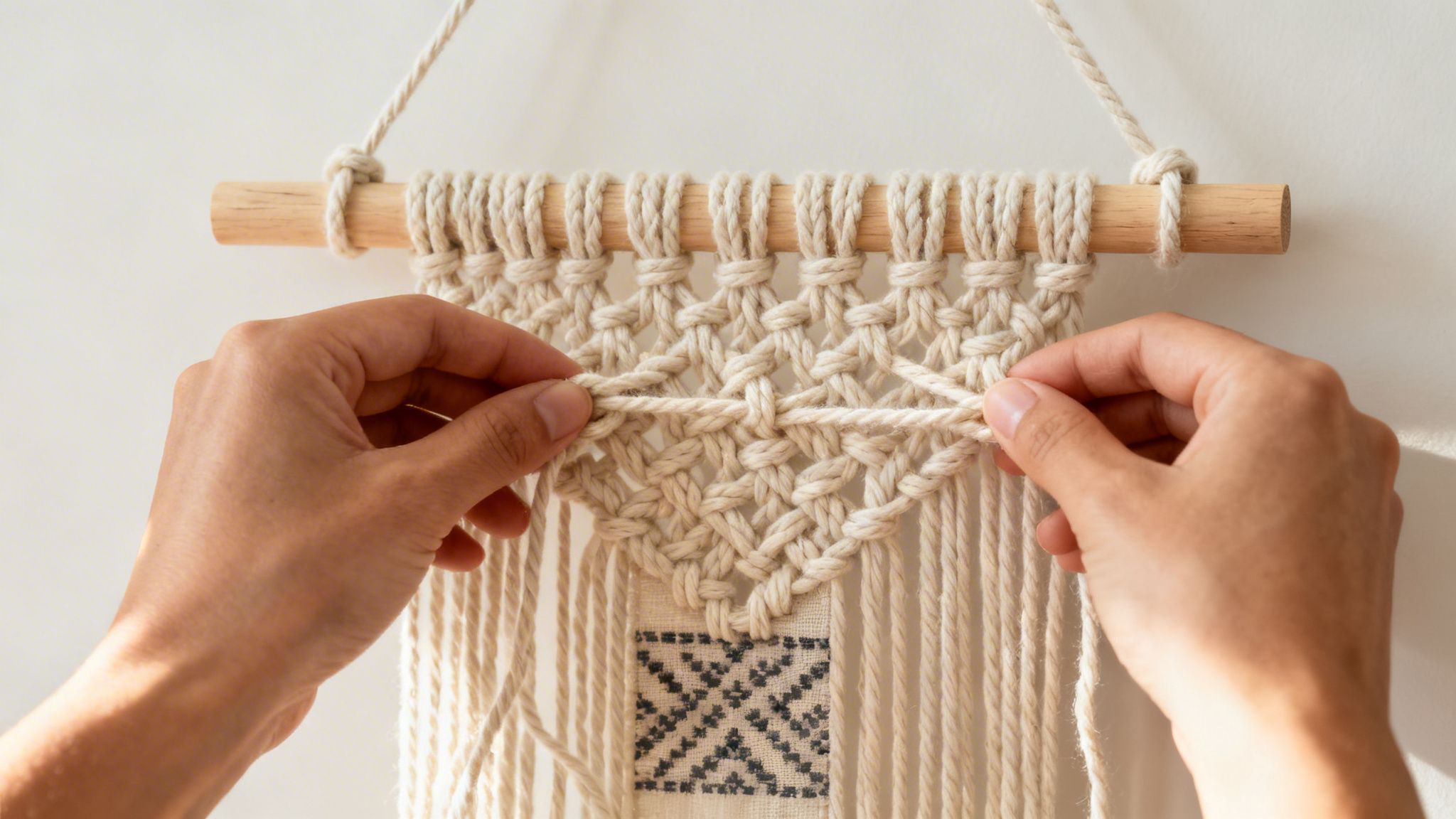
Before we get into all the different styles and patterns, it’s good to get a feel for what macramé really is at its core. Where weaving interlaces threads over and under one another on a loom, macramé is built entirely from knots. An artist will start with several lengths of cord—usually something like cotton, jute, or even wool—and create a whole design from just a handful of foundational knots.
This is where the real magic happens. Just as a painter can mix a few primary colours to create a stunning masterpiece, a macramé artist uses basic knots to produce everything from small, simple plant hangers to huge, elaborate wall tapestries. The final structure, the texture, and the way the piece hangs are all down to the sequence and tension of these knots.
Macramé is anything but a new trend; its history stretches back through the centuries. The craft had a massive revival back in the 1970s, becoming a signature part of bohemian style. Today, its popularity is stronger than ever because it has grown far beyond its boho roots and now complements all sorts of modern aesthetics.
A macramé wall hanging is so much more than just a decoration; it’s a piece of handmade artistry. Its real appeal comes from the way it adds natural texture and a sense of calm to a room, connecting us to a timeless craft tradition.
There's a certain rhythm and mindfulness to creating a macramé wall hanging. In a world full of mass-produced items, that handmade quality is a huge part of its charm. The key elements that really define a piece are:
Ultimately, a macramé wall hanging is a beautiful focal point, ready to add a dose of personality and artisanal flair to your home.
Every macrame wall hanging you see today carries a fascinating story, one that stretches back centuries long before it became the beloved decor we know and love. It's a journey not just of art, but of incredible utility and global travel, with roots so practical they eventually blossomed into intricate beauty.
The tale begins with 13th-century Arab weavers. These weren't just skilled artisans creating textiles; they finished their work with purpose. They used a series of decorative knots to secure the loose ends of woven fabrics like towels and shawls, creating a functional fringe that stopped everything from unravelling. It's believed the name "macrame" itself comes from the Arabic word migramah, which simply means "fringe."
As trade and conquest spread across Europe, so did the craft. But it was sailors who truly carried macrame across the world's oceans. During the long, quiet months at sea, mariners became absolute masters of knotting. It was a productive way to pass the time, resulting in practical items like hammocks, belts, and bell pulls which they would then trade or sell at port. This seafaring tradition was key in introducing macrame to new cultures everywhere, from China to the Americas.
By the Victorian era, macrame had found a firm footing in homes, especially in England. Even Queen Mary II was an enthusiast, and the craft quickly became a popular hobby for the ladies of the time. You could find patterns in household magazines, and it was used to create elaborate decorations for just about everything.
Understanding this history transforms a simple macrame wall hanging from a piece of decor into a connection to a global tradition. It’s a tangible link to ancient weavers, seafaring adventurers, and 1970s free spirits, all tied together with a few simple knots.
The craft’s popularity faded a bit after the Victorians, only to re-emerge with incredible force during the 1970s. This is the decade most people think of when they hear "macrame," as it became a true symbol of the bohemian and counter-culture movements. Suddenly, macrame was everywhere:
This 70s craze defined the aesthetic many of us still love, cementing the macrame wall hanging as a hallmark of free-spirited, natural decor. The revival we're seeing today honours that legacy while also exploring modern, minimalist, and even colourful new takes on this timeless art form.
Finding the right macrame wall hanging is about more than just filling a space on your wall; it’s about discovering a piece of art that truly resonates with your home’s personality. Just as painters work within different artistic movements, macrame artists create pieces that fall into distinct styles, each with its own unique charm.
The style most people picture is Bohemian, or "boho." These are the soulful, organic pieces with an almost untamed spirit. Think of long, cascading fringes, the warmth of wooden beads, and intricate patterns that seem drawn from nature itself. They are perfect for creating a relaxed, earthy atmosphere.
In complete contrast, you have the Modern or Geometric style. Here, the focus shifts to clean lines, sharp angles, and a beautifully minimalist feel. Instead of complex, flowing knots, you’ll find bold diamond shapes and perfect symmetry. This style adds wonderful texture to contemporary spaces without ever feeling cluttered.
The material a macrame hanging is made from is just as crucial as the knots themselves. The type of cord an artist chooses dictates the final look, feel, and even the durability of the piece, lending its own character to the finished work.
The choice of support—the dowel, branch, or hoop the macrame is hung from—is the final piece of the stylistic puzzle. A smooth, turned wooden dowel lends a clean, polished look, while a piece of natural driftwood instantly adds a rugged, coastal charm. A sleek metal hoop can frame the knotwork like a piece of contained art, reinforcing a modern aesthetic.
The global appreciation for this craft continues to grow, becoming a significant part of the artisan economy. For example, the art and craft market in Southeast Asia, which includes these boho-chic decorations, is forecasted to grow from USD 941.62 million to over USD 1,906.75 million by 2034. This is a testament to the enduring appeal of handmade items in our homes. The techniques involved can also be applied to more than just wall decor; for instance, you can find out how similar skills are used in our article on creating a crocheted top for women.
So, you’ve decided a macramé wall hanging is the perfect touch for your space. Wonderful! But now comes the big question: should you buy one ready-made or dive in and create it yourself? There’s no single right answer, as each path offers its own unique rewards. The choice really comes down to what you value most—be it time, budget, or the desire for a truly personal piece.
Buying a finished piece is, of course, the fastest way to bring that gorgeous textured art into your home. It’s also a fantastic opportunity to support a skilled artisan and own a polished, complex design that might be beyond a beginner’s reach. With the handicrafts market flourishing, it’s easier than ever to find unique works from talented makers.
To help with that decision, it's useful to know what style you're even looking for. This little chart breaks down the two most popular macramé aesthetics.
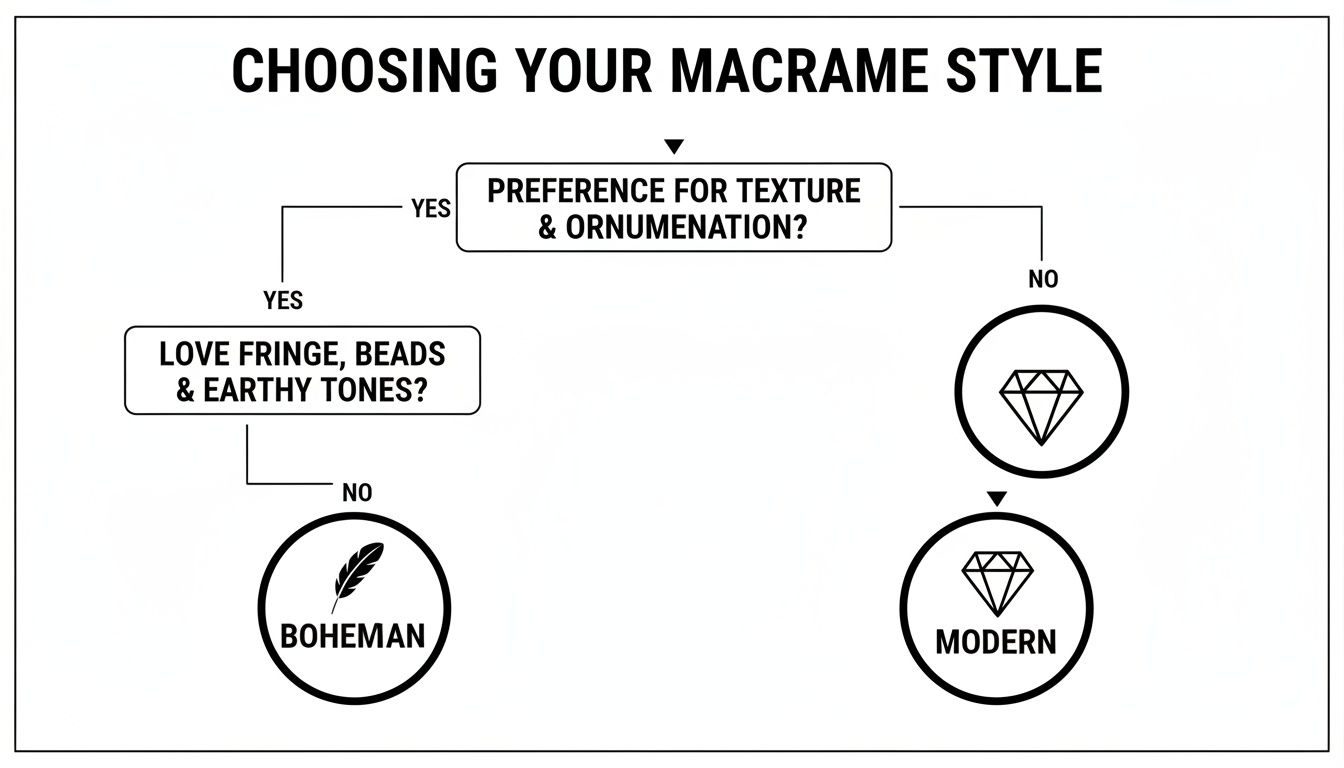
As you can see, Bohemian styles embrace natural, free-flowing elements, while Modern designs lean on clean lines and structure. Clarifying which direction you prefer is a great first step, whether you end up buying or making it.
On the other hand, there’s something incredibly satisfying about the DIY journey. Making your own macramé wall hanging gives you complete creative freedom. You get to customise every detail, from the exact shade of the cord to the final dimensions, ensuring it’s a perfect fit for your home and style.
This hands-on approach is a huge reason for the craft's modern revival. The wider Asia-Pacific handicrafts market is projected to hit USD 17,856.01 million with a 13.6% growth rate, partly because making things yourself has become so accessible. In fact, the online part of this market is soaring at an 18.5% CAGR, driven by enthusiasts in places like Thailand, Malaysia, and Vietnam flocking to digital marketplaces for unique wall art.
If you’re feeling that creative spark, you don't need much to get started. And if you're hunting for another great weekend project, you might love our guide on building a DIY wine rack.
The best part about DIY macramé is its low barrier to entry. With just a few basic supplies and knowledge of a couple of knots, you can create a stunning piece of decor that is entirely your own.
Ready to give it a go? Here’s a simple starter checklist to get you on your way:
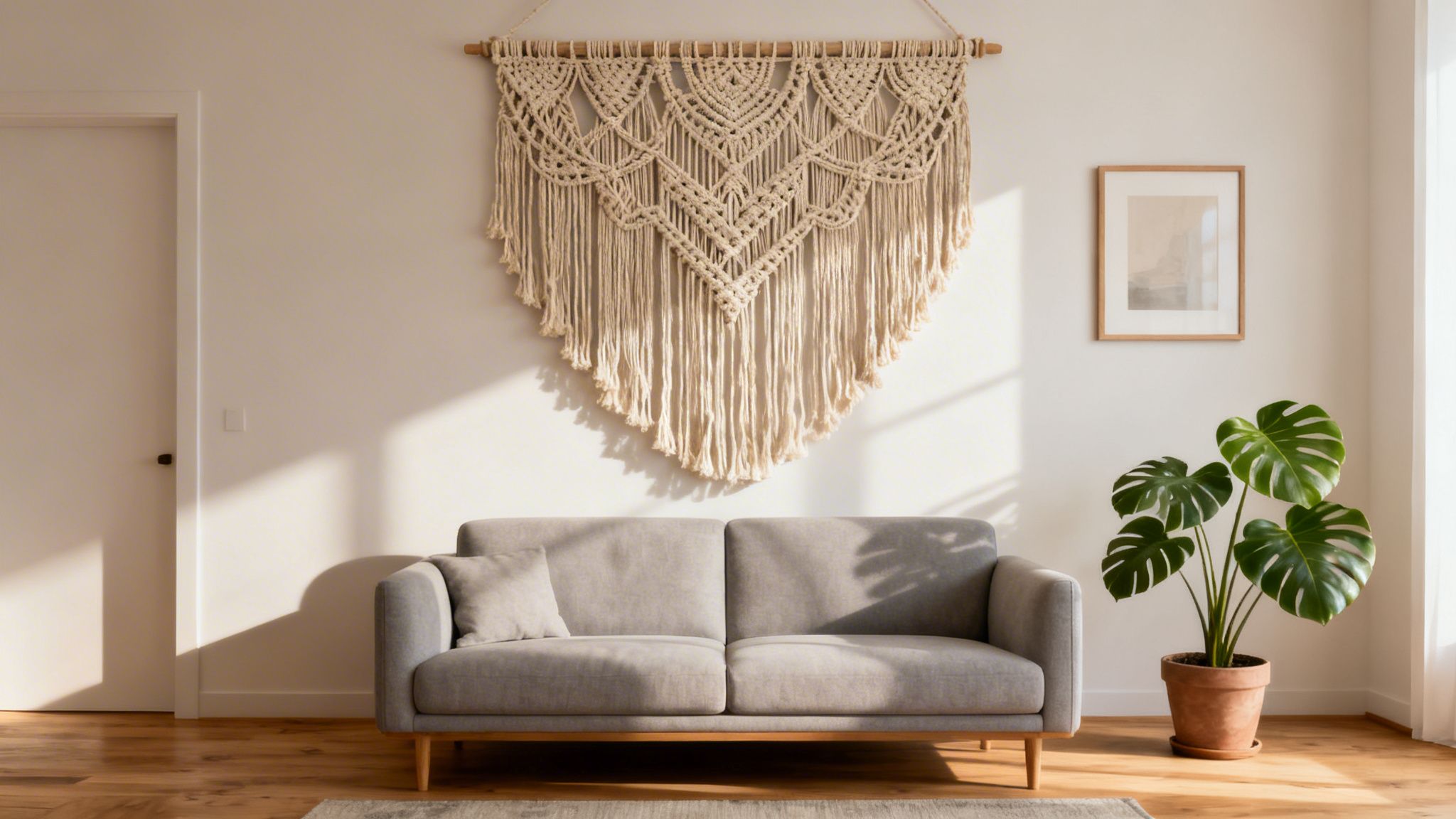
This is where the real creativity begins—bringing your beautiful woven art to life within your home. Styling a macrame wall hanging is less about following strict rules and more about celebrating its unique texture and handmade charm. No matter your style, these pieces introduce a layer of warmth and can create an instant focal point.
For larger macrame pieces, the best approach is often to let them be the star of the show. Think of a substantial hanging as a soft, textural alternative to a large painting or a traditional headboard. Hung above a sofa or over a bed, its intricate patterns and graceful lines will anchor the entire room.
To really make a statement, give your macrame some breathing room. Avoid crowding it with too many other decorations on the same wall. Let its craftsmanship and natural fibres draw the eye, setting a calm and inviting tone.
The magic truly unfolds when you start to play with contrast. Macrame’s soft, knotted form is incredibly striking when set against different materials and decor styles, allowing your personal taste to shine through.
One particularly beautiful combination is pairing the organic feel of macrame with the rustic charm of folk art. Imagine a macrame wall hanging providing a soft backdrop to a nearby shelf, which is decorated with colourful, hand-painted Swedish Dala horses. The contrast between the neutral, woven fibres and the smooth, vibrant wood of the horses creates a look that feels both unique and deeply personal. To explore more ideas for integrating wooden elements, check out our guide on styling with wood wall decor.
The key to successful styling is creating a visual conversation between different textures. The soft intricacy of macrame pairs beautifully with smooth wood, glossy ceramics, sleek metal, and the lush leaves of houseplants.
Don’t be afraid to mix things up. A macrame hanging can be a fantastic addition to a gallery wall, offering a welcome break from framed prints and photos. Its three-dimensional quality adds a depth and an unexpected element that makes the whole arrangement feel more dynamic.
Even a small macrame wall hanging can have a huge impact when styled with a bit of thought. These smaller pieces are wonderfully versatile and can bring a touch of handmade warmth to just about any corner of your home.
Here are a few ideas to get you started:
A beautiful macramé piece is more than just decoration; it's an investment in your home's character and warmth. You’ll want to keep it looking just as lovely as the day you brought it home, and thankfully, preserving its unique texture and craftsmanship is surprisingly simple.
The main culprit for any fibre art is, of course, dust. Over time, those intricate knots and soft cords can trap airborne particles, which can subtly dull the natural colour of your piece. A little bit of regular, gentle care is all it takes to stop this from happening.
For a quick refresh, just take your wall hanging outside and give it a light but firm shake. This simple gesture is usually enough to dislodge most of the dust that has settled, without putting any strain on the knots or delicate fibres.
Think of caring for your macramé wall hanging like you would a delicate wool jumper; less is always more. You’ll want to avoid harsh chemicals or fully submerging it in water. These can cause the natural fibres to shrink, lose their shape, or even discolour.
Life happens, but a little spill doesn't have to spell disaster for your beautiful macramé. The real trick is to act fast and focus only on the spot that needs attention.
To spot-clean a fresh stain:
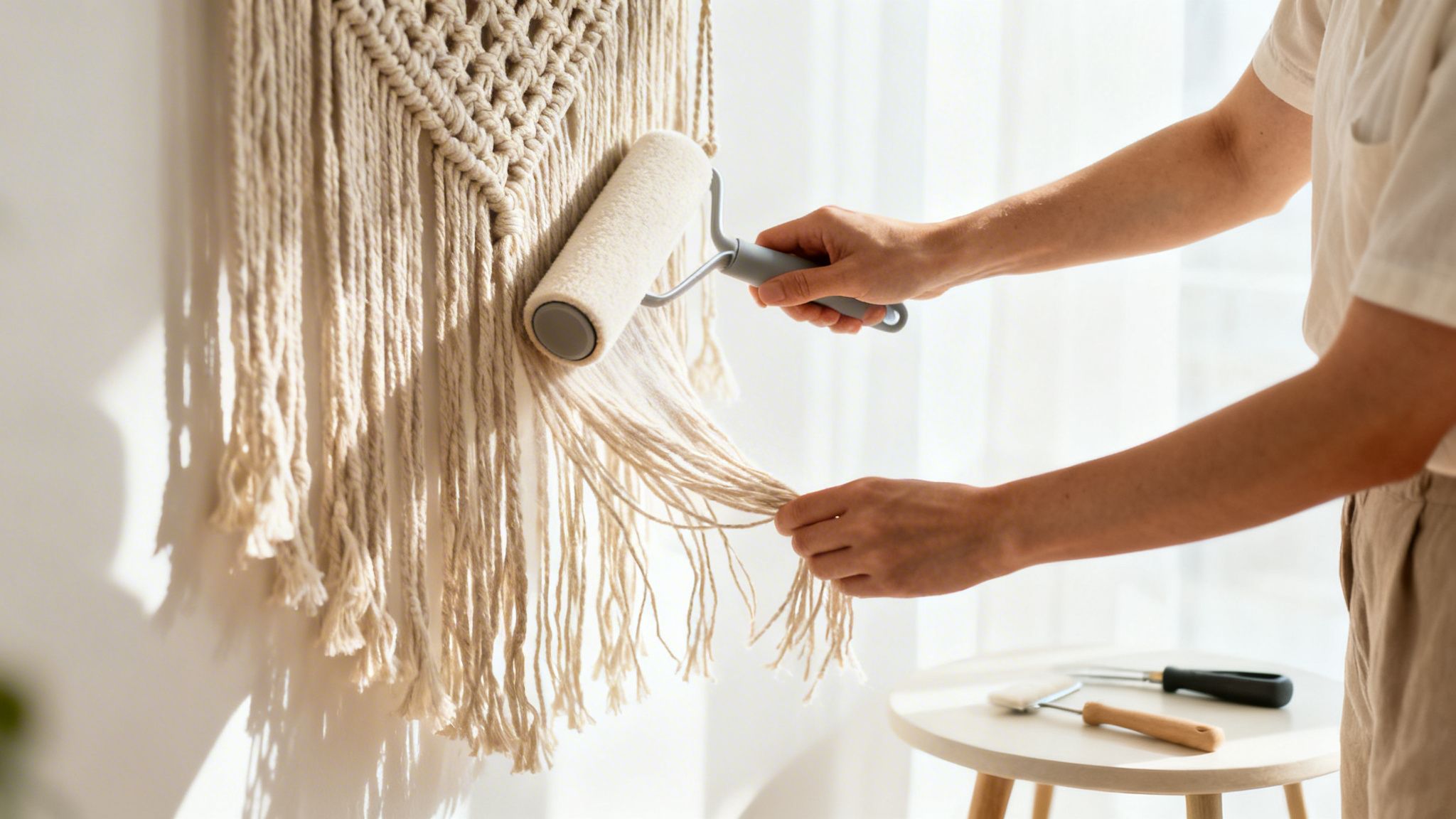
You might also notice the fringe on your piece getting a bit tangled or unruly over time. To bring back its graceful, uniform look, just gently run a wide-tooth comb through the tassels. This will straighten out the fibres and restore that lovely, polished finish.
Now that you’re wrapping up your journey into the world of woven art, a few practical questions might still be lingering. We’ve found that once people fall in love with the craft, they want to be sure they’re choosing, styling, and caring for their macrame wall hanging with complete confidence.
Our goal is to tackle those final uncertainties. Think of this as a chat with a friend who’s been through it all before, clearing up any remaining questions so you can feel like an expert when bringing this timeless craft into your own home.
Absolutely. The modern macrame revival has proven it has serious staying power, evolving far beyond its 1970s origins. Today’s artisans are creating wonderfully sophisticated and versatile pieces that feel perfectly at home in minimalist, Scandinavian, and even industrial interiors.
The enduring appeal of natural textures and authentic, handmade craftsmanship ensures macrame remains a relevant and stylish choice. It continues to be a go-to for designers and decorators looking to add a layer of warmth, character, and a touch of organic beauty to a space.
Finding the right size is all about creating a sense of balance and proportion in your room. A good rule of thumb is to choose a hanging that is roughly two-thirds the width of the furniture it will be placed above, like a sofa, headboard, or console table.
For those narrow spaces, such as an entryway or the end of a hallway, a long and slender design works beautifully to draw the eye upward and create an illusion of height. Smaller hangings are perfect for adding a pop of texture to a gallery wall or enlivening a quiet, cosy reading corner. Our best advice? Always measure your wall first to ensure a perfect fit.
It's certainly possible, but it requires a bit of strategic placement. Natural fibres like cotton are beautiful, but they can absorb moisture and odours, so it’s best to avoid hanging them directly next to a steamy shower or a splattery stovetop.
A small macrame piece, however, can add a lovely, softening touch to a well-ventilated powder room or a kitchen nook that’s away from the main action. The global demand for these pieces remains strong; in Southeast Asia, the handicrafts market, featuring items like the macrame wall hanging, reached USD 31.3 billion in 2024 and is projected to nearly double by 2033. This impressive growth is partly driven by sustainability, with 70% of regional macrame products using locally sourced natural fibres. You can explore more about these market insights on imarcgroup.com.
At Dalaart, we believe in the profound beauty of handcrafted traditions. As you find the perfect spot for your macrame, consider pairing it with one of our authentic, hand-painted Swedish Dala horses to create a stunning display of folk art and fibre. Find your unique piece at https://dalaart.com.


.svg)


.png)


