May 12, 2026
The first time I held a Mariehult cup, it was at a Swedish loppis, tucked between mismatched glassware and a chipped sugar bowl. The cup was light in the hand, cool and practical, but the blue decoration gave it a quiet kind of grace that made me stop and look twice.
Mariehult doesn't always announce itself loudly. That's part of its appeal. In the world of Scandinavian antiques, some names arrive with immediate recognition, while others slip into your home by way of a single saucer, a coffee set inherited from a grandparent, or a berry-patterned jug that seems too lovely to leave behind.
That's often how mariehult sweden design begins for collectors. Not with a manifesto, but with an object made for ordinary life. A teacup. A plate. A Christmas glögg cup brought out in winter. These pieces were never only decorative. They belonged on breakfast tables, in kitchen cupboards, and beside fresh cinnamon buns on a Sunday afternoon.
What makes Mariehult special is that it sits at a meeting point many people find irresistible. It has the clean restraint associated with Swedish modern design, yet it also carries the warmth of folk tradition. Floral motifs, fruit decorations, and blue painted borders soften the functional shapes. The result feels domestic rather than distant.
Mariehult pieces often charm people before they know the name on the base.
For readers new to the subject, that's the simplest way to understand it. Mariehult was part of Sweden's broader story of making well-designed everyday goods for real households. Its surviving ceramics still feel usable, approachable, and rooted in place.
If you're drawn to Swedish craft, vintage tableware, or the quieter corners of Nordic design history, Mariehult is one of those names worth learning slowly. The pleasure comes not only from recognising a pattern, but from seeing how a modest cup can carry the values of an entire design culture.
Småland has long held a special place in the story of Swedish making. Forests, workshop towns, practical ingenuity, and a strong habit of turning local materials into useful goods all shaped the region's craft identity. In that setting, Mariehult found its footing.
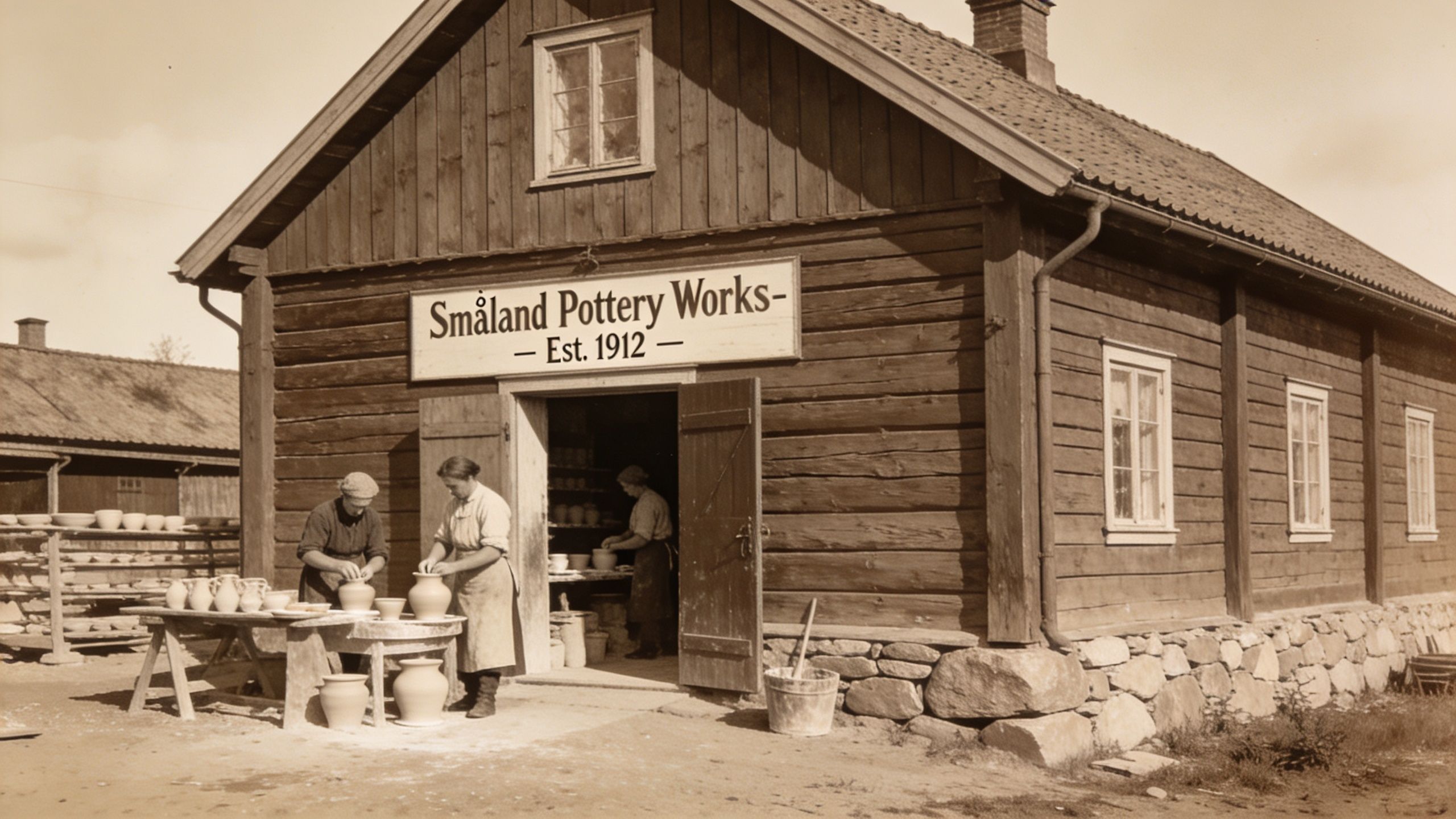
Mariehult, a renowned Swedish porcelain manufacturer based in the Småland region, was established in 1933, and by 1940 it had expanded production to over 500,000 pieces annually, specialising in durable everyday tableware that captured the spirit of Scandinavian functionalism, according to historical notes gathered on the Mariehult Blåklint market page.
That origin matters. Mariehult wasn't built around ceremonial luxury. It made objects for frequent use, which is one reason so many vintage examples still feel familiar. The forms were practical, stackable, and suited to the rhythms of Swedish domestic life.
In museum terms, this is always worth stressing. Functionalism in Sweden didn't mean cold design. It meant thoughtful design. A plate should store neatly. A cup should feel balanced in the hand. Decoration should add beauty without getting in the way of use.
Mariehult's success came from understanding that balance. Its tableware carried visual calm. White porcelain offered a clean ground for floral motifs and blue accents. Even when the decoration was cheerful, the overall impression stayed disciplined.
The factory's regional setting also helps explain its character. Småland is often associated with resourcefulness, and that mood appears in Mariehult wares. These were objects made with an eye on durability and household value, but without abandoning aesthetic pleasure.
You can sense the broader Swedish design conversation in them. Mid-century Sweden admired simplicity, nature, and sensible living. Mariehult translated those ideals into plates, saucers, coffee cups, and serving pieces that people could afford and use.
A few features define that atmosphere:
Museum note: When a ceramic brand survives in memory through cups and saucers rather than grand vases, it often means it succeeded at something deeper. It entered everyday life.
Mariehult's later reputation as a collectible brand grew from that earlier success. People kept these objects because they worked, because they were attractive, and because they belonged to family rituals. A morning coffee service can become cultural history without anyone planning it.
That's why Mariehult deserves attention beyond specialist circles. It tells a Swedish story from the cupboard shelf upward. Not only about industry, but about taste, habit, and the beauty people invited into daily life.
The fastest way to recognise Mariehult is to train your eye for mood as much as pattern. Many pieces combine practical forms with gentle, nature-based decoration. The shape says “use me every day”. The surface says “look a little closer”.
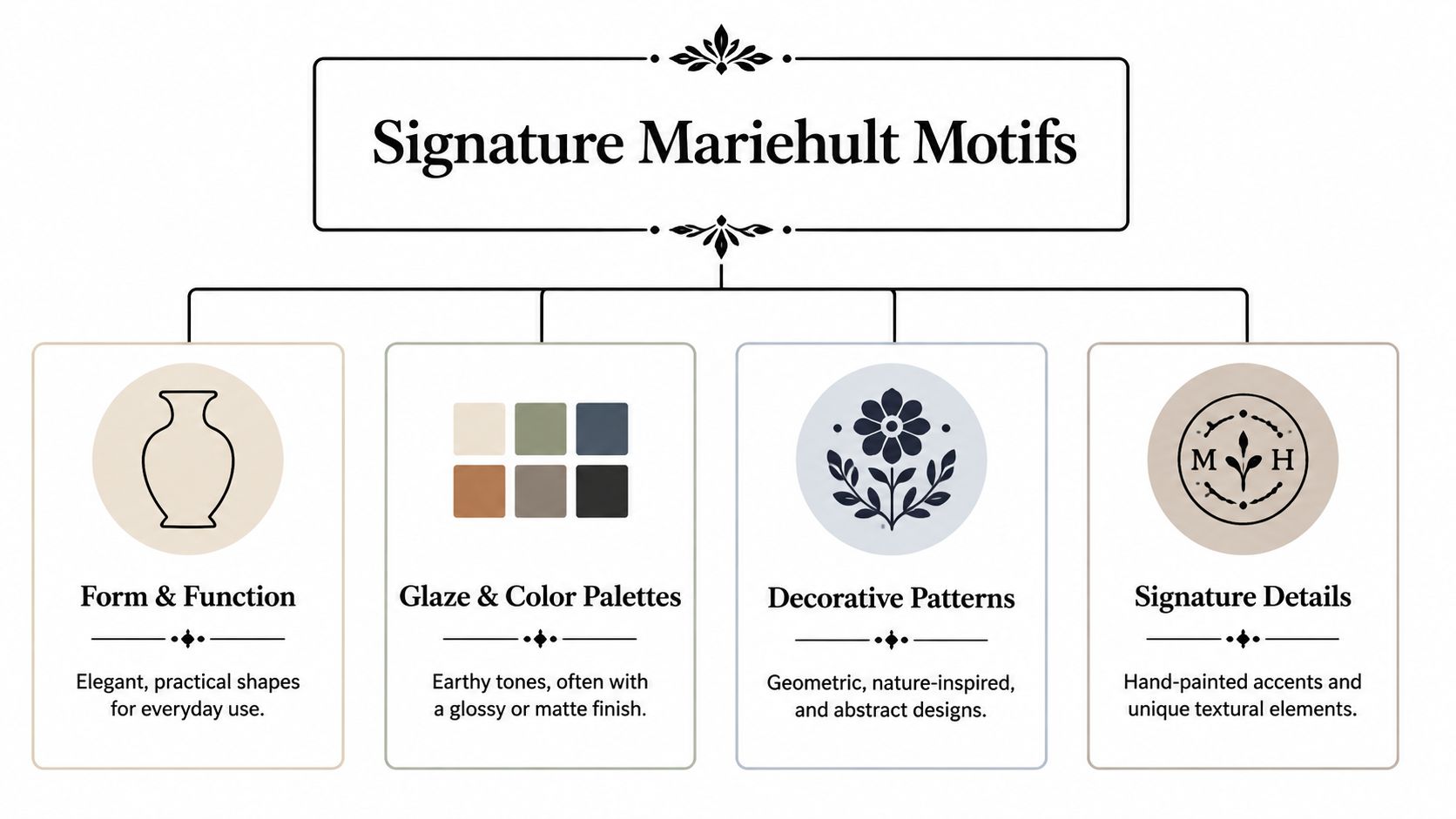
The best-known example is the Blåklint series. The Mariehult Sweden Blåklint line is noted for stackable, space-efficient storage, and its blue colour, often matching Pantone 286C, was chosen to harmonise with 80% of Swedish flag hues while showing strong UV-fastness in bright Nordic interiors, as described in the Blåklint listing details.
Blåklint means cornflower, and that tells you a great deal. The pattern usually appears in blue against white porcelain, with a light, airy feeling rather than heavy ornament. It has enough detail to feel tender, but enough spacing to feel clean.
If you're standing in an antique shop and wondering whether a plate belongs to this world, look for these clues:
Readers often get confused at this point. They expect “folk art” to mean dense colour and exuberant decoration. Mariehult often works with more restraint. Its folk connection comes through the use of familiar natural motifs and household intimacy, not visual excess.
Mariehult also became known for fruit-decorated wares. These pieces carry a different tone from Blåklint. They feel more playful, often more rustic in mood, and especially inviting in kitchens.
Think of strawberry and pear motifs on mugs and jugs. They bring the orchard and garden indoors, which is a very Swedish instinct in decorative arts. Nature isn't treated as a grand scenic vista alone. It arrives at the table through small, repeatable pleasures.
A collector learning to identify Mariehult should pay attention to three design habits:
A useful rule is this. If a piece looks as if it belongs equally well on a shelf and at afternoon coffee, you're likely close to the Mariehult sensibility.
The most satisfying identification work happens at close range. Turn a piece over. Study the base. Look at how the motif sits on the form. A genuine Mariehult object often reveals itself through proportion and finish rather than a dramatic flourish.
Collectors also learn to notice how Swedish design avoids fuss. A Mariehult cup may have a sweet motif, but the handle usually remains sensible. A plate may carry blue decoration, but the overall line stays neat. That tension between charm and order is one of the clearest signs you're looking at authentic mariehult sweden design rather than a generic vintage import.
Many readers encounter Mariehult while searching for Swedish folk art more broadly, and that's where a common misunderstanding appears. A ceramic brand from Småland gets mentioned alongside Dalarna crafts, especially the Dala horse, and the categories start to blur.
They shouldn't.

While Mariehult produced affordable, mass-produced painted wooden animals, they lacked the hand-carved nuance and symbolic painting of Dala horses from Dalarna. Interest in that comparison has clearly grown, with Google Trends data from 2025 showing a 45% year-on-year spike in searches comparing the two, highlighting collector confusion about investment value.
Mariehult belongs first to the story of Småland ceramics and domestic tableware. Dala horses belong to a different lineage. They come from Dalarna, and their meaning is tied to carving, regional painting traditions, and a deep folk-art symbolism that goes beyond simple decoration.
That doesn't make one “better” in every sense. It makes them different objects with different cultural jobs.
Mariehult wooden animals were generally made as accessible decorative pieces. Dala horses, by contrast, are prized for the handwork visible in the carving and painting. One speaks more to affordable Swedish décor. The other carries a denser layer of regional identity and artisanal heritage.
For readers who want a broader cultural background, this introduction to the beauty and culture of Dalarna gives helpful context for why Dalarna occupies such a distinct place in Swedish craft history.
The confusion often happens because both can feature painted animal forms and both are marketed as “Swedish”. But the making tradition tells the true story.
Keep these distinctions in mind:
If you're buying for heritage, ask “Which region's tradition does this object actually represent?” That question clears up much of the confusion.
This connection between Mariehult and Dalarna is still useful, though. Side by side, they reveal how rich Swedish decorative culture really is. One gives us the poetry of the kitchen shelf. The other gives us the ceremonial joy of painted wood. Together, they show that Swedish design was never only minimal. It was also local, symbolic, and full of domestic feeling.
Collecting Mariehult becomes easier once you stop looking only for beauty and start looking for evidence. A lovely pattern matters, of course, but condition, finish, and authenticity matter just as much. The good news is that Mariehult often rewards close inspection.
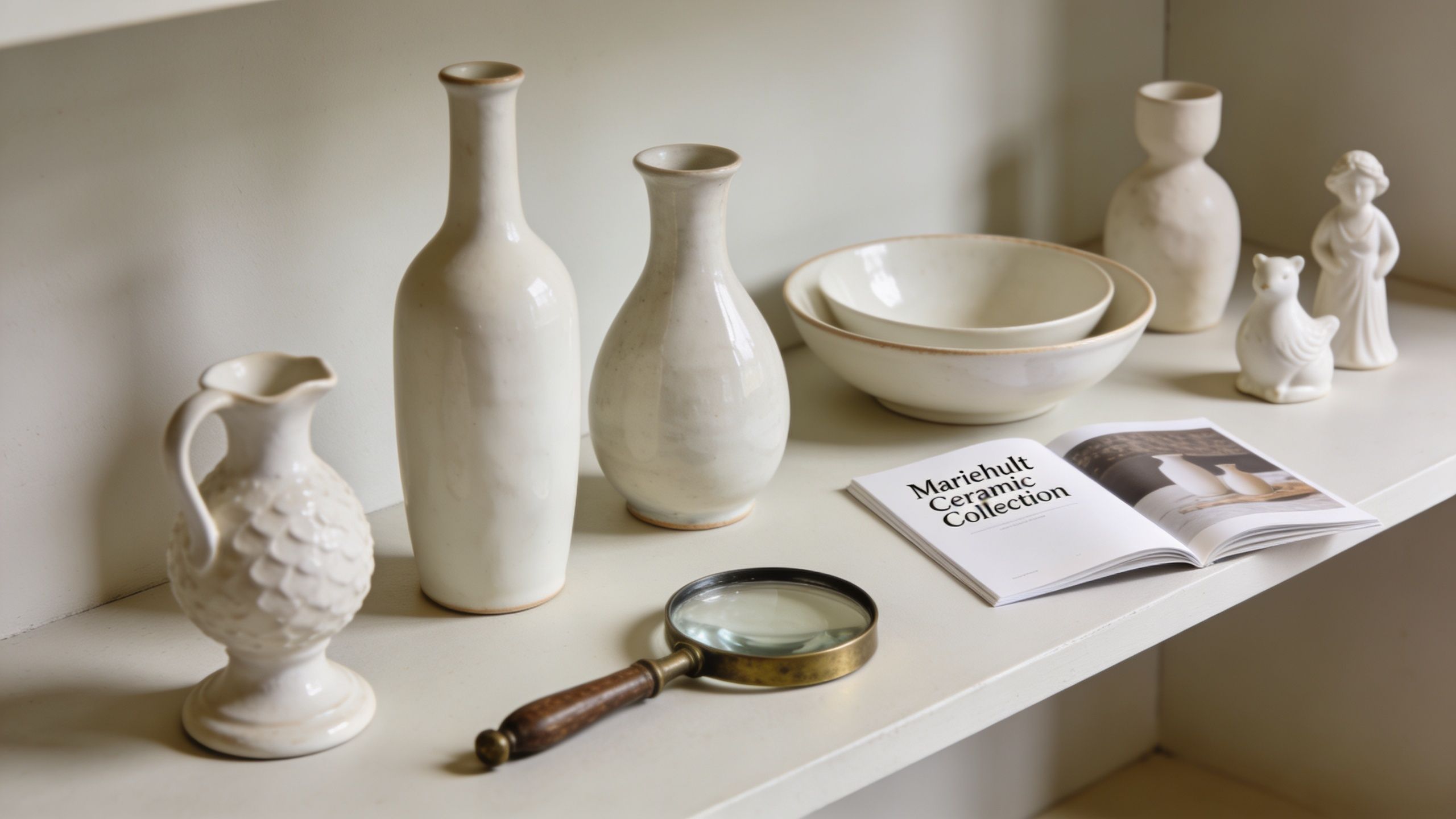
For collectors, vintage Mariehult pieces with intact blue rim underglaze are especially desirable. Their vitrified glaze reached Mohs hardness 6 to 7, resisted dishwasher crazing, reduced porosity to less than 0.5%, and supported a practical service life of 20+ years. Those features can raise resale value by 25 to 35% in Swedish auctions, according to the technical description in this Mariehult coffee cup listing.
When you pick up a piece, begin with the rim, the glaze, and the base. These areas tell you the most in the shortest time.
A sound Mariehult piece should feel composed. The glaze should look settled rather than chalky. The decoration should sit confidently on the form, not look like an afterthought. If the piece has blue rim decoration, check whether it remains intact and even.
Here are the first signs to assess:
Terms like “vitrified glaze” can sound academic, but they're useful in practice. They tell you why some old cups remain bright, smooth, and dependable after decades of service while others fade into purely decorative status.
Reduced porosity matters because it supports cleanliness and long-term use. Harder glaze matters because it resists the fine cracking collectors call crazing. If you want pieces you can live with, not just display, those details become very practical.
Practical rule: Buy with your fingertips as much as your eyes. Smooth glaze, clean edges, and a stable foot ring often reveal more than a seller's description.
Mariehult turns up in the places you'd expect for vintage Swedish household goods. Flea markets, estate sales, antique centres, and online marketplaces are all common hunting grounds. The trick is comparison. Don't judge a piece in isolation if you can avoid it.
Study several examples of the same pattern before buying. A cup that seems perfect alone may reveal repainting, unusual wear, or a mismatched saucer once you've seen a few better examples.
If you enjoy comparing one Swedish ceramic tradition with another, this piece on Alingsås Keramik Winblad is a useful companion read because it sharpens the eye for form, glaze, and maker identity across neighbouring collecting categories.
New collectors often worry about perfection. They shouldn't. A small amount of age-related wear is part of the pleasure of vintage tableware. The goal is not sterile flawlessness. It's honesty.
Keep your standards clear:
The best Mariehult collections rarely arrive all at once. They build gradually, cup by cup, as your eye becomes steadier. That slow education is part of the reward.
Mariehult works beautifully in a home because it was made for homes in the first place. That may sound obvious, but it's the secret. These pieces don't need elaborate staging to feel right. They settle naturally into shelves, tables, and sideboards because they were designed with domestic life in mind.
A single cup can soften a stark kitchen. A pair of floral plates can warm a white wall. A berry-patterned jug can hold flowers one week and wooden spoons the next. The objects remain useful even when you change your mind about how to display them.
If you're unsure where to begin, don't start with a full cabinet. Start with one piece that has character. A Blåklint saucer under a candle, a glögg cup on an open shelf, or a small jug on a bedside table often does more than a crowded arrangement.
Mariehult suits interiors that need a little human warmth. Minimal rooms benefit from its pattern. Traditional rooms benefit from its restraint. That's why the ceramics can bridge styles without looking forced.
Some approaches work especially well:
A home looks more convincing when vintage pieces are allowed to be useful, not treated like nervous museum loans.
The strongest interiors rarely copy a catalogue. They feel assembled over time. Mariehult helps create that feeling because it carries memory so easily. Even in a modern flat, it suggests continuity. Someone chose this. Someone used it. Someone kept it.
The broader folk-art connection becomes especially rewarding. Mariehult's quieter ceramics can sit beside bolder Swedish craft without competition. A painted wooden figure, a woven textile, or a carved decorative object gains balance from the calm white and blue of a ceramic plate nearby.
The trick is contrast. Let Mariehult provide visual rest. Let the brighter folk elements provide rhythm. That combination often feels more authentically Scandinavian than a room filled only with severe minimalism.
If you love mariehult sweden design, don't hide it in a cabinet waiting for a perfect occasion. The whole point of the tradition is that beauty belonged in ordinary life.
Vintage ceramics last best when they're treated with respect rather than fear. Mariehult pieces were made to endure, and that's part of their charm. Still, age changes how we should care for them.
Mariehult's Christmas glögg cups, produced from 1960 to 1975, earned 4.9/5 collector ratings and strong survival rates because of their durable vitrified porcelain. Post-1970 production also reduced waste by 60% through recycled materials, which contributed to the long-lasting character of later wares, according to the Mariehult Sweden cup market notes.
Even durable porcelain deserves gentle handling. Hand washing is the safer habit for older decorated pieces, especially if you want to preserve surface brilliance over time. Use mild soap, lukewarm water, and a soft cloth or sponge.
Avoid abrasive powders and rough scrubbing pads. They can dull the glaze or wear decoration at the edges. If a cup has tea staining, soak it first rather than attacking it immediately.
For collectors who enjoy other sturdy Swedish stoneware traditions, this look at Gabriel Sweden stengods offers helpful perspective on how durability and care often work together in vintage Nordic ceramics.
Storage matters as much as washing. Plates should be stacked carefully, ideally with a soft separator if the glaze feels vulnerable. Cups should never be wedged tightly by the handle. If you display pieces on open shelves, keep them away from spots where they're likely to be brushed by doors or heavy serving items.
A few simple habits go a long way:
Older tableware can still be used beautifully. It just asks for a calmer rhythm than brand-new supermarket ceramics.
Mariehult rewards that kind of care. These objects were built for repeated service, but they've already lived long lives. Treat them as capable elders. Use them thoughtfully, clean them gently, and they'll continue doing what they've always done best. Bringing Swedish grace into ordinary moments.
If you'd like to explore Swedish folk art more thoroughly, Dalaart offers a carefully curated selection of authentic Dala horses and companion animals made in Sweden by skilled artisans. It's a wonderful place to continue your journey from vintage ceramics into the wider world of Scandinavian craft heritage.


.svg)


.png)


