May 21, 2026
A cassette clicks into place. The room fills with bright synths, polished drums, and a Swedish chorus that feels both local and oddly futuristic, like a painted wooden horse sitting beside a chrome stereo.
That tension is the magic of svensk 80-tals musik. It belongs to a decade when Sweden sounded more modern, looked more graphic, and still carried older traditions in the background.
Swedish 1980s music makes more sense when you stop treating it as a playlist and start treating it as a cultural atmosphere. The decade carried a new kind of confidence. Youth culture leaned more openly towards pop, style, technology, and international ambition, while older ideas about serious, politically charged music no longer dominated in the same way.
That didn't mean Sweden abandoned its social ideals. It meant those ideals began sharing space with a brighter commercial imagination. Pop music could be catchy, polished, and emotionally direct without seeming shallow. In Sweden, that shift mattered because the country already had a strong habit of organising culture, supporting education, and building local creative networks.
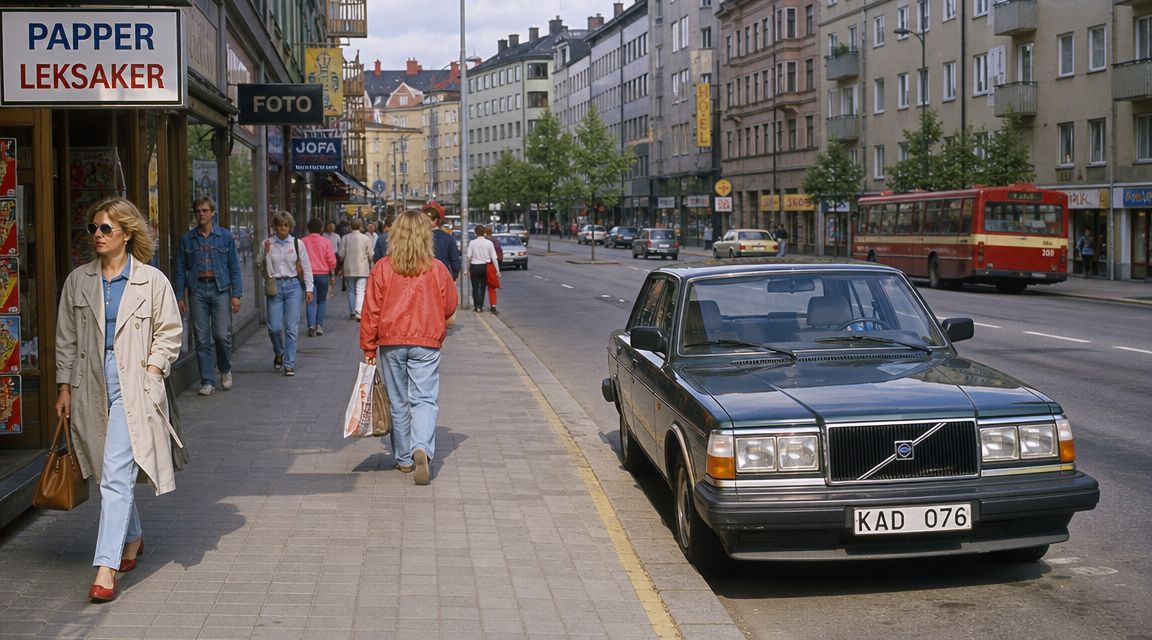
A lot of people picture svensk 80-tals musik as a Stockholm story. That's too narrow. A key part of the decade was Sweden's decentralised music life, where public support and local institutions helped scenes grow beyond the capital. The Swedish Arts Council and municipal kultur schools supported long-running local production networks, and that helped regional punk, local-language rock, and other non-hit styles flourish alongside more famous pop exports, as highlighted in this curated view of Swedish regional and catalogue listening.
That matters because it changes how we hear the decade. Swedish 80s music wasn't only sleek synth-pop made for export. It was also rehearsal rooms, school music programmes, municipal venues, and local bands singing in Swedish to local audiences.
A useful way to hear the decade: listen for the balance between polish and place. Even very commercial songs often carry a clear sense of Swedish language, melody, or mood.
The 1980s in Sweden had a visual and emotional character that's still easy to recognise. You can sense it in bold shop signage, angular interiors, practical furniture, graphic knitwear, glossy magazine imagery, and the growing presence of consumer electronics in ordinary homes. Music belonged to that same world. It wasn't background decoration. It was part of how modern life felt.
That's one reason the era still connects so strongly with people who love Swedish heritage objects today. A hand-painted folk piece and an 80s pop cassette may seem far apart, but both capture Swedish ideas about identity, style, and everyday life. If you're curious about how earlier decades set the stage for that cultural continuity, this look at Swedish music from the 1960s gives helpful context.
A good historical shortcut is this. The 1980s weren't only louder or more commercial than what came before. They translated Swedish culture into a new set of colours, textures, and sounds. That's why the decade still feels alive rather than merely retro.
You can often recognise svensk 80-tals musik within seconds. The drums hit with unusual precision. The keyboards are bright and glassy. The melodies are clean, memorable, and designed to carry emotion fast.
That sound didn't appear by accident. Swedish pop in the 1980s was shaped by a production shift towards sampling, Yamaha DX7 synthesisers, and digital effects, which gave recordings a brighter, cleaner quality and tighter rhythmic grids than the more organic productions of the 1970s, as discussed in contemporary commentary on the Swedish scene at 99musik's discussion of the era's production tools and aesthetics.

If you're new to the era, a few sonic clues make it easier to hear what's going on:
These qualities helped songs travel well. They worked on radio, in clubs, on television, and later on streaming playlists where crisp production still holds up.
The Swedish 80s sound wasn't one single style. It was a family of related approaches.
This is the sound many listeners associate with the decade first. Synth-pop in Sweden often mixed melancholy with catchiness. The music could feel sleek and emotional at the same time. Electronic textures gave songs a modern skin, but the writing underneath was usually very strong and very pop.
New wave carried some of punk's edge into a more stylised and pop-aware form. Guitars remained important, but so did fashion, attitude, and rhythmic drive. Swedish new wave often sounded less chaotic than earlier punk and more shaped for repeat listening.
Some of the best 80s Swedish songs sound emotionally serious even when their surfaces are glossy. That contrast is part of their appeal.
Rock never disappeared in the 1980s. It adapted. Swedish rock ranged from hard-driving arena sounds to melodic pop-rock and local-language bands with a rougher edge. In many cases, even guitar-based acts absorbed the decade's cleaner production values.
The result was a generation of music that sounded modern without losing songwriting discipline. For listeners today, that's one reason svensk 80-tals musik remains so inviting. It gives you the unmistakable technology of the era, but it rarely forgets the chorus.
To understand a decade, it helps to meet its voices. Swedish 80s music lives through songs people still know by heart, songs that still turn up at parties, on radio, and in the private nostalgia of car rides and kitchen speakers.
Many Swedish heritage acts from this era remain visible in present-day listening habits. Roxette, Europe, and Lena Philipsson-era pop are still heavily recycled on Swedish radio and streaming, which helps explain why their songs continue to serve as entry points for younger listeners, as noted in this discussion of enduring Swedish catalogue listening and music culture.
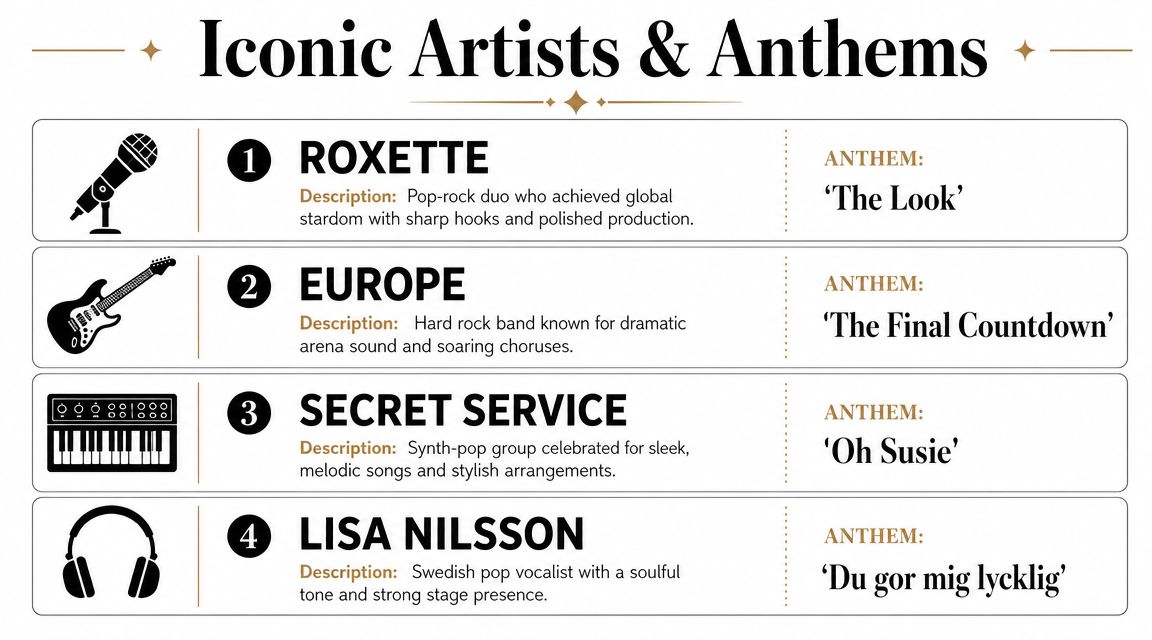
Start with Freestyle and the song “Vill ha dig.” It's one of those tracks that helps non-Swedish listeners grasp an important point immediately. Swedish 80s music wasn't only about international crossover. Domestic hits in Swedish mattered significantly, and they still function as cultural memory markers.
“Vill ha dig” feels youthful, direct, and rooted in everyday emotion. It shows how the decade could be catchy without becoming anonymous.
Then there's Orup, whose “Då står pojkarna på rad” remains one of the most recognisable titles in Swedish pop memory. Orup represents a very Swedish 80s skill. He made polished music that still felt personal, local, and linguistically specific.
His songs are useful for listeners who think 80s pop is all surface. In fact, the best material from the decade often combines smart observation with irresistible hooks.
If you want the grand, international face of the decade, go to Europe. Their sound stands for scale. Big keyboards, commanding vocals, and arena ambition turned Swedish rock into something unmistakably global.
Europe matters because they reveal another side of svensk 80-tals musik. Sweden wasn't just nurturing domestic identity. It was learning how to project sound outward, with songs built to travel across borders and still feel distinctly of their time.
Listening shortcut: if you want to hear the decade's confidence, play a domestic pop hit and a Europe anthem back to back. You'll hear two different strategies for the same moment in Swedish culture.
Strictly speaking, ABBA belong to a broader timeline than the 1980s alone. But they remained part of the decade's cultural furniture, and “Super Trouper” appears in Swedish-facing 80s curation on Apple Music according to the verified background provided for this article. That inclusion says something important. Swedish listeners continue to treat certain songs as part of the national 80s songbook, even when artist timelines overlap decades.
ABBA's presence also reminds us that the 1980s didn't start from zero. Swedish pop had already learned how to combine melody, identity, and professionalism. The decade inherited that lesson and refitted it with harder drum sounds, sharper graphics, and a cooler sheen.
If you only build one starter playlist, make it mixed. Include domestic-language pop, mainstream synth-led songs, and at least one giant rock anthem. That combination captures the decade better than any single subgenre can.
The sound of svensk 80-tals musik wasn't separate from how Sweden looked. It belonged to the same visual world as lacquered surfaces, geometric patterns, bold typography, practical furniture with sharper silhouettes, and the growing presence of hi-fi equipment in domestic interiors.
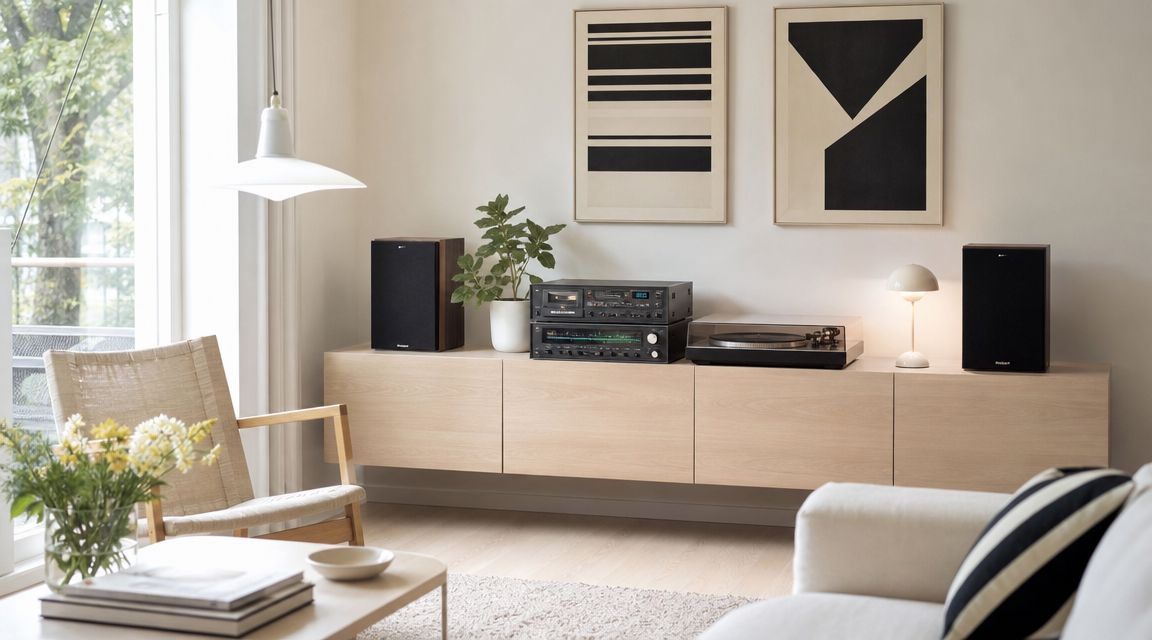
A bright synthesiser patch and a clean Scandinavian interior share a logic. Both favour clarity. Both like strong lines. Both turn simplicity into style. That's why the 80s in Sweden can feel surprisingly coherent when you place the music beside objects from the period.
At first glance, this seems far away from folk traditions such as painted wooden craft. It isn't. Swedish culture often carries old and new together rather than choosing one over the other. A home could contain traditional textiles, carved objects, modern lamps, and the newest stereo system without feeling contradictory.
That's the key argument. The 1980s weren't a break from Swedish design heritage. They were another layer added to it. The colours got louder, the shapes got sharper, and the sound became more electronic, but the deeper habits remained familiar. People still valued craft, recognisable forms, and objects that gave everyday life a sense of character.
People often think nostalgia is only about memory. It's also about design language. The 80s return again and again because the decade has such a clear visual vocabulary. You can spot it in album covers, fashion photography, type treatments, cassette packaging, and furniture details.
For readers drawn to Swedish heritage aesthetics, that connection becomes even clearer when you look at colour and form in Swedish design traditions. The same national culture that preserved decorative folk expression also embraced a period of synthetic shine and graphic boldness. Those aren't opposites. They're related expressions of Swedish taste in different historical moods.
That's why an 80s record sleeve can look surprisingly at home near a traditional carved figure. Both are cultural artefacts. Both tell you what Sweden wanted to preserve and what it wanted to become.
The easiest way into svensk 80-tals musik is to avoid trying to master the whole decade at once. Start with a small path, listen for recurring sounds, and let one artist lead you to the next.
A very practical first stop is the officially curated material on streaming platforms. Spotify's Swedish compilation “Svenska hits: 80-talet” includes tracks such as Freestyle's “Vill ha dig”, Orup's “Då står pojkarna på rad”, Mikael Rickfors' “Vingar”, Eldkvarn's “Kärlekens tunga”, and X-Models' “Två av oss”, which shows that these songs are still treated as core references in Sweden's digital music heritage through Spotify's Swedish 80s compilation.
Try this order if you're a beginner:
Start with the canon
Put on an official Swedish 80s playlist or compilation and don't skip too quickly. You're listening for the decade's common language, not just your favourite song on first pass.
Follow the Swedish-language tracks
Songs in Swedish often reveal the domestic emotional core of the period. They can also sound less familiar if you've mainly heard global 80s hits before.
Add one rock track for contrast
A broader listening picture appears when glossy pop sits beside more forceful guitar material.
Repeat the songs that feel immediate
This music often rewards replay. A chorus or synth line that seems simple on first listen can become the very thing that defines the era in your memory.
Don't build your first playlist by genre alone. Build it by feeling. One tender pop song, one dramatic anthem, one local-language favourite, one stranger track that opens a side door into the decade.
Swedish 80s music also suits collectors. Vinyl, cassettes, and CDs make the era feel more tangible because the design, typography, and photography are part of the experience. If you enjoy vintage interiors or ephemera, you'll probably enjoy the hunt as much as the listening.
A few useful habits help:
If that crossover between music and visual nostalgia appeals to you, this feature on vintage posters from Sweden is a natural companion.
The best approach is to stay curious. Let one famous song bring you in, then follow the side roads.
The strongest proof of svensk 80-tals musik isn't found in nostalgia alone. It's found in the fact that the decade still circulates through ordinary Swedish life. These songs remain available, playable, recognisable, and commercially useful. They haven't become museum pieces.
That continuing life has practical support. In Sweden, SAMI collects remuneration when recordings are played in businesses, on radio, or on TV, which means 80s catalogue tracks can continue generating value in public settings through Sweden's neighbouring-rights system at SAMI. That's one reason the decade keeps showing up in cafés, shops, media, and curated commercial spaces.
The legacy works on several levels at once.
That combination matters. Some decades survive in private memory only. Swedish 80s music survives in both memory and infrastructure.
The deeper legacy is national confidence. By the time the music industry was being measured systematically in the early 2010s, Sweden's domestic music market had reached SEK 6.3 billion in 2011, up 4% from the previous year, with SEK 534 million in streaming income in 2011, a 106% increase versus the previous year, according to Volante Research's report on the Swedish music industry in 2011. Those figures come long after the 1980s, but they show the scale of the music economy that grew from earlier foundations.
The point isn't that the 80s caused everything that followed. It's that the decade helped define Sweden as a place where pop music could be local heritage, export craft, and organised industry at the same time.
The echo of the 80s isn't faint. It lives in songs people still choose, in recordings businesses still play, and in the way Sweden still understands itself as a musical country.
That's why the era keeps attracting new listeners. The best Swedish 80s songs don't feel sealed off in the past. They still sound like invitations.
If Swedish cultural history speaks to you, Dalaart is worth exploring. Their collection of authentic Swedish Dala horses and companion animals offers another way to connect with the same heritage of colour, craft, and enduring design that makes svensk 80-tals musik so memorable.


.svg)


.png)


